Winnie the Pooh: Exploring a Classic
Museum of Fine Arts, Boston, 2018
Role: Exhibition Designer
Team: Curator Meghan Melvin; Graphic Designer Eben Haines; Management and production by Quinn Corte, Neal Johnson and Cyrille Conan
Photos courtesy of MFA, Boston
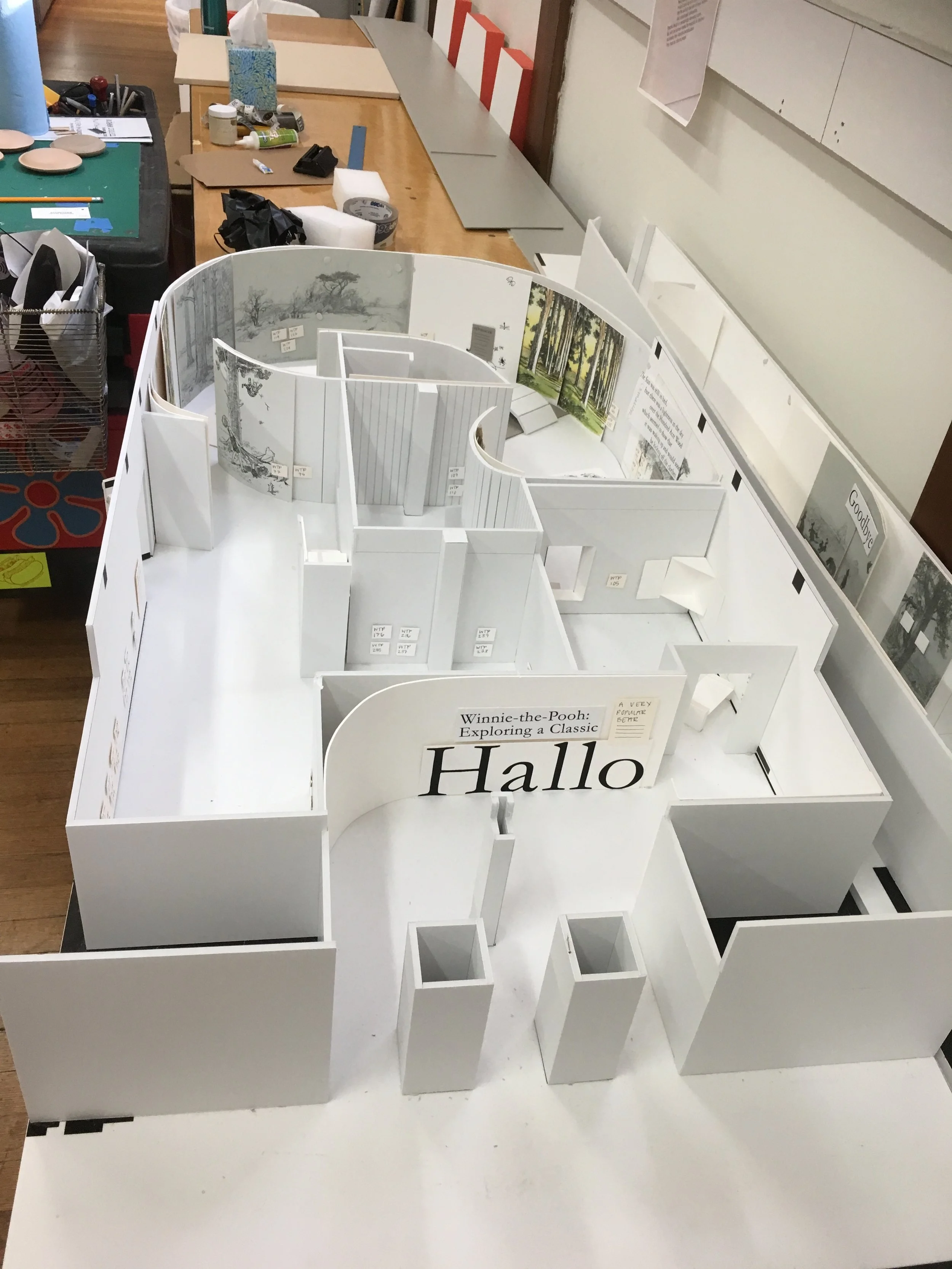
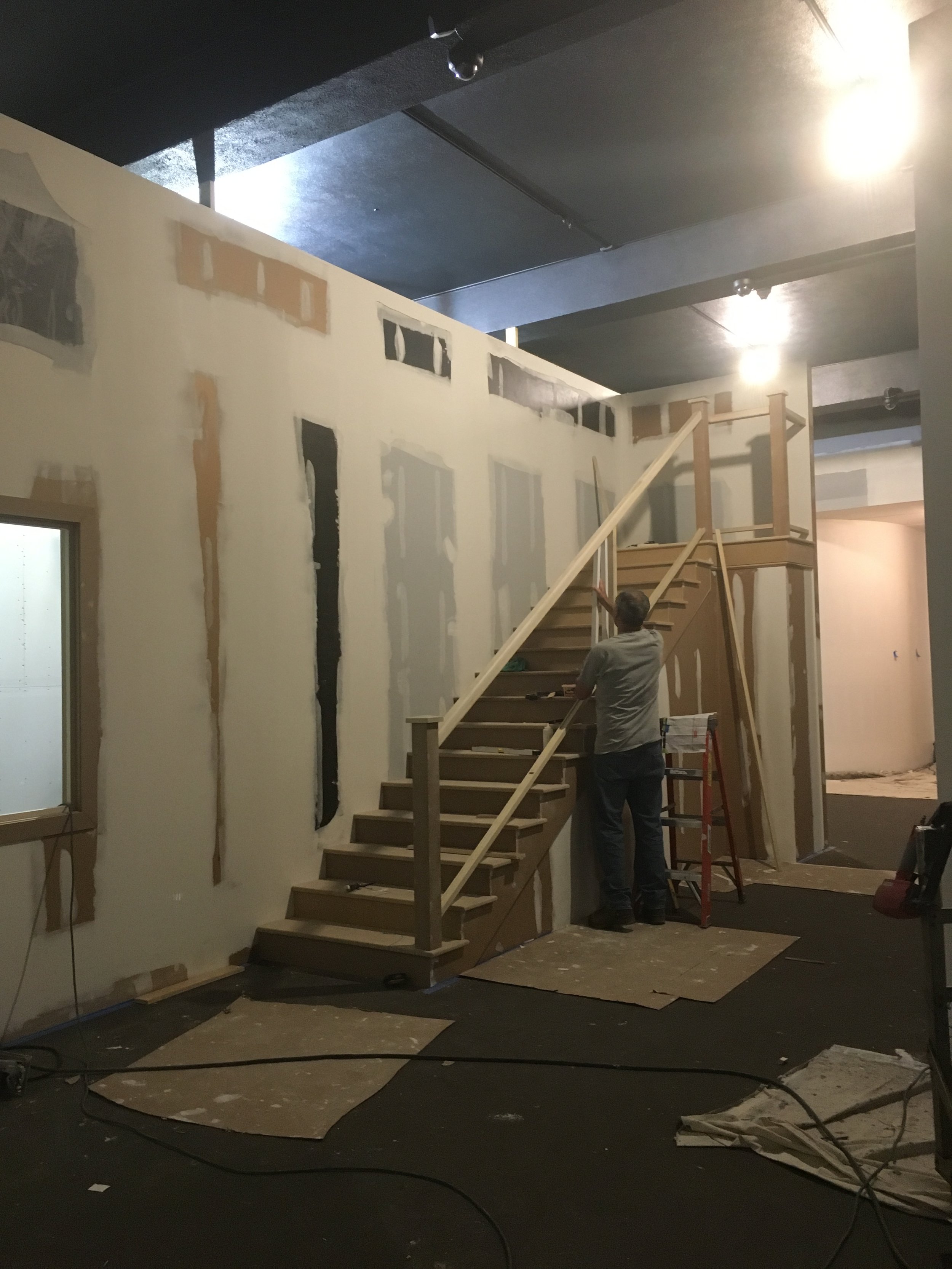
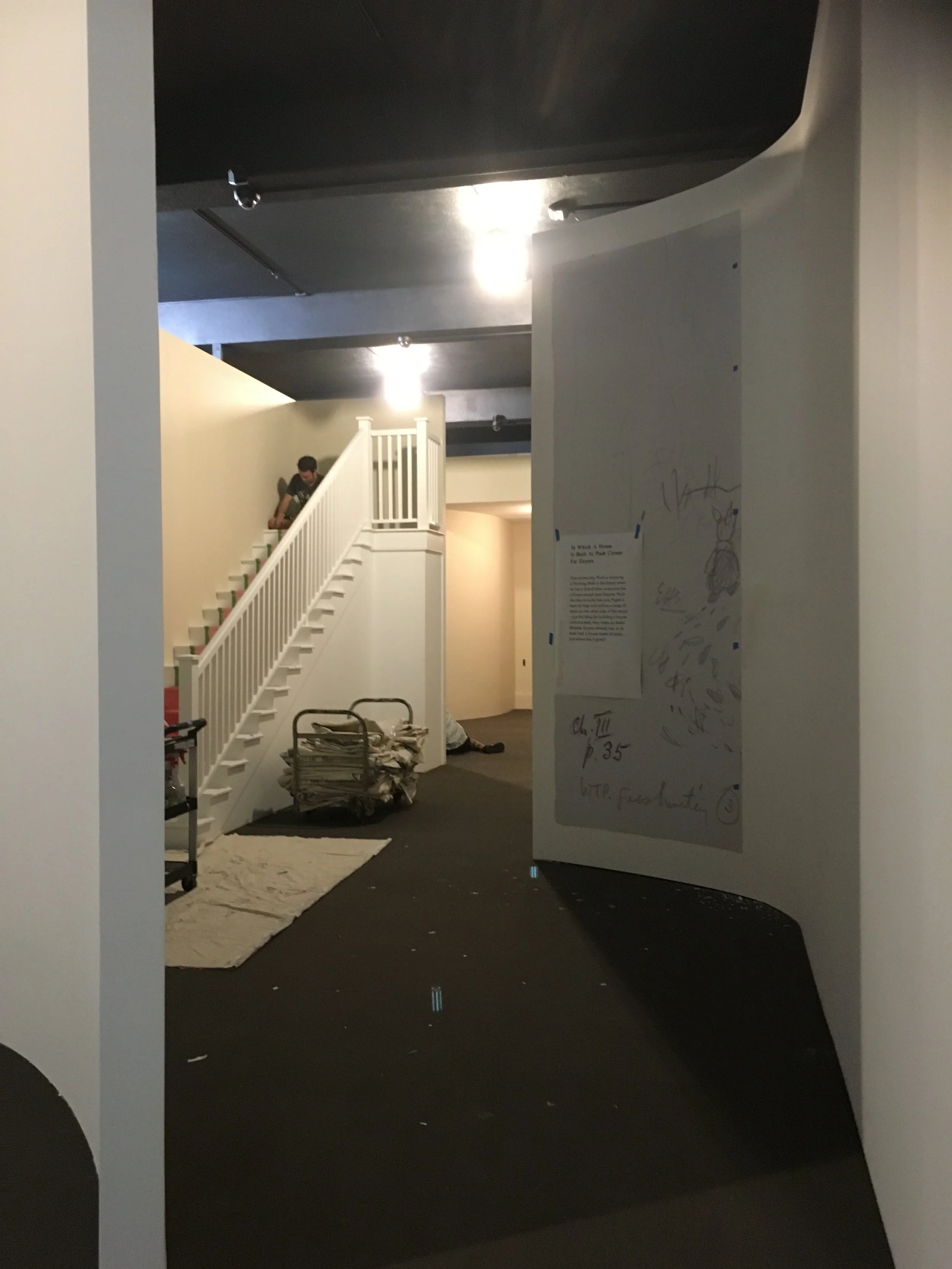
Originating at the Victoria and Albert Museum and traveling to the MFA, this exhibition traced the history of the Winnie-the-Pooh stories—written by A. A. Milne and illustrated by E. H. Shepard—through an immersive environment that invited visitors directly into the world of the stories. Nearly 200 works, drawn largely from the V&A's archives, surrounded visitors with original drawings, letters, photographs, and ephemera, creating a deeply atmospheric, narrative-driven experience.
The Visitor Journey. Visitors entered through a large introductory case filled with ephemera—board games, dolls, dishware, even a child's dress—establishing Winnie-the-Pooh's wide cultural reach across time and place.
From there, they stepped into a re-creation of Christopher Robin's childhood bedroom, introducing Milne and his family through a period bed, lighting, original dolls and drawings, and a window seat with a period-style telephone. Picking up the receiver, visitors could listen to the author reading aloud while looking through the window toward the storyscape several rooms ahead.
The journey continued into E. H. Shepard's studio, where an original drawing table—sourced and converted into a display case for works on paper—anchored the room. Beadboard detailing and wall color were matched to Shepard's actual studio, and a second window offered a glimpse of the story world ahead, this time from the illustrator's point of view.
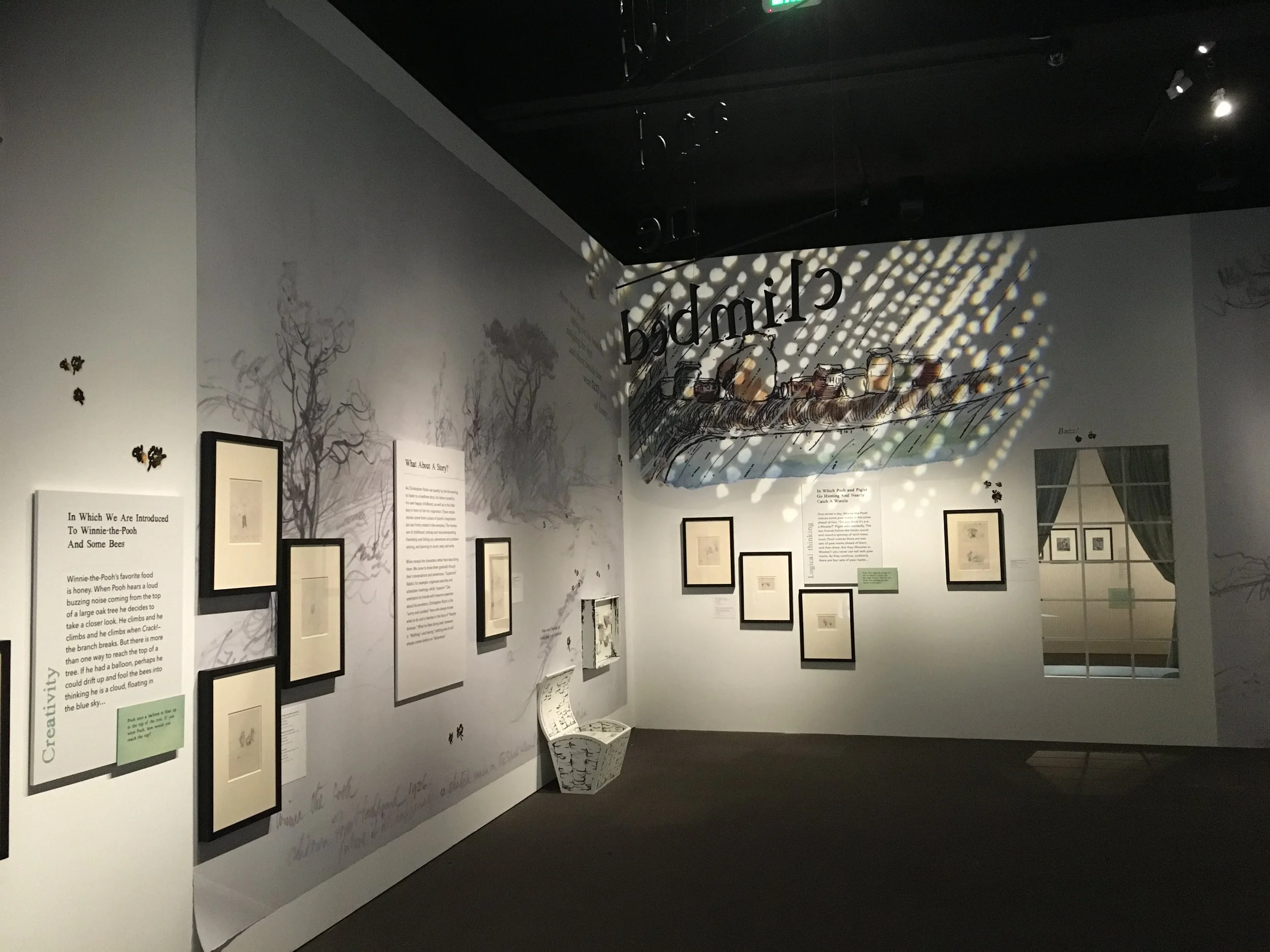
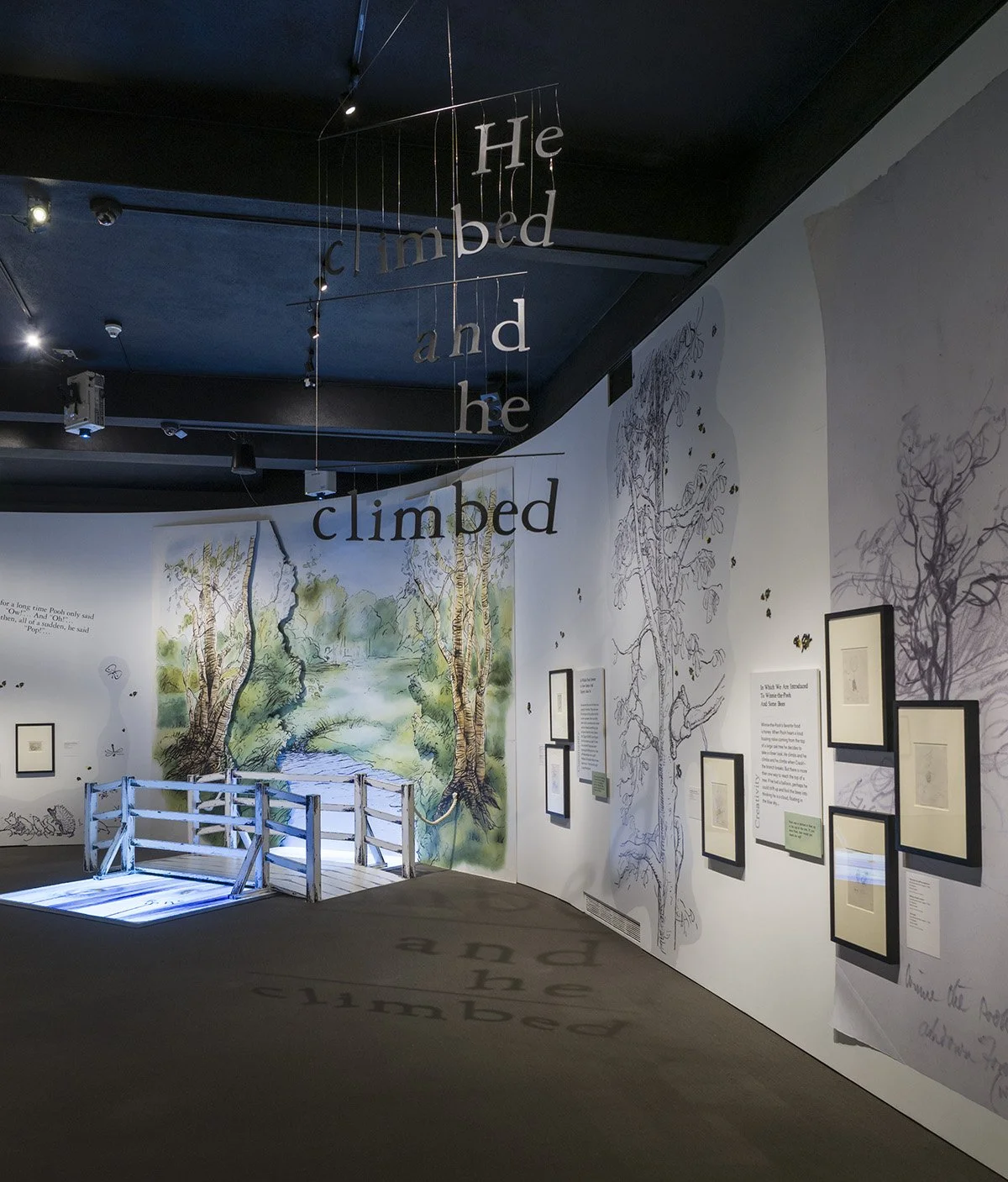
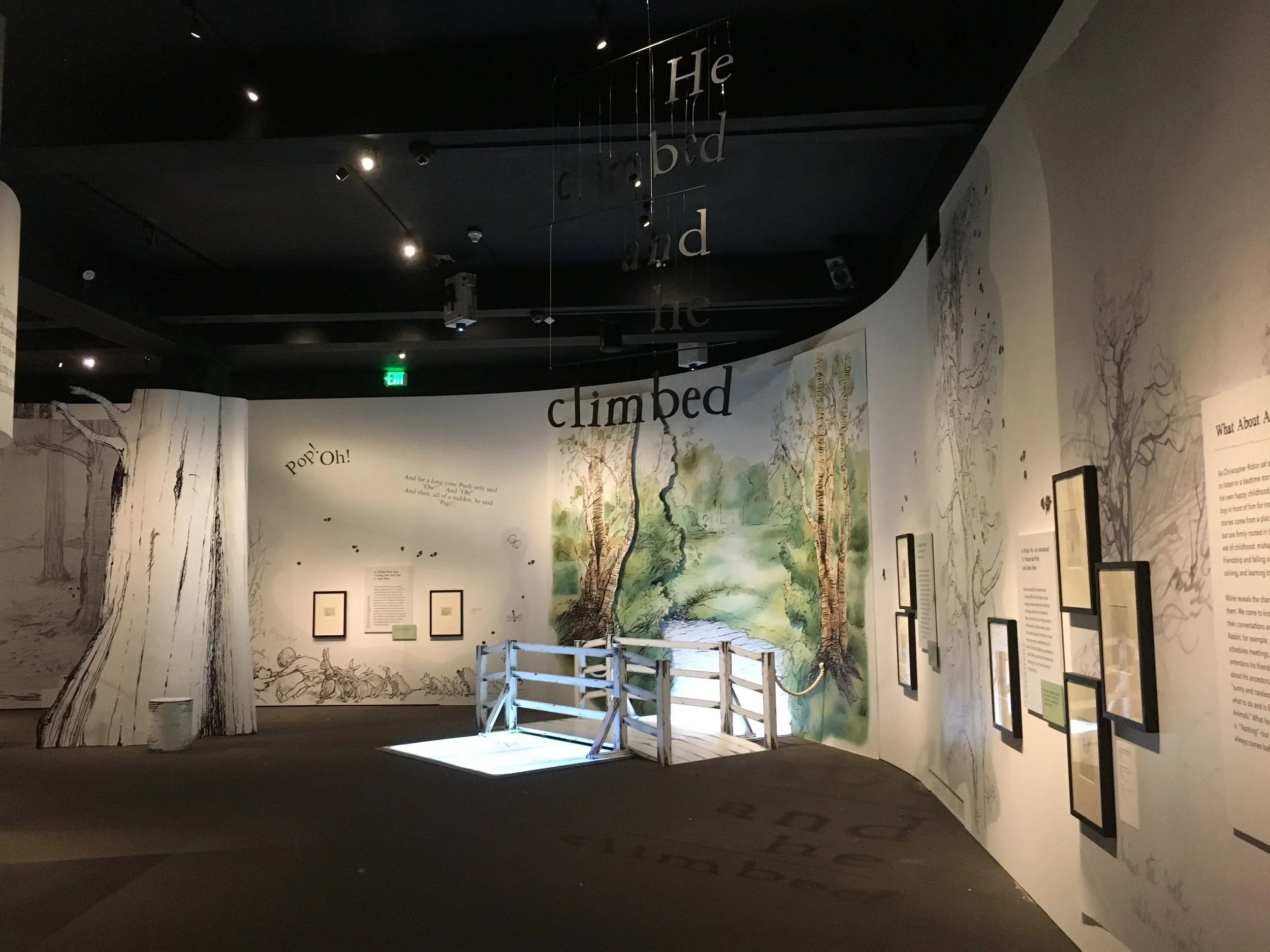
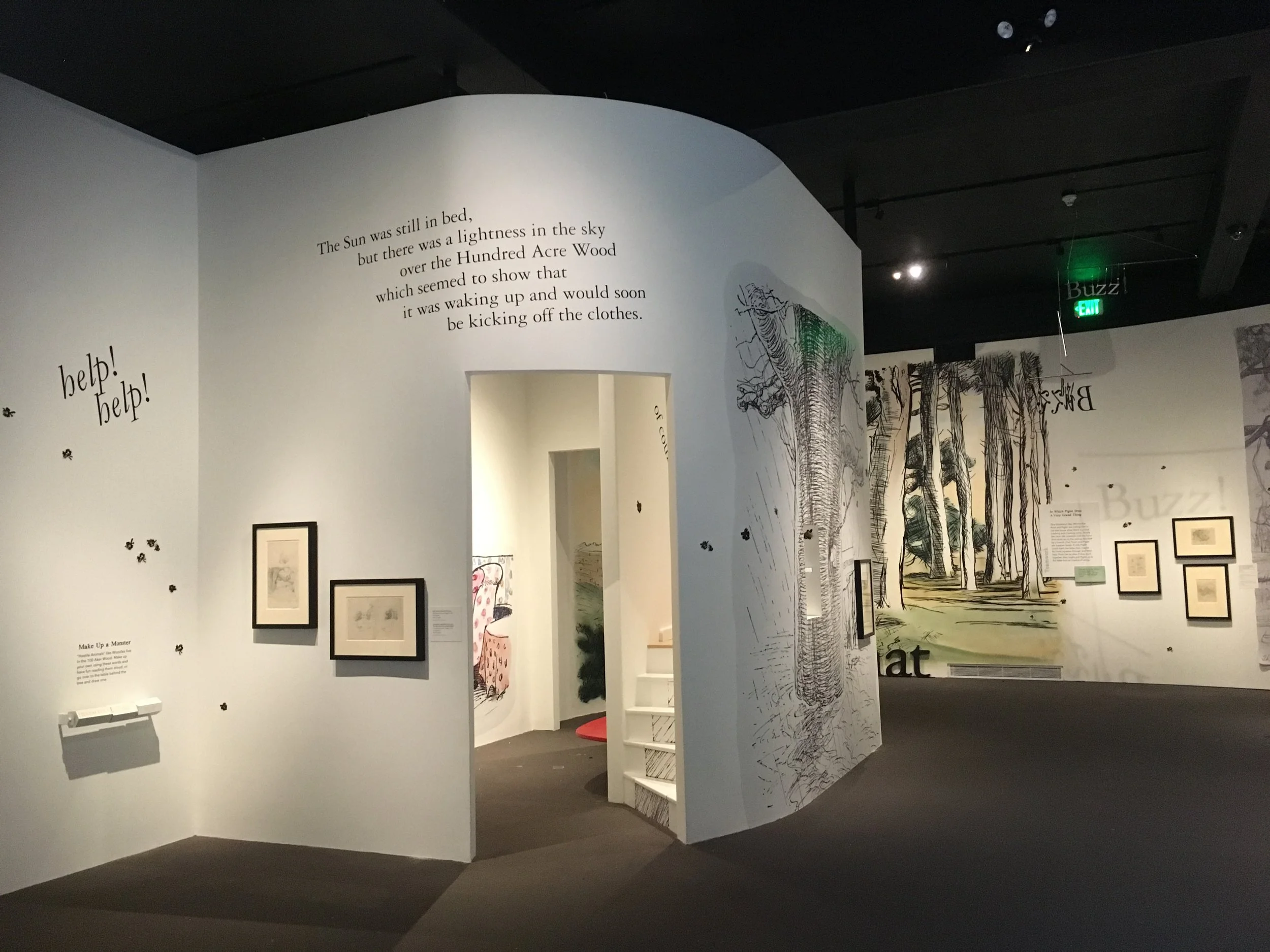
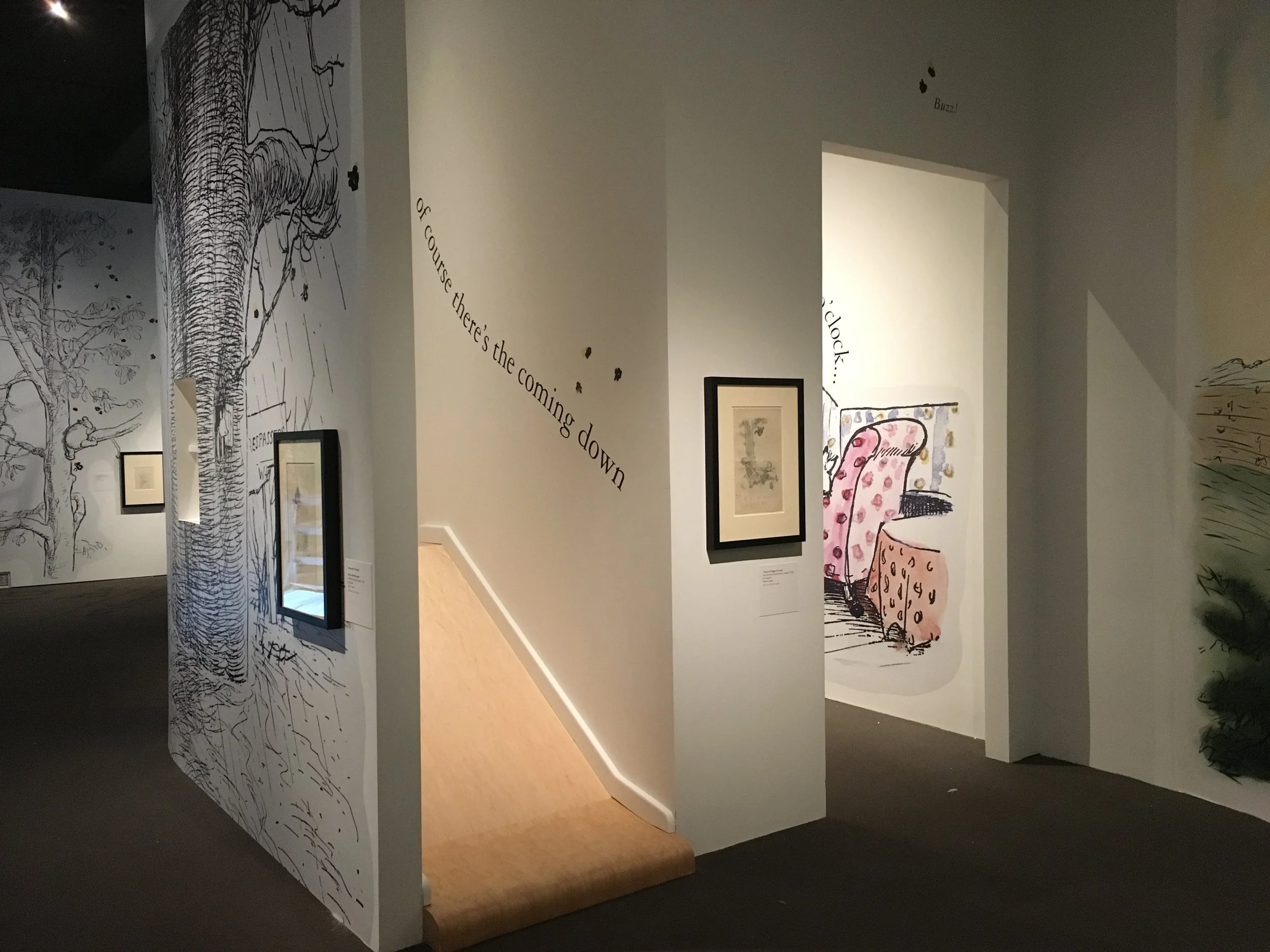
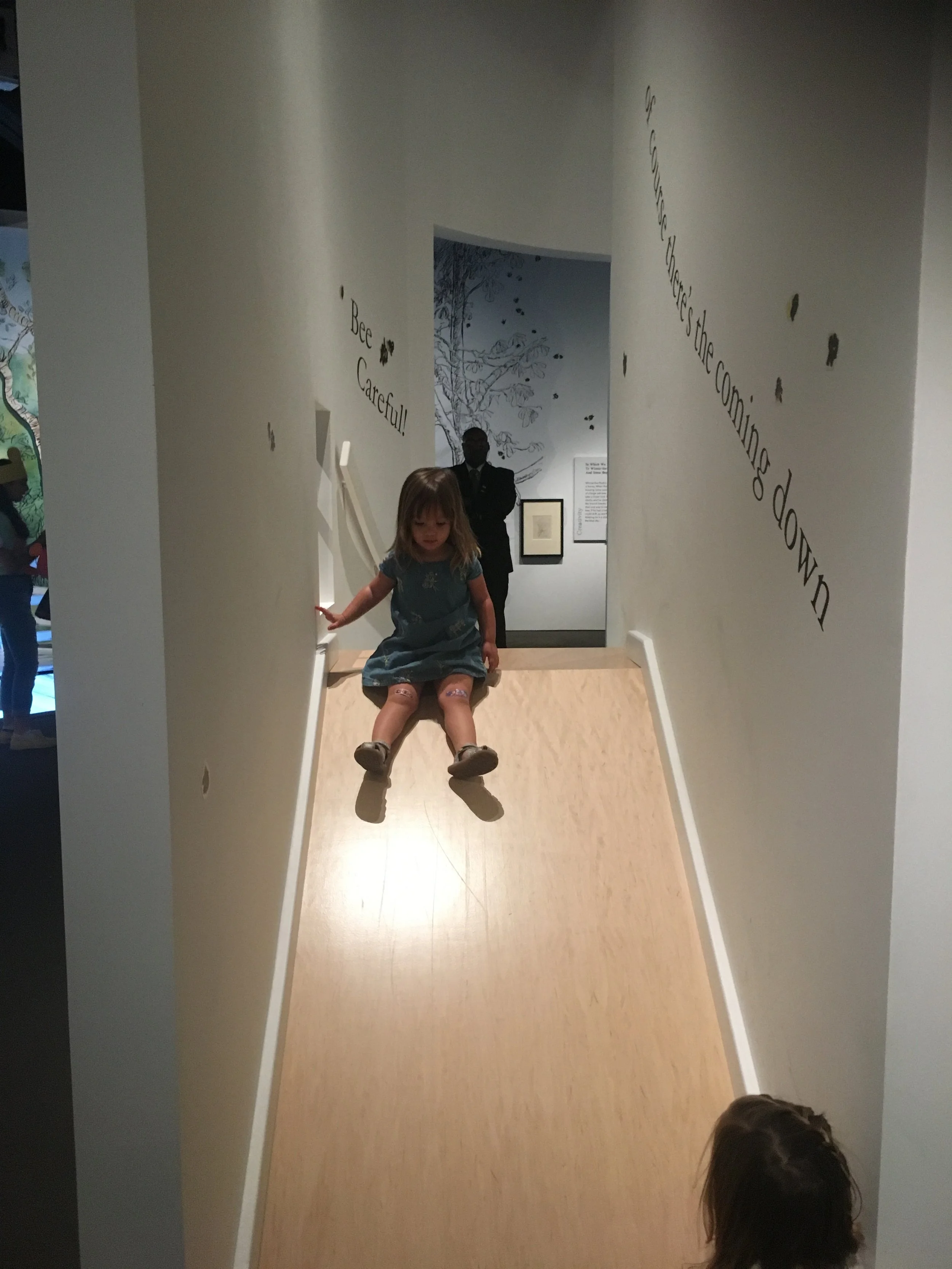
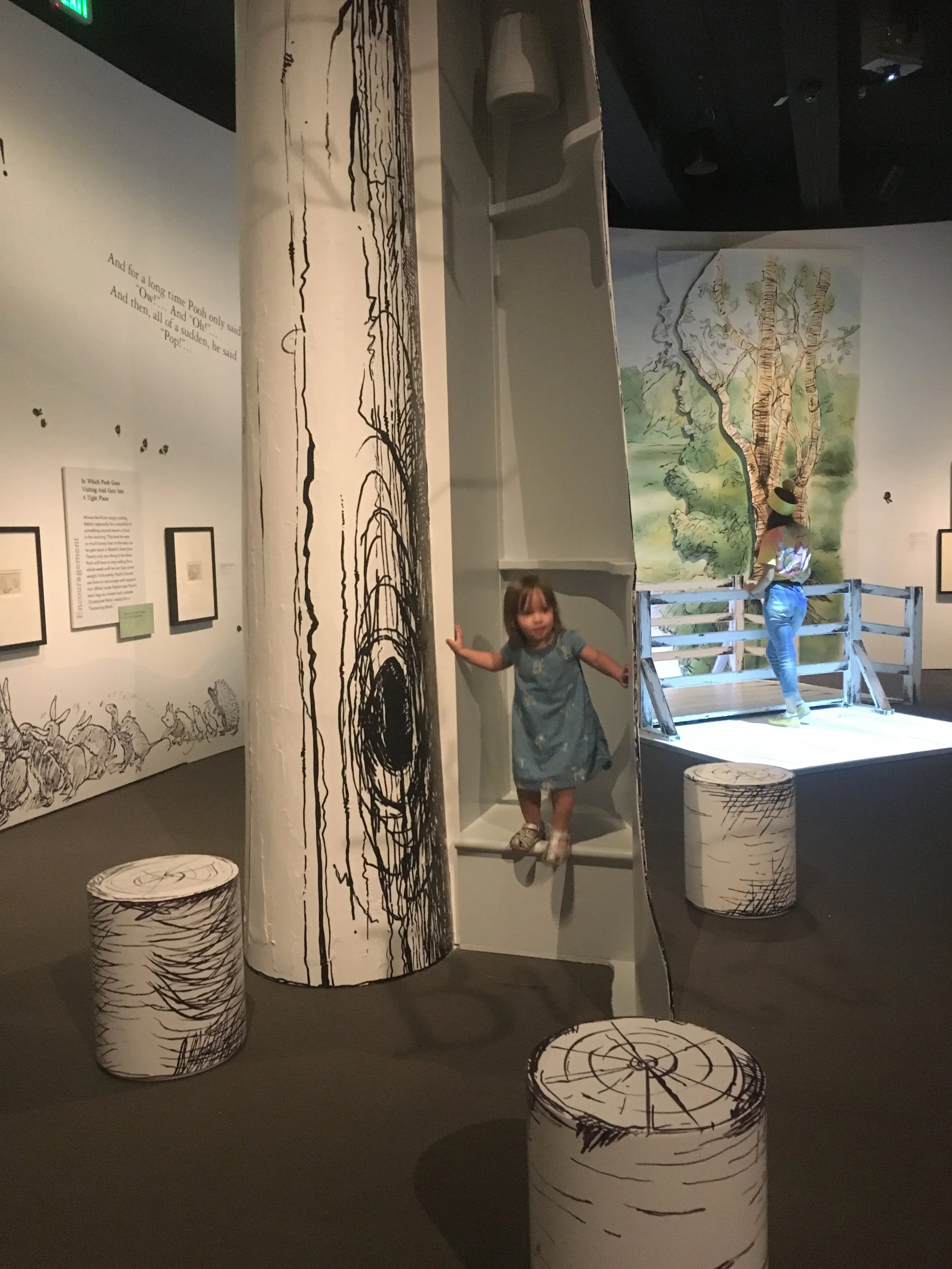
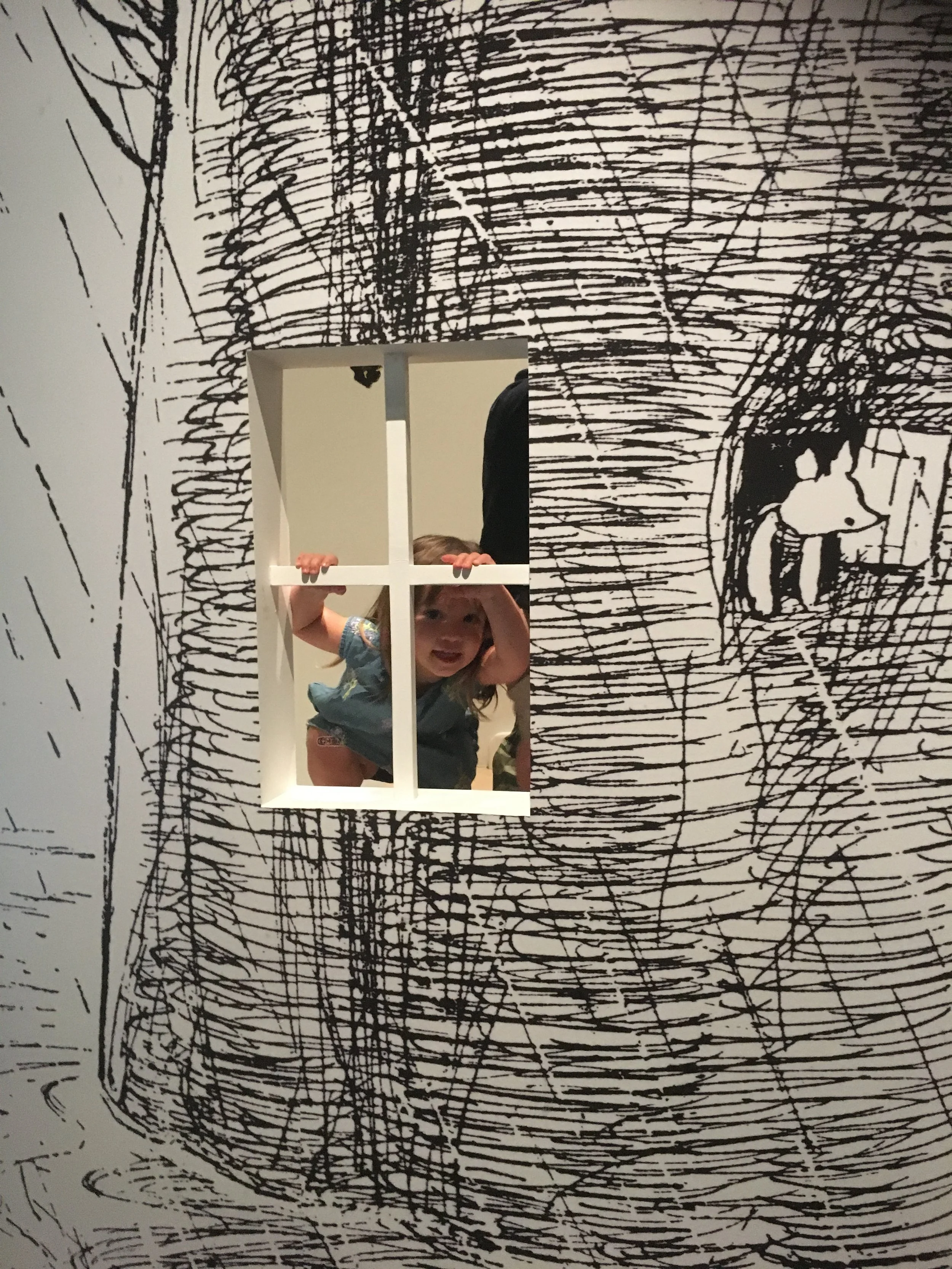
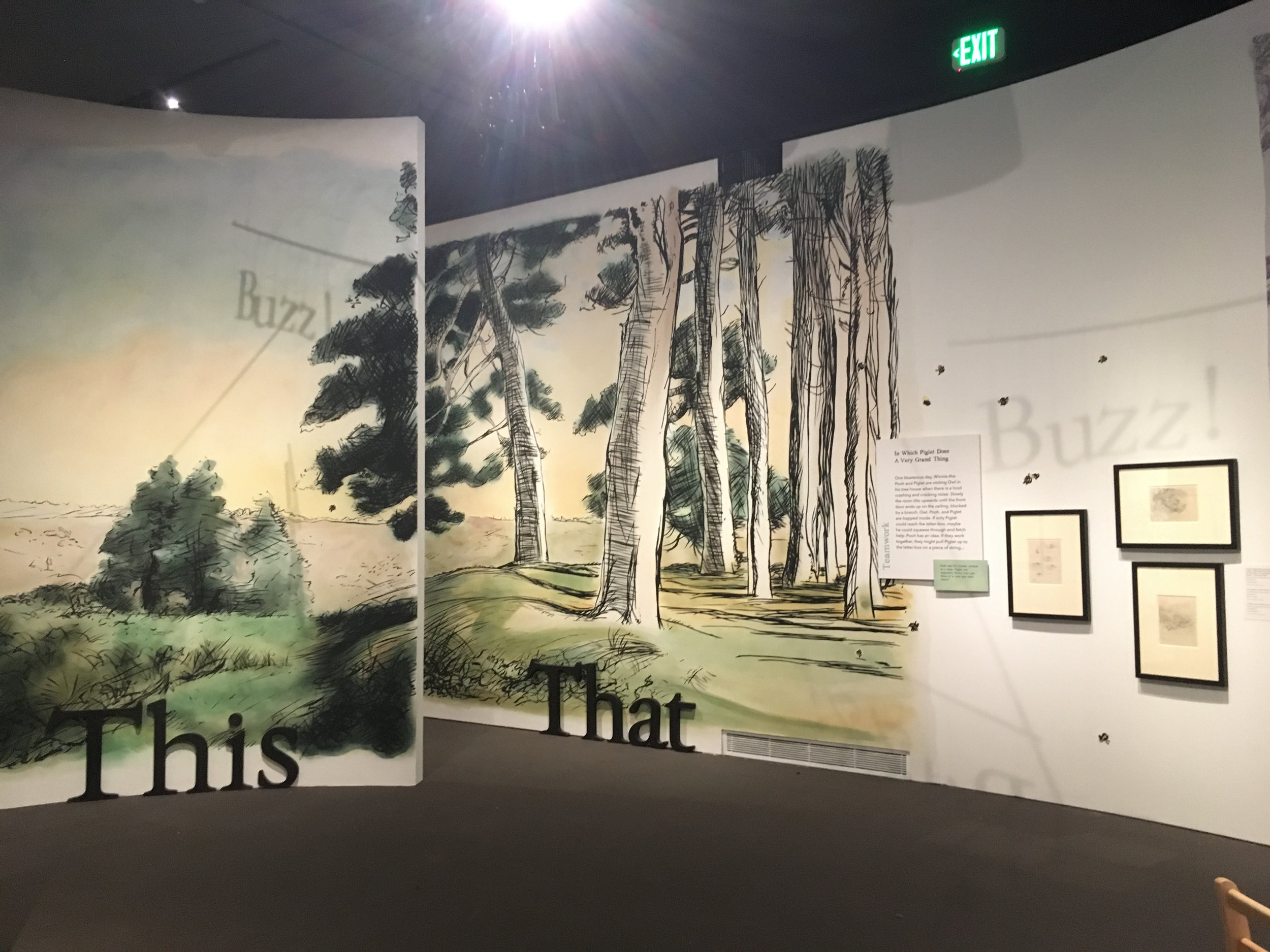
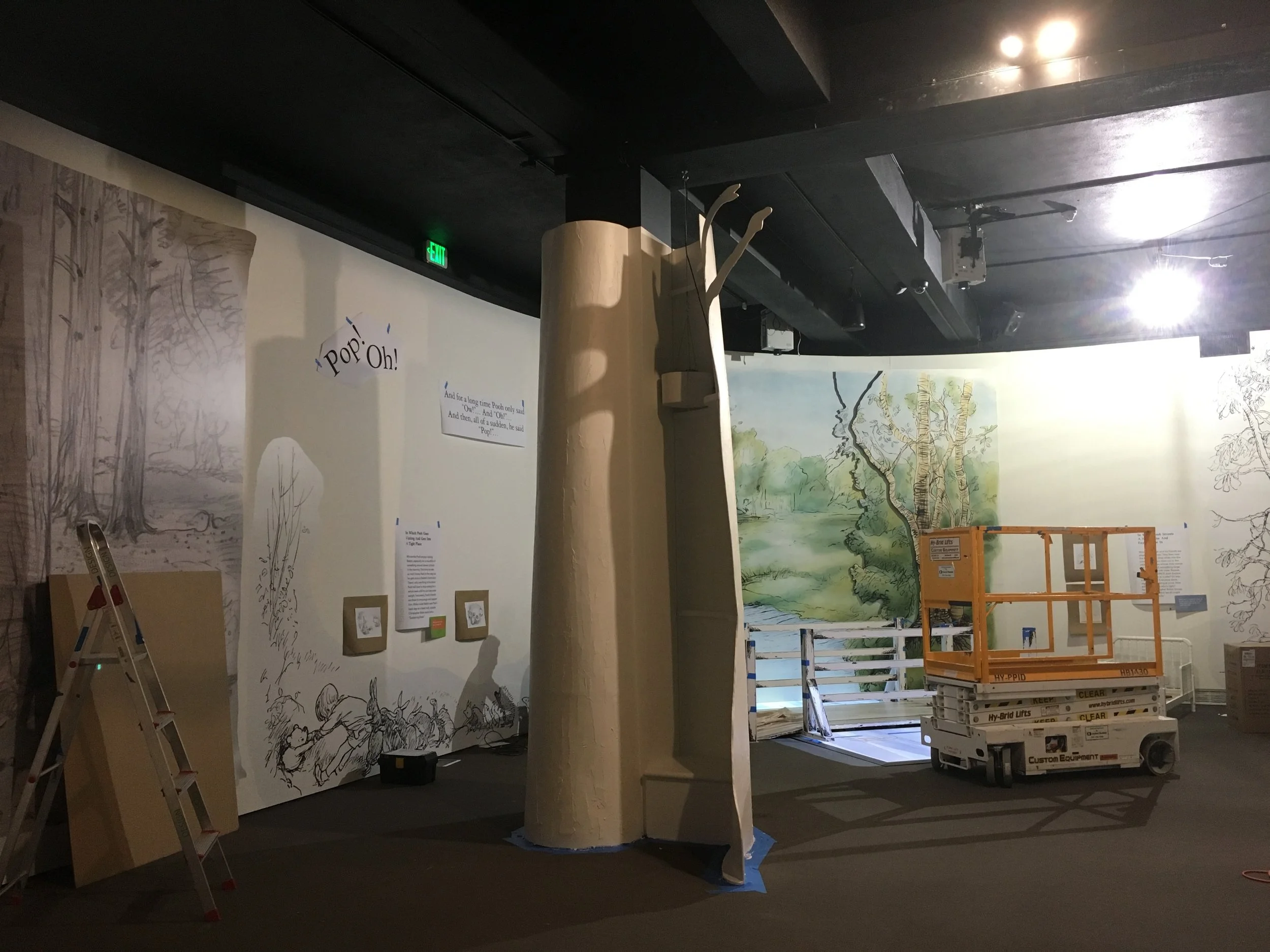
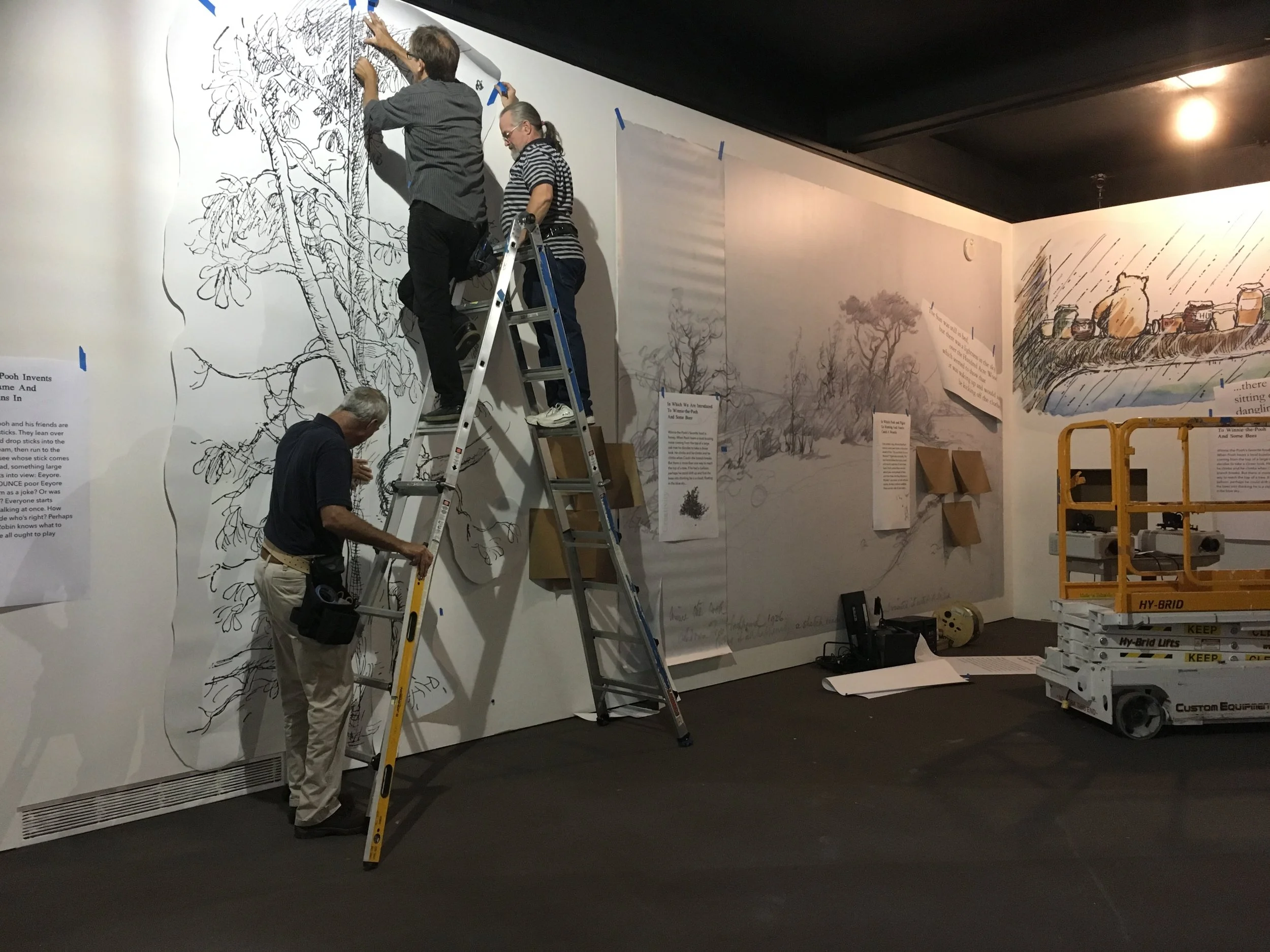
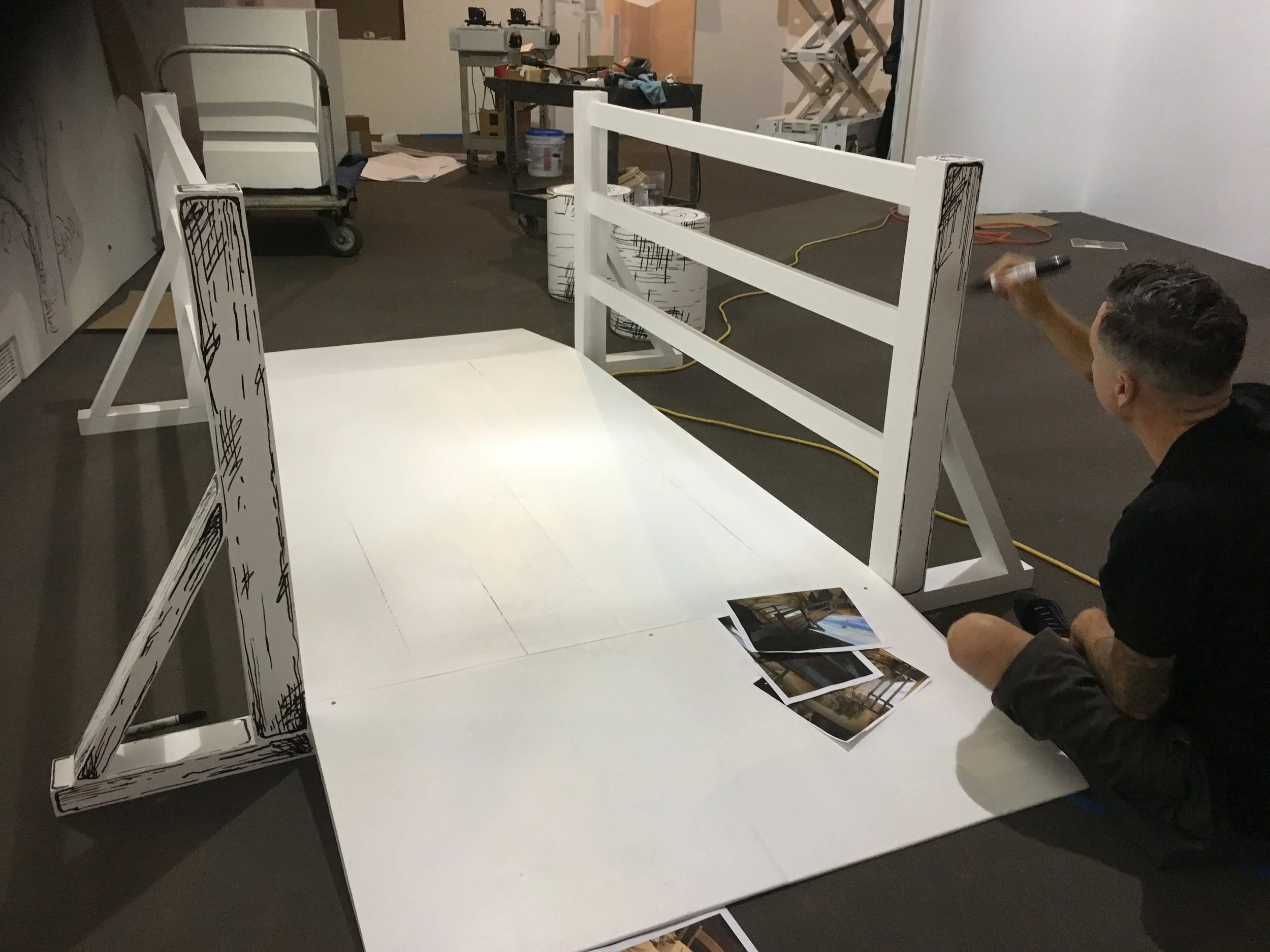
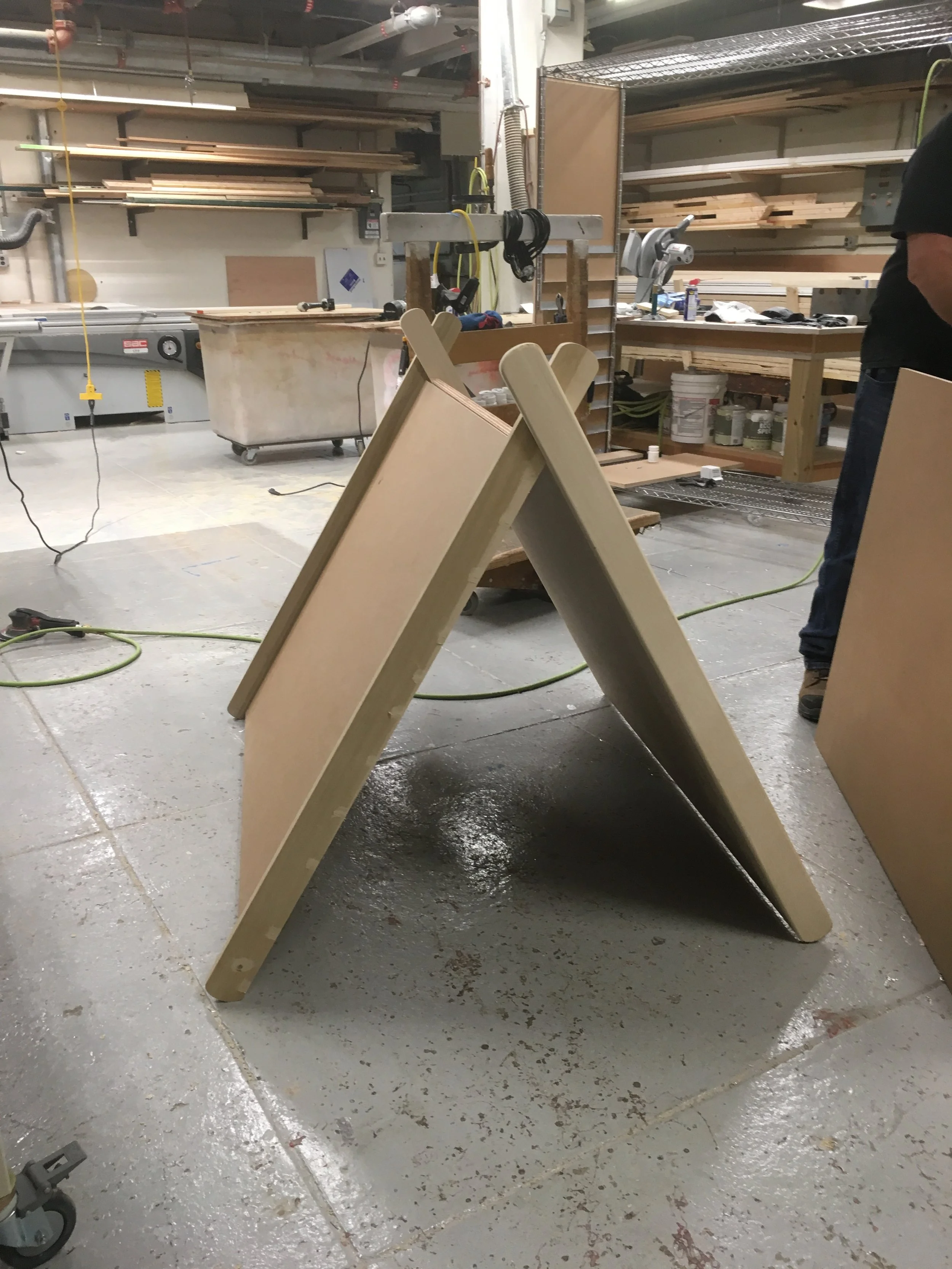
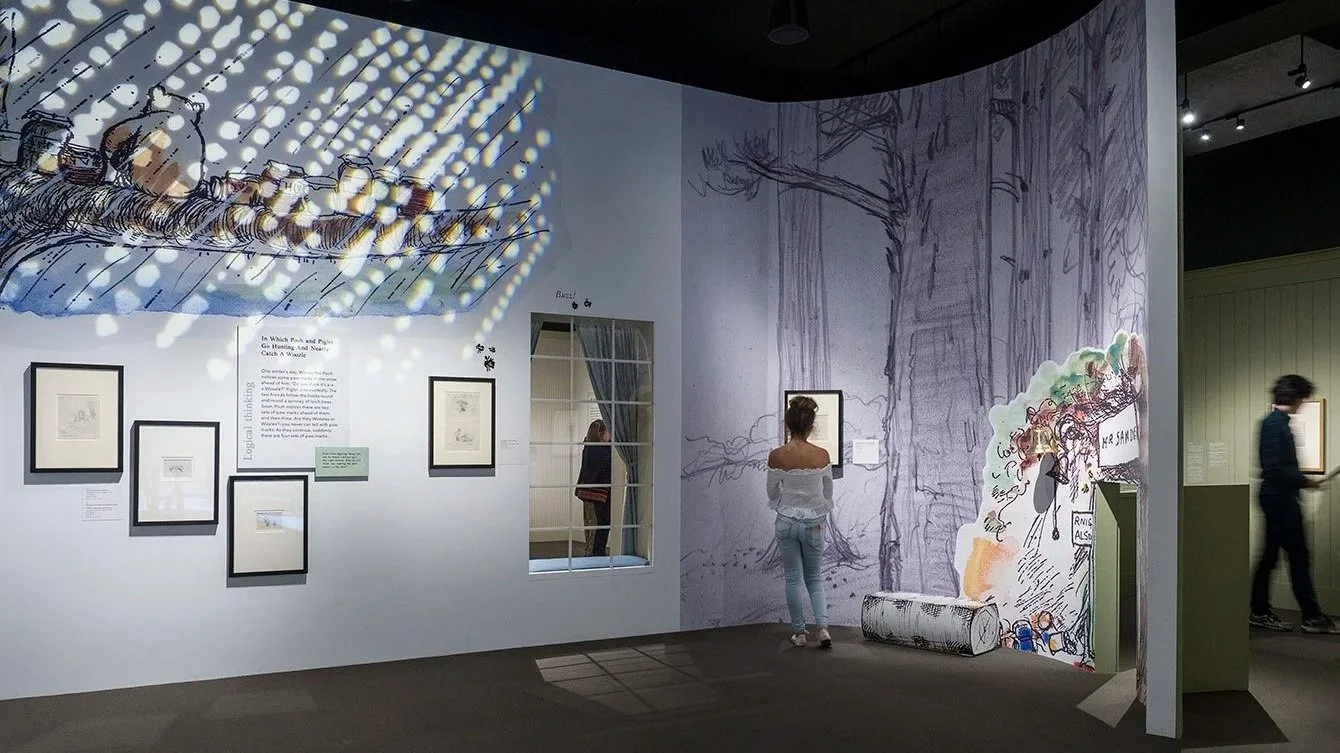
Visitors could then choose to enter through a child-sized re-creation of Pooh's front door into a fully immersive storybook environment: theatrical lighting, projections, hanging word mobiles, full-scale wall graphics, interactive puzzles, a life-size bridge and trees, a drawing table, and a carved-out interior for Pooh's house, complete with a slide. Within this playful setting, original drawings were displayed in lively, thematically organized clusters, anchored by large text panels that let the works hold their own against the immersive backdrop.
From the storybook world, a serpentine gallery wall transitioned visitors into the art of book design—a theme that carried through the remainder of the exhibition.