Philip Guston: Now
Museum of Fine Arts, Boston, 2002
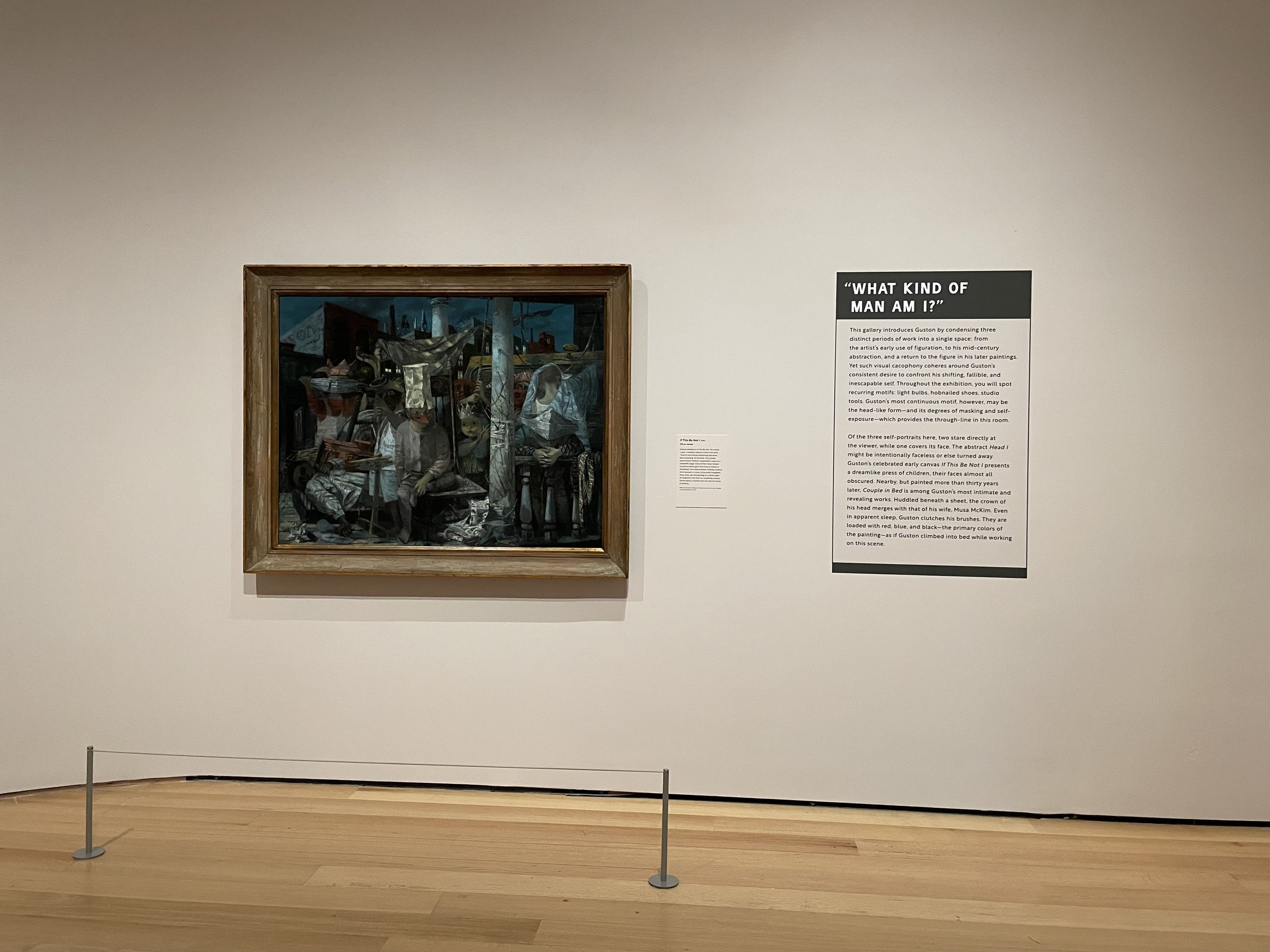
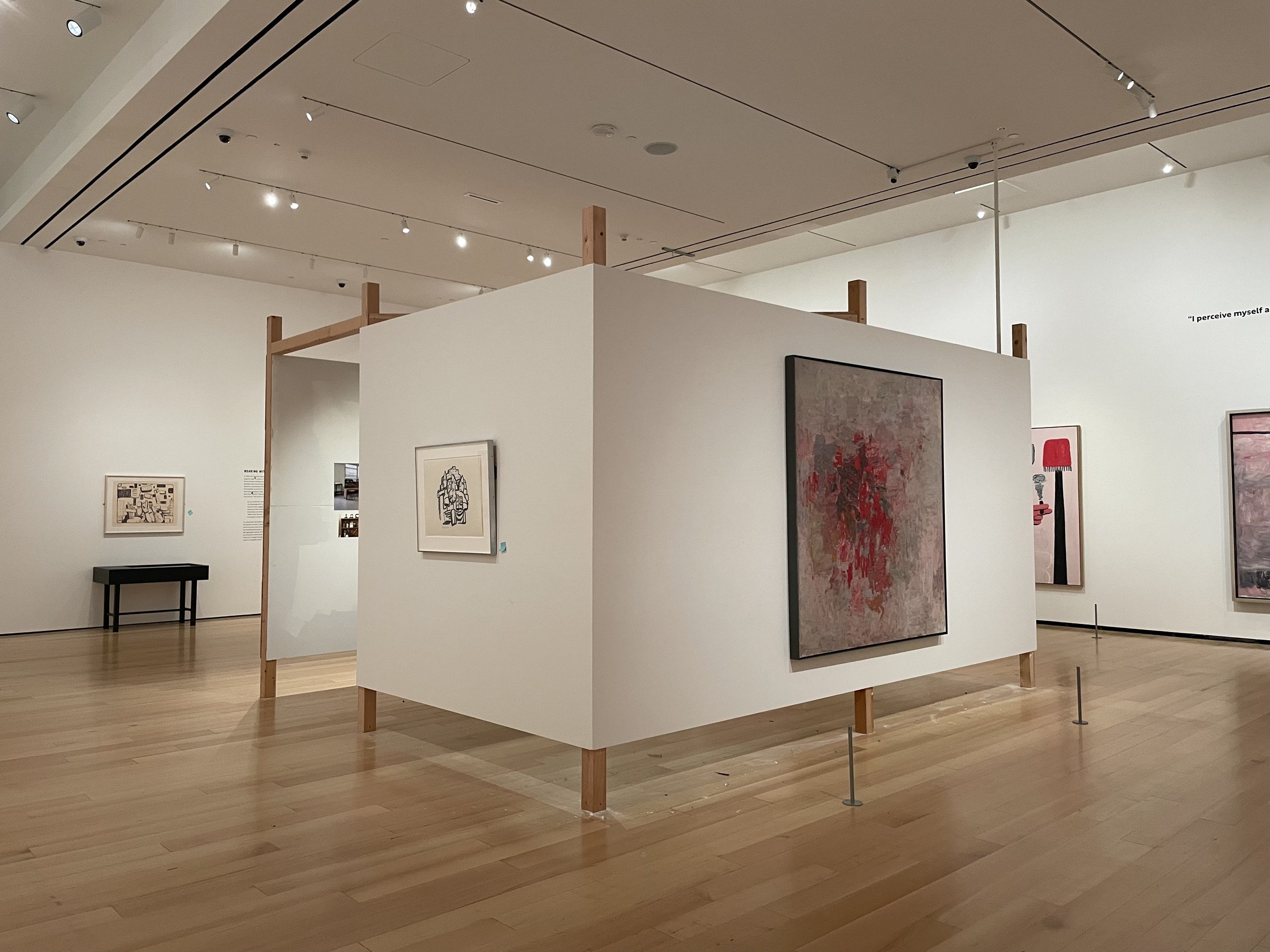
I served as Lead Exhibition Designer for this project, collaborating closely with a team of four curators and graphic designer Eben Haines. This exhibition explores Guston’s career, the stylistic periods of his work, and his own exploration of self.
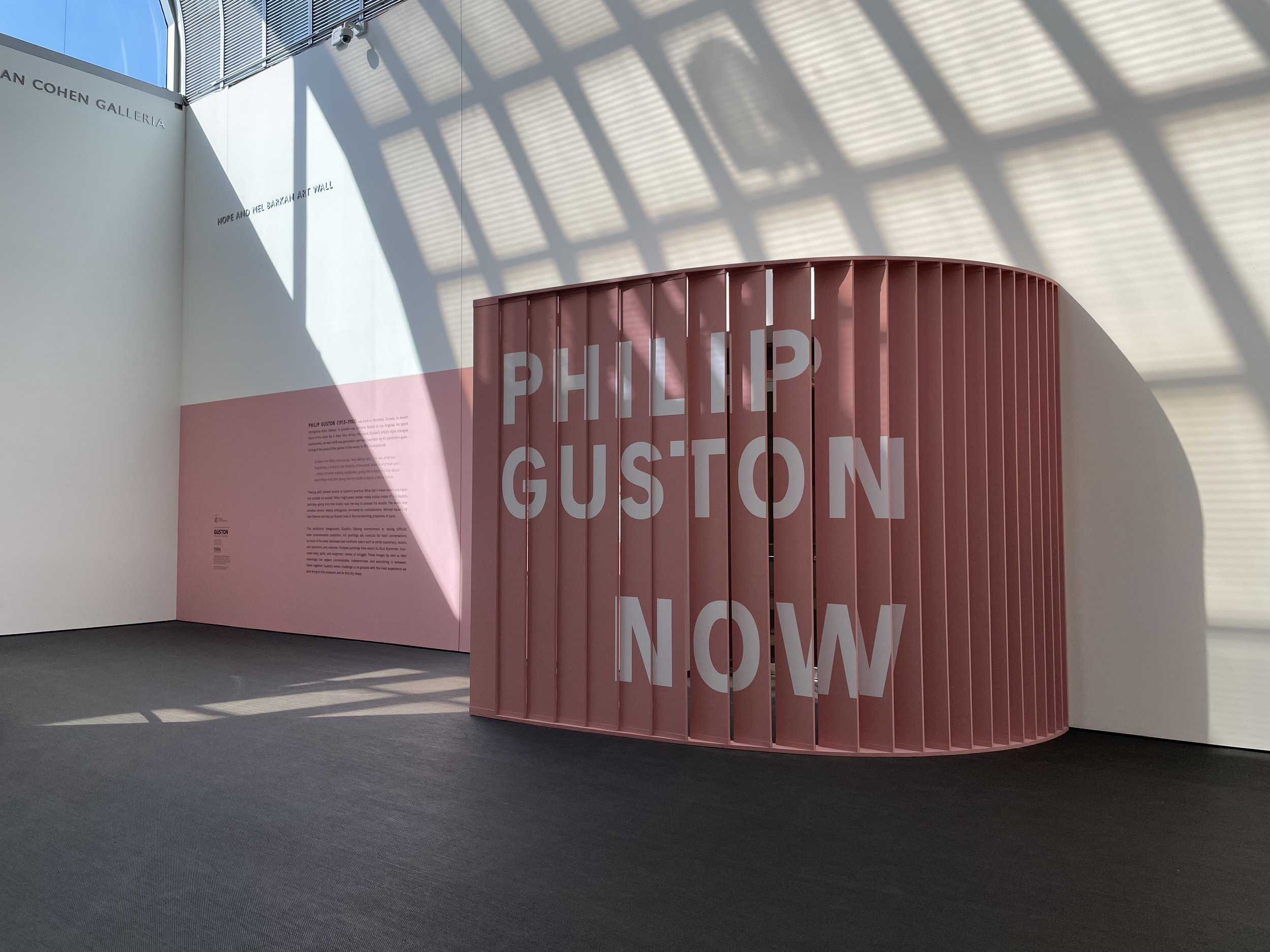
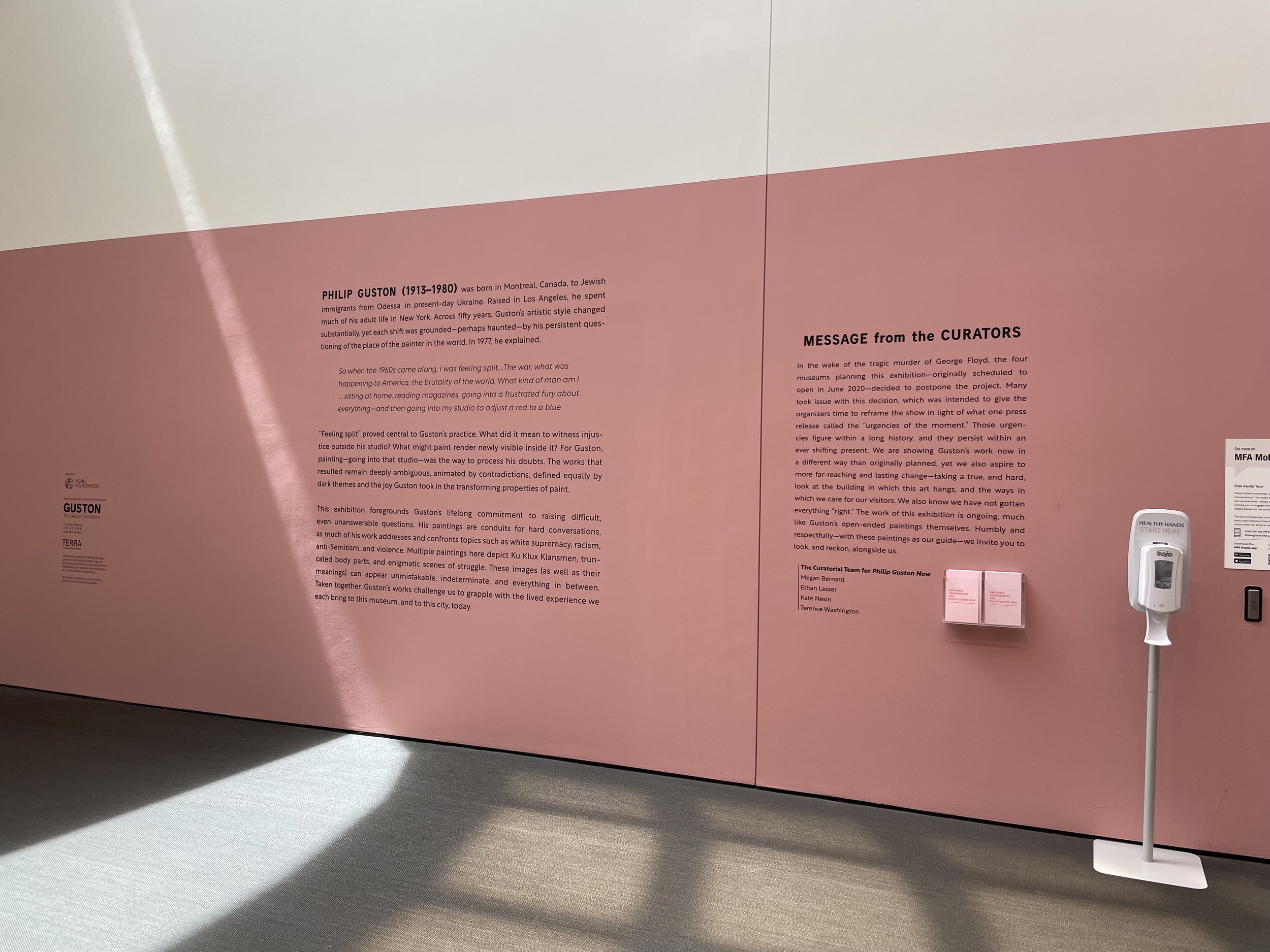
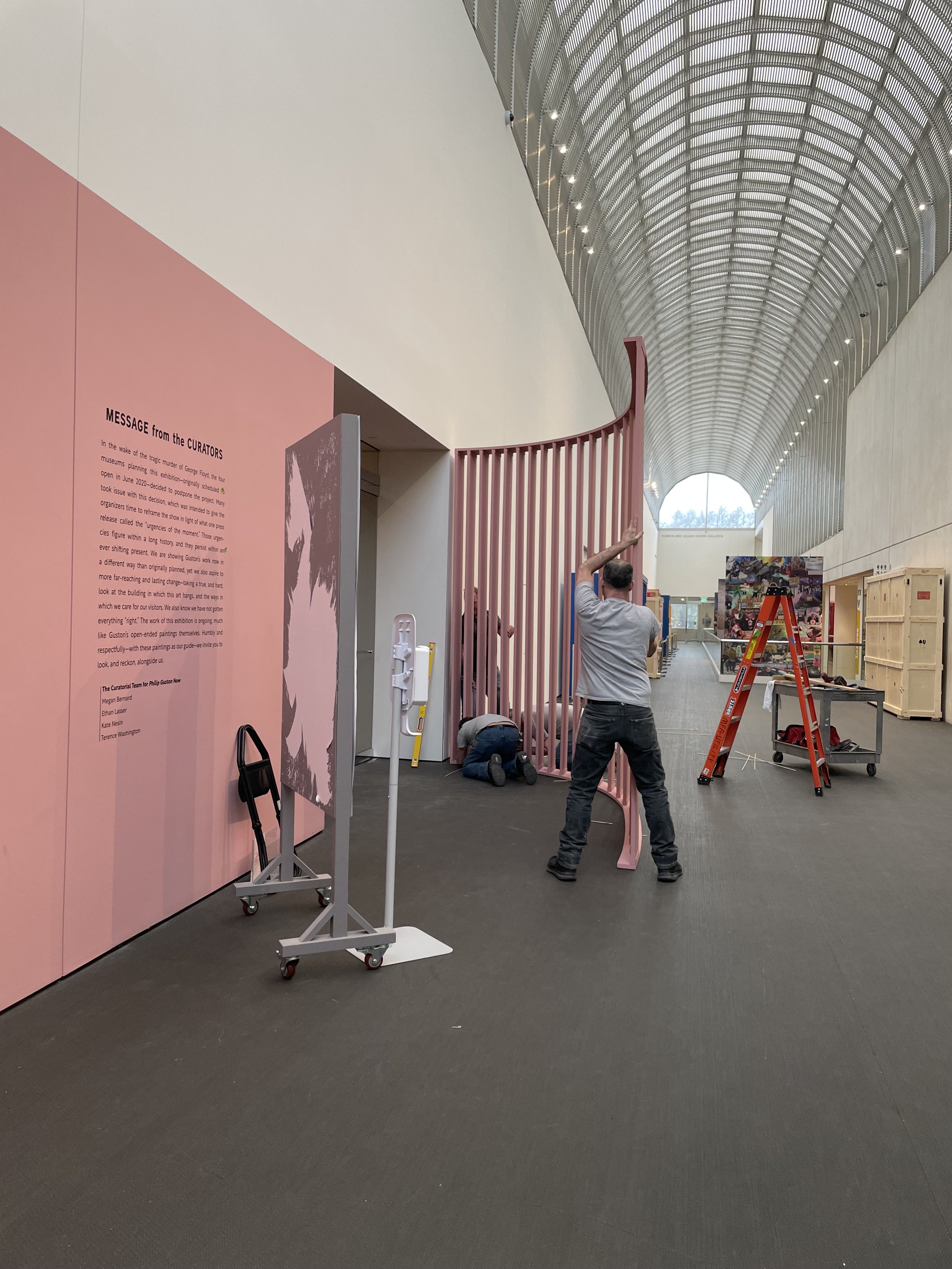
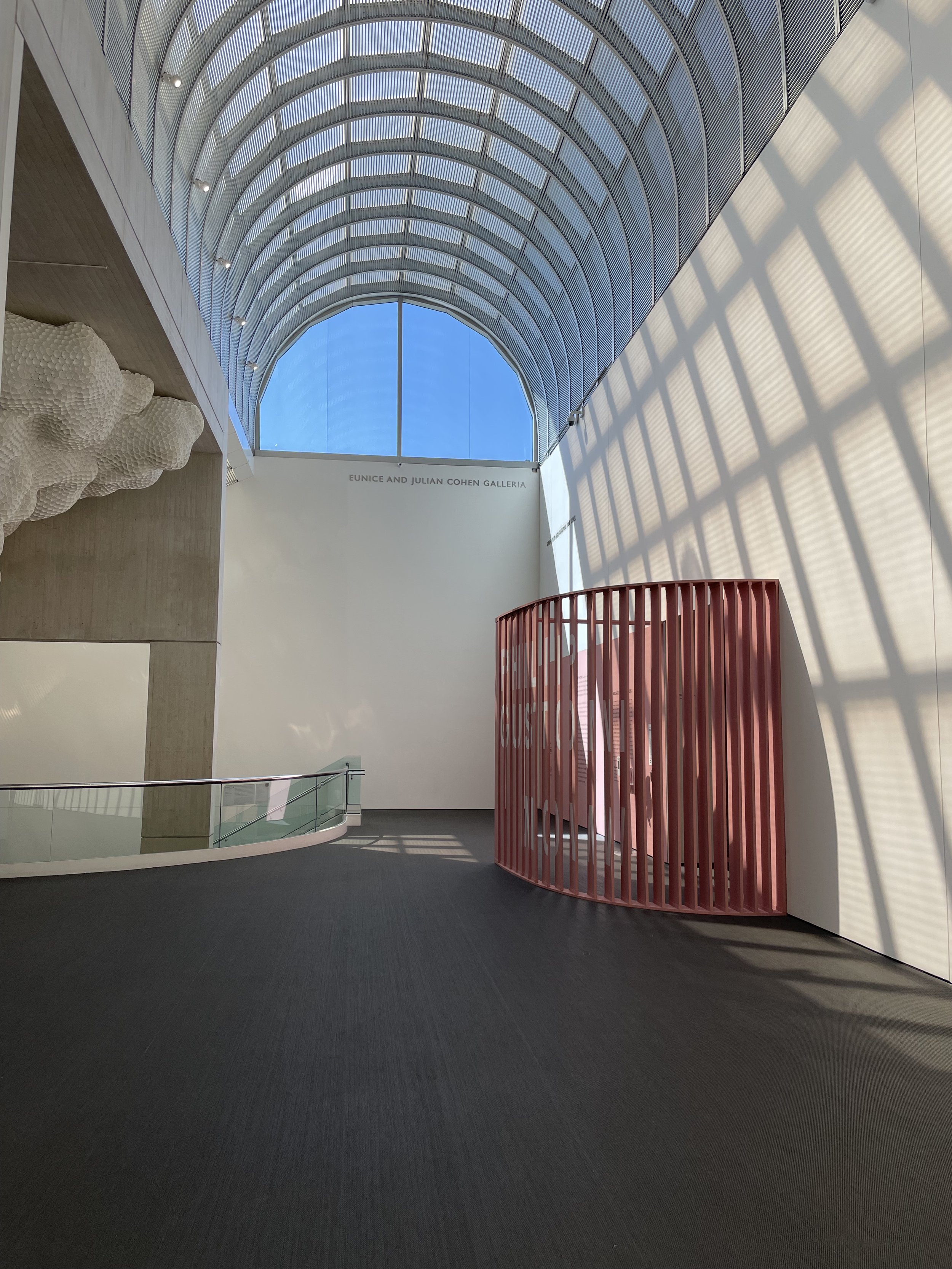
We built the curved slated entry wall outside of the exhibition as a way to create a transition for the visitor into the show that wasn’t provided by the existing architecture. Through the use of wall color and graphics this also became an inviting canvas for the title and introductory text. The language of the slats integrated with the vaulted roof in the surrounding architecture and also maintained a feeling of openness in a small space.
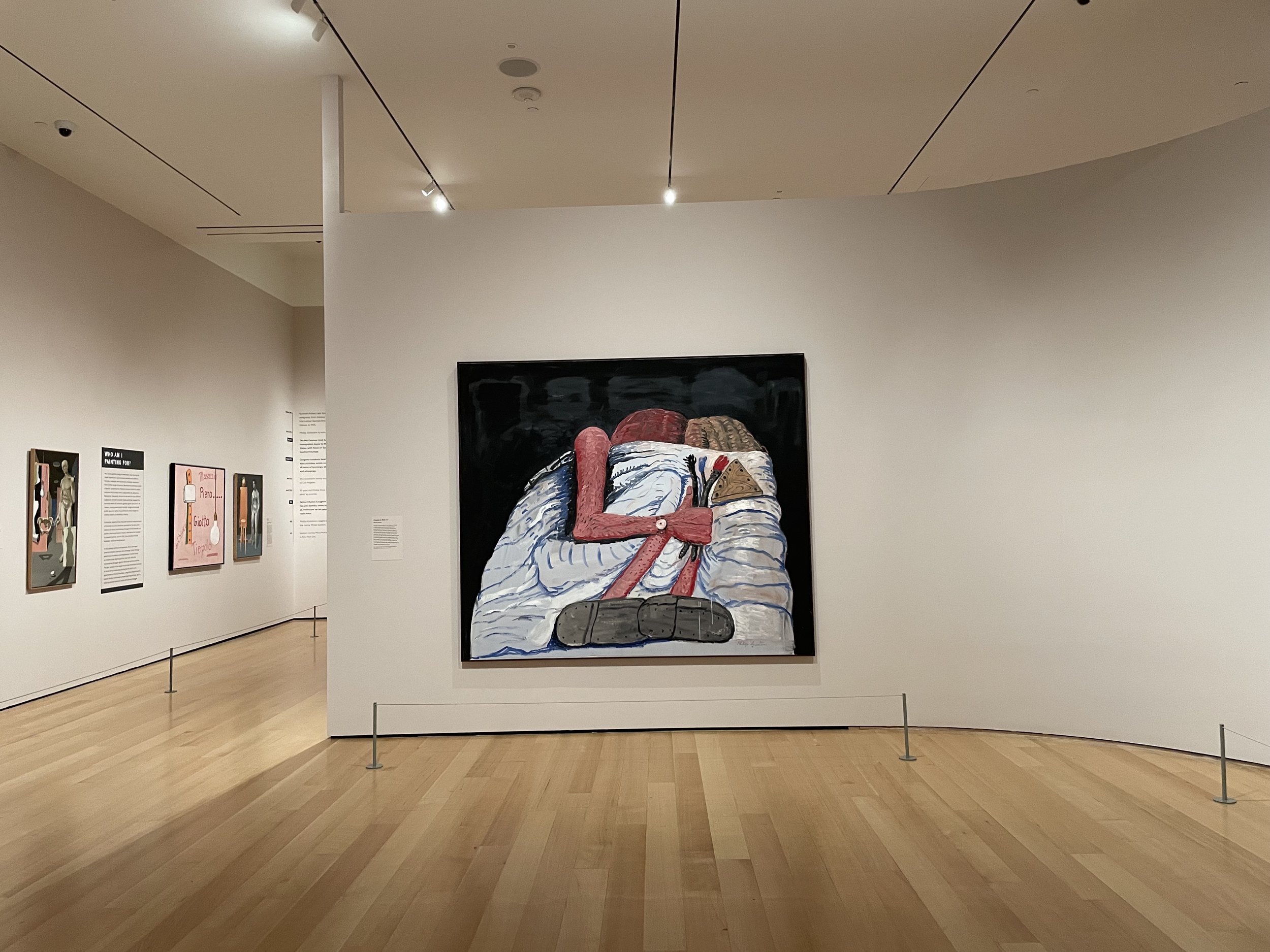
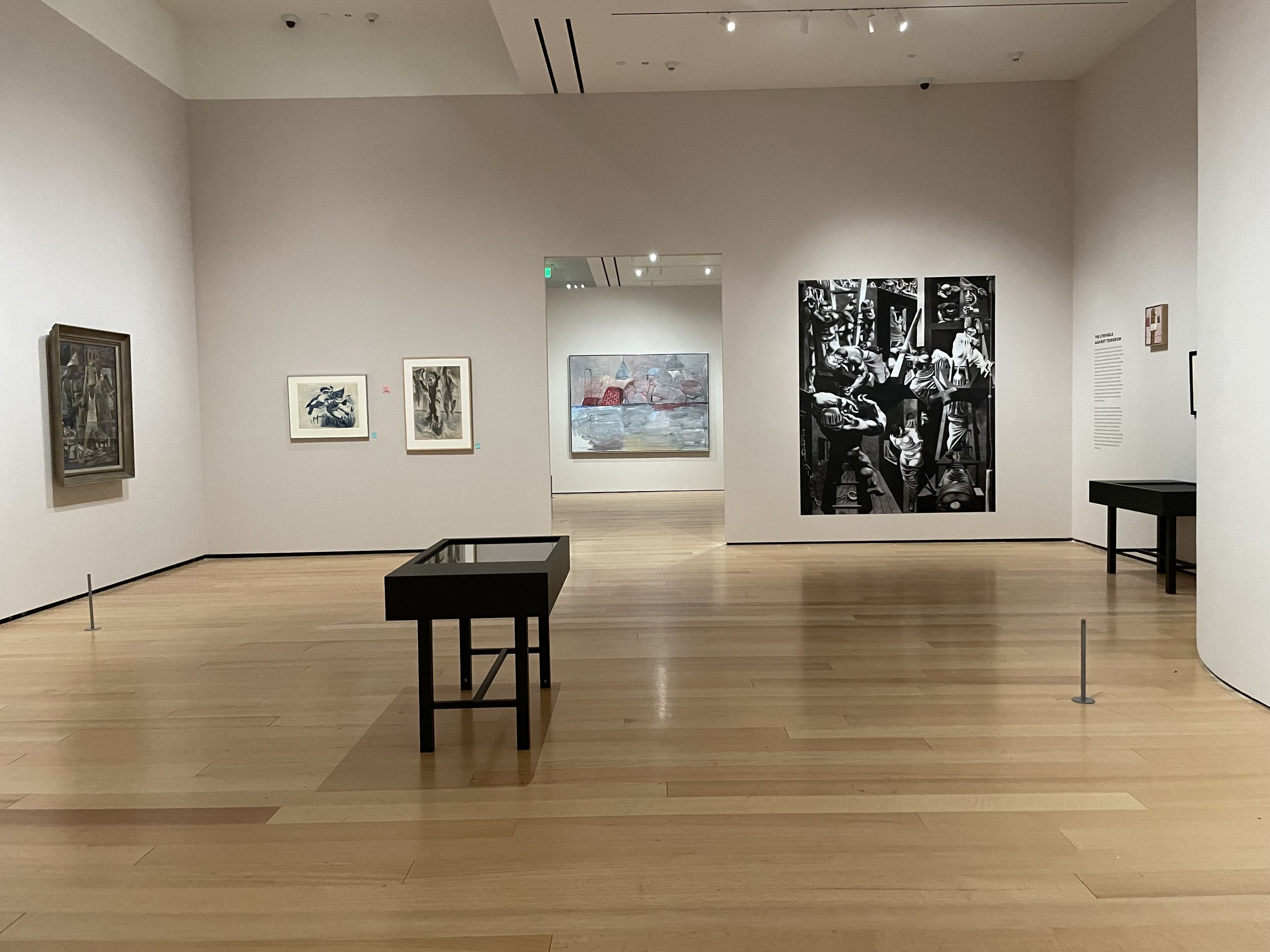
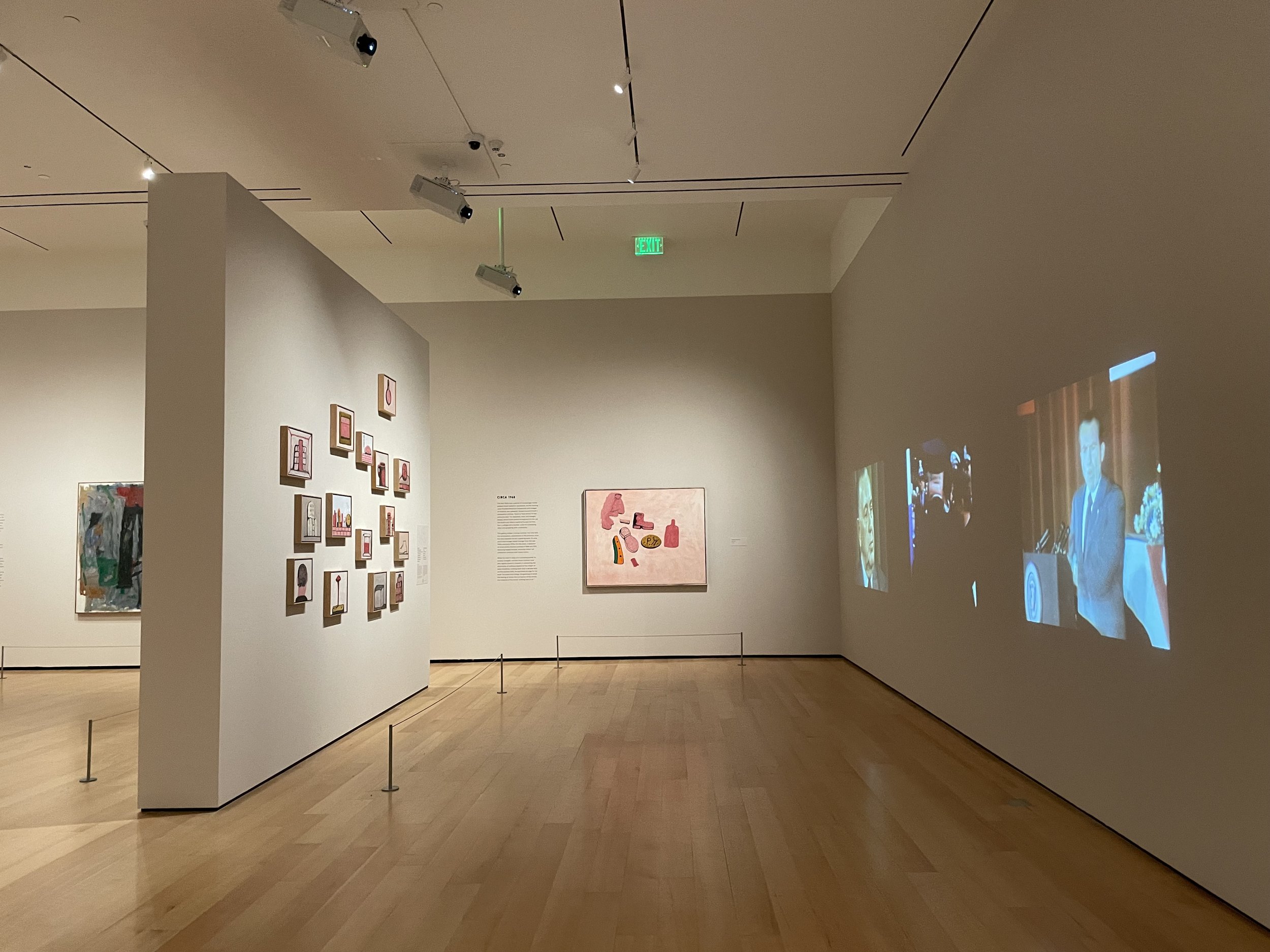
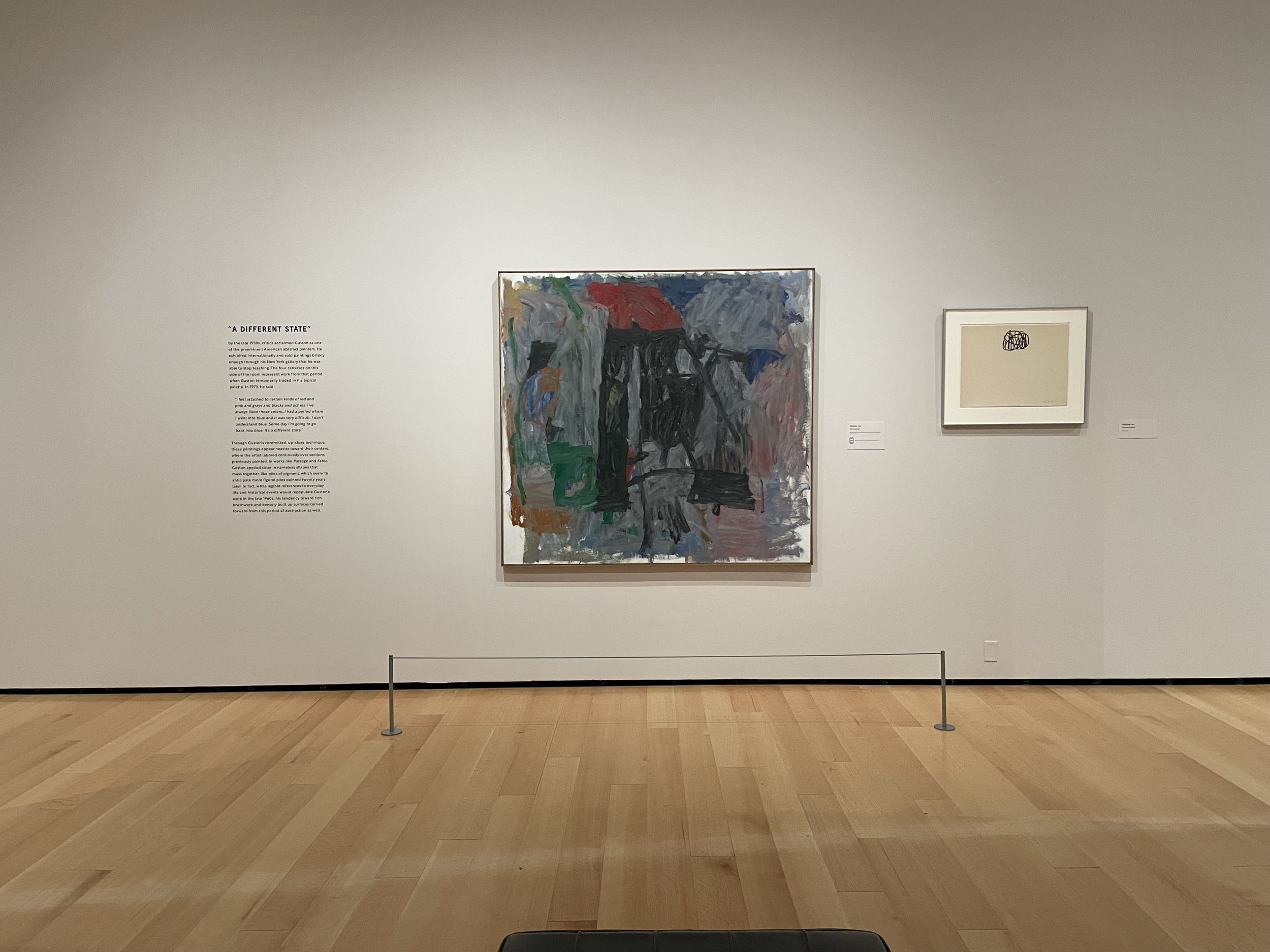
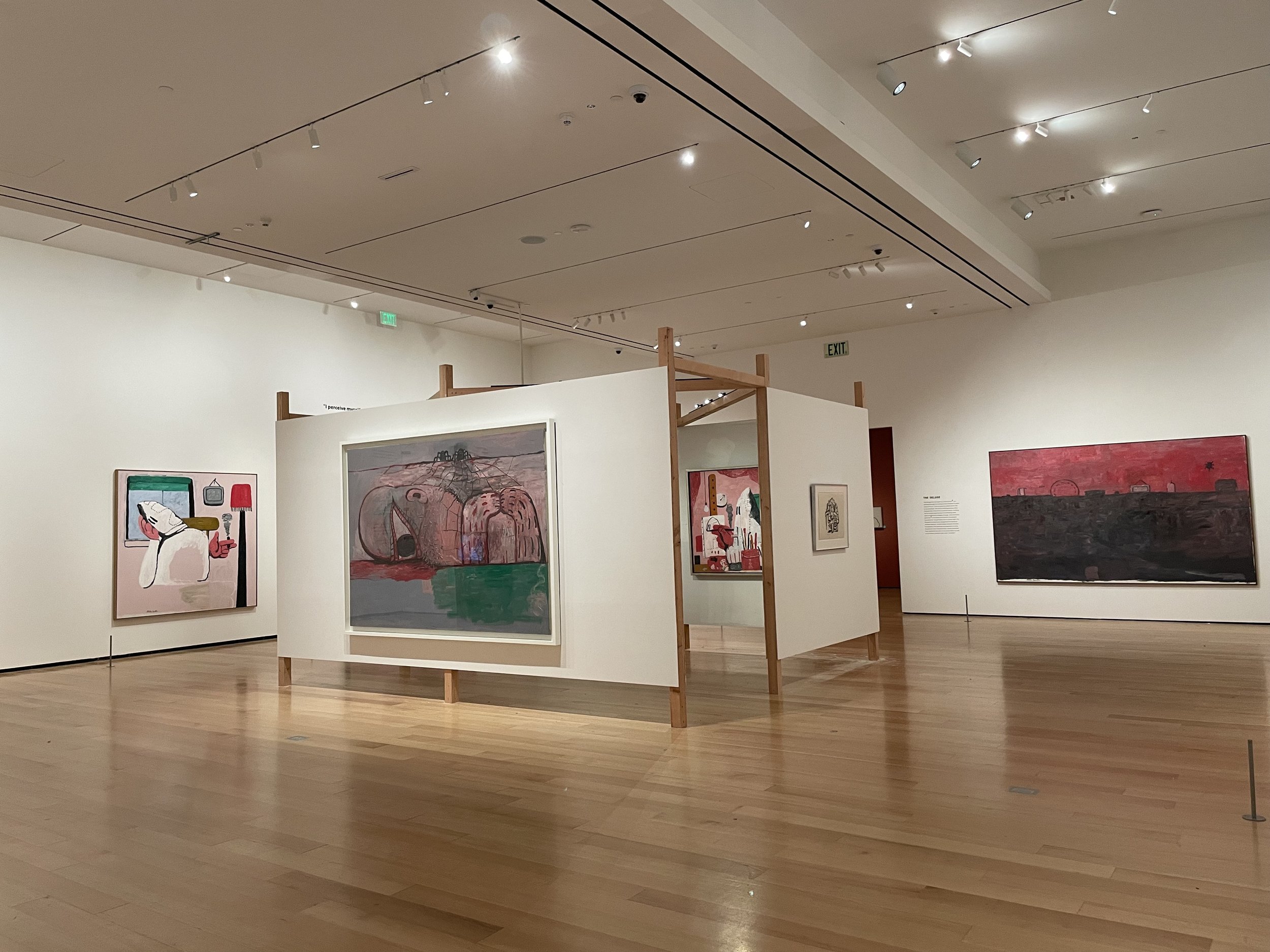
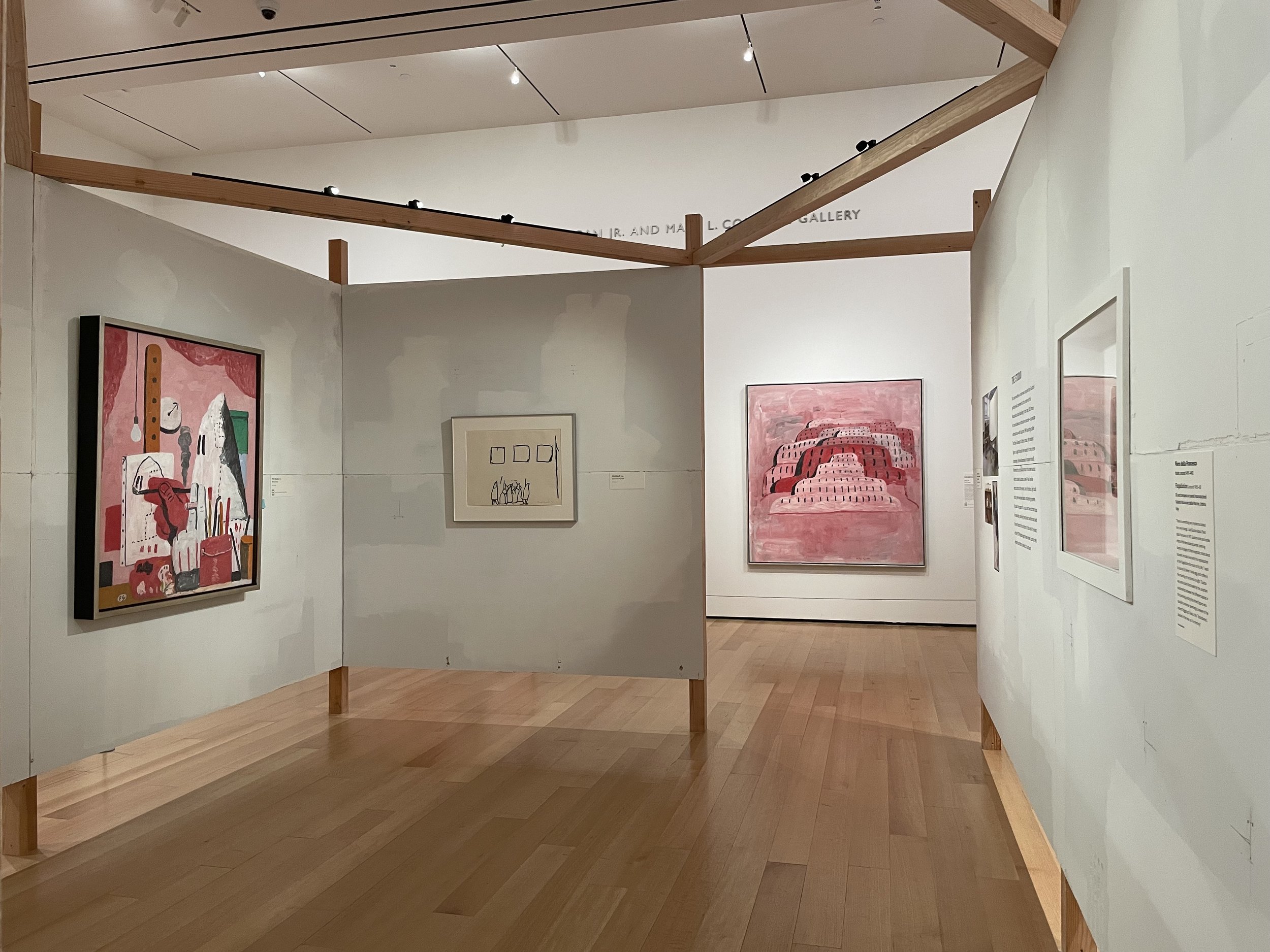
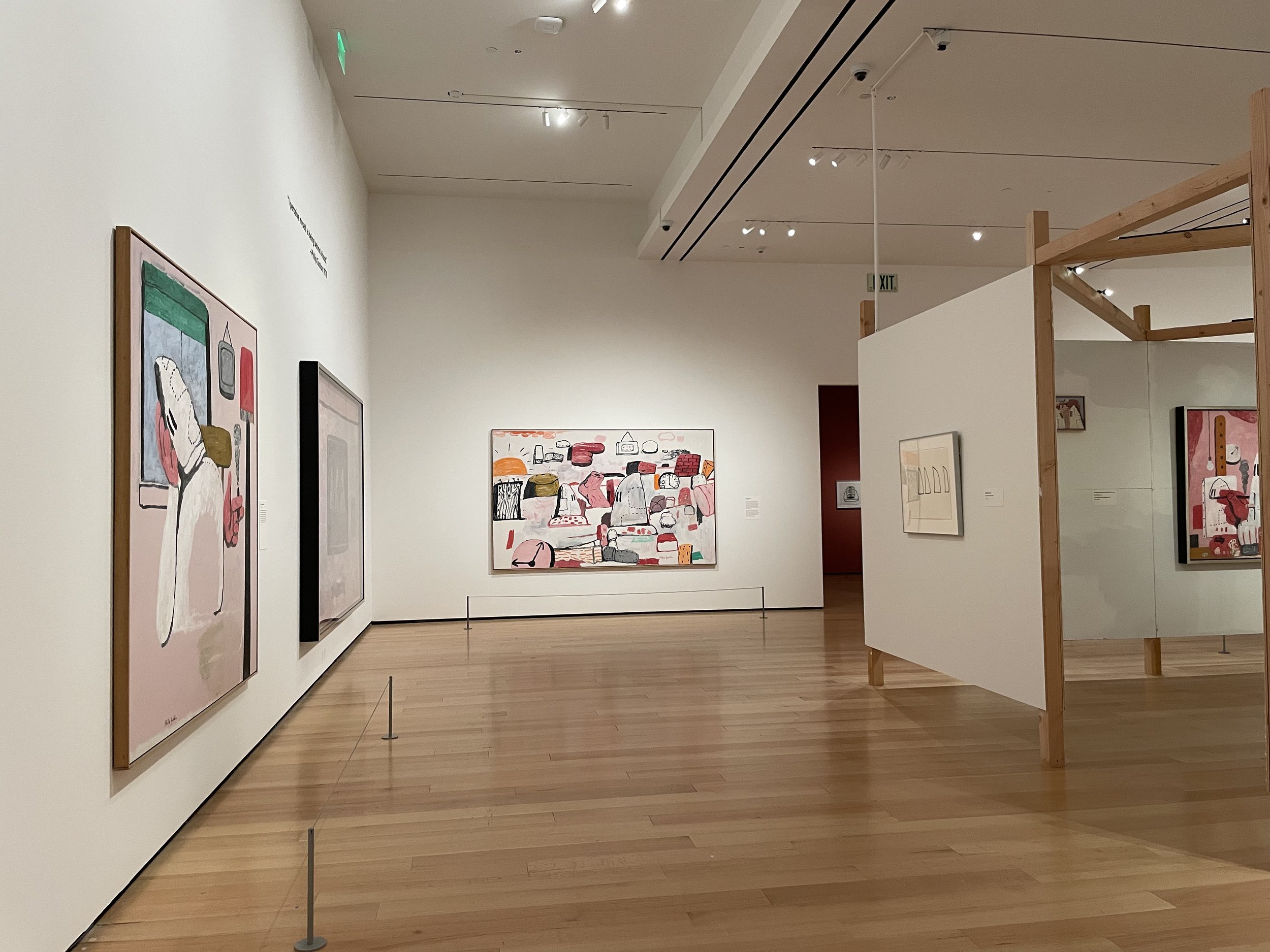
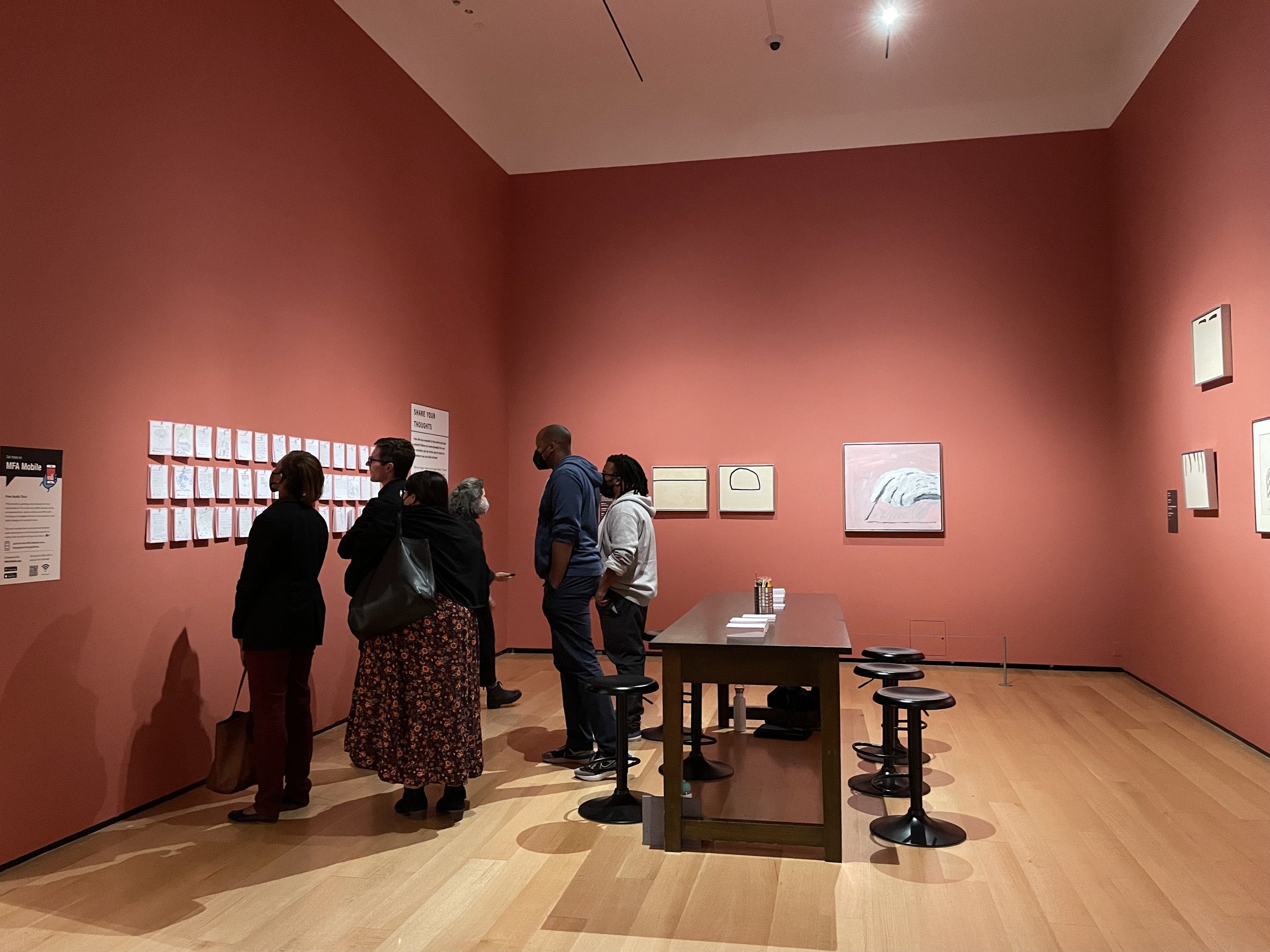
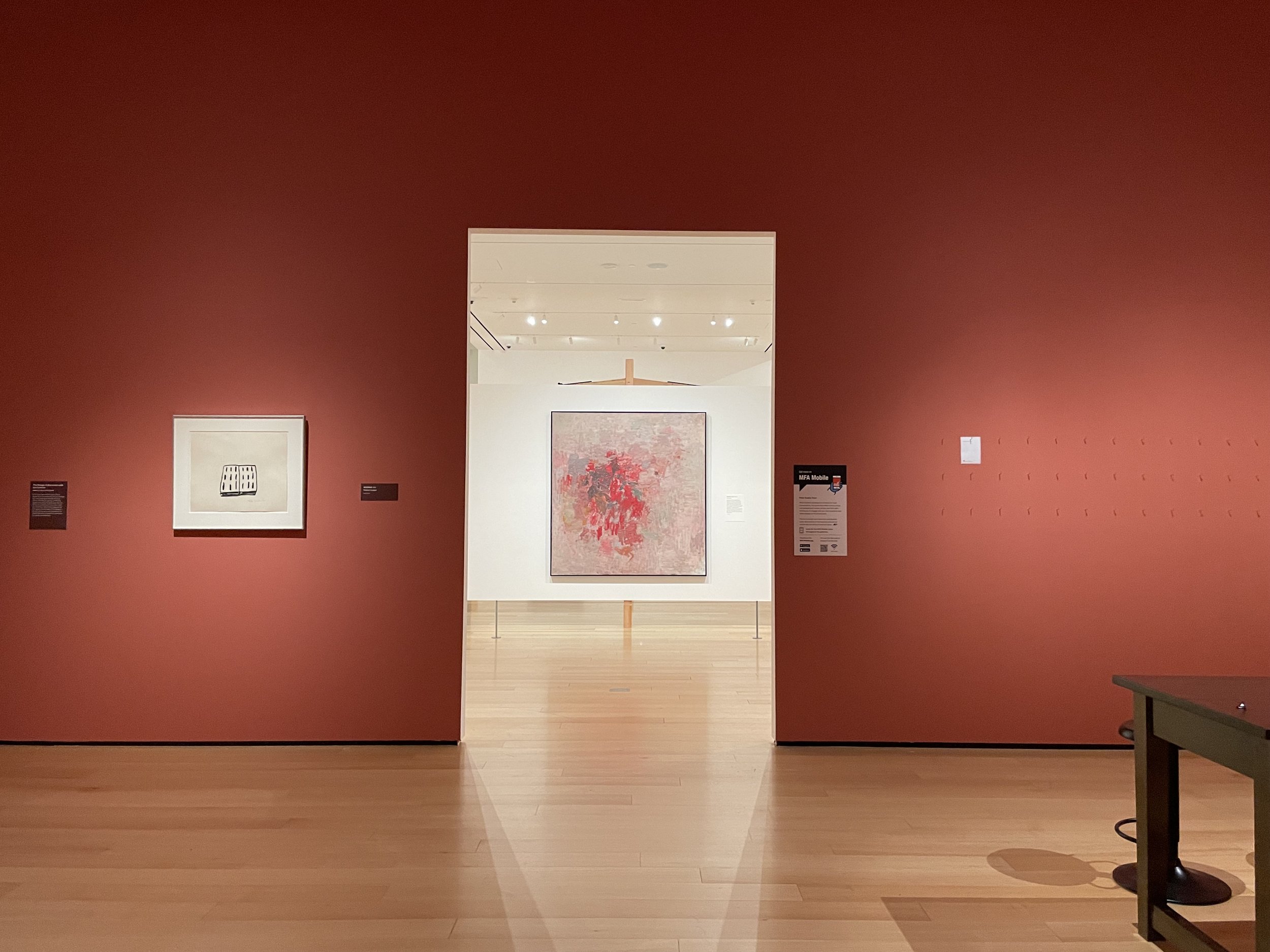
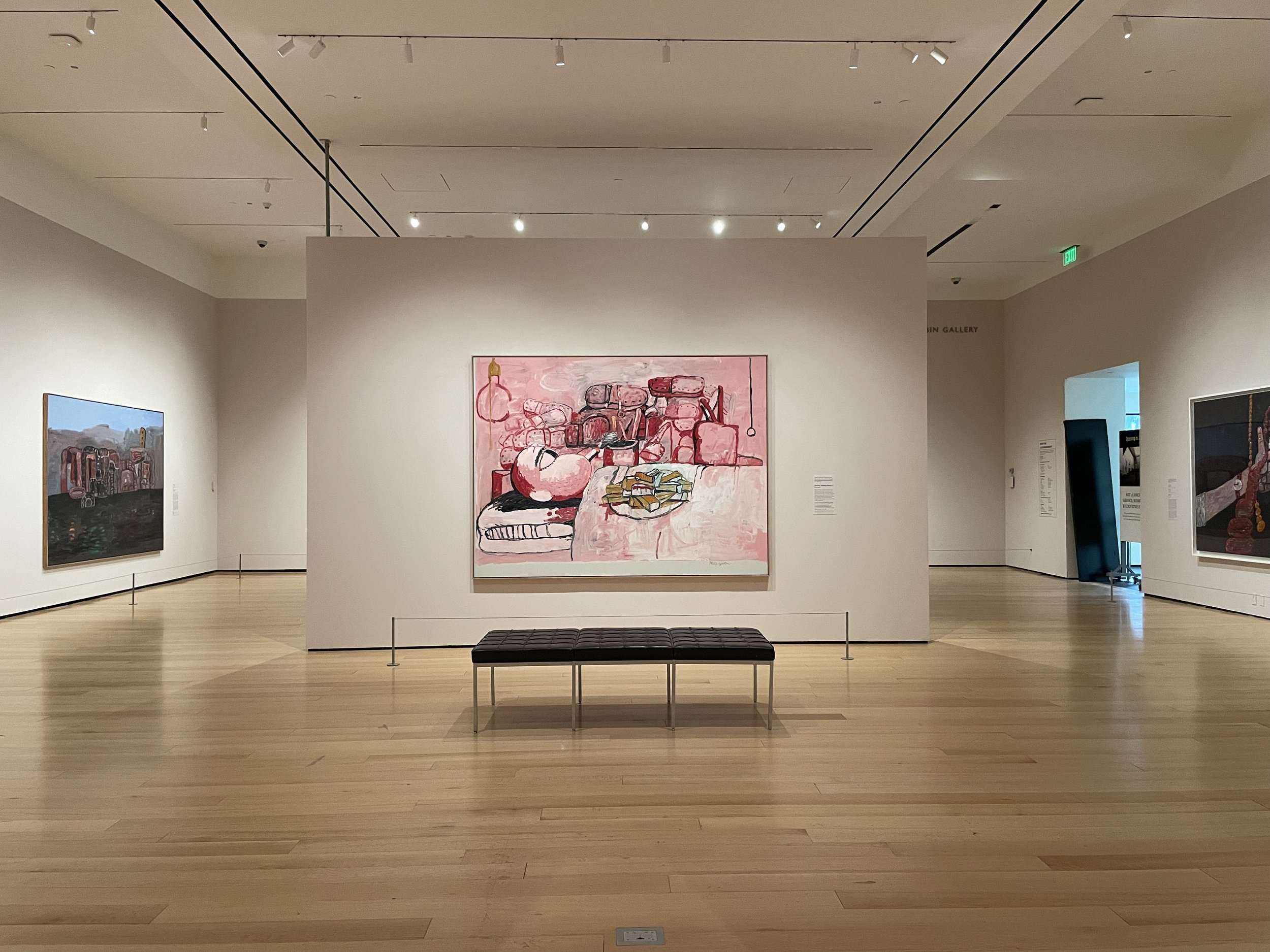
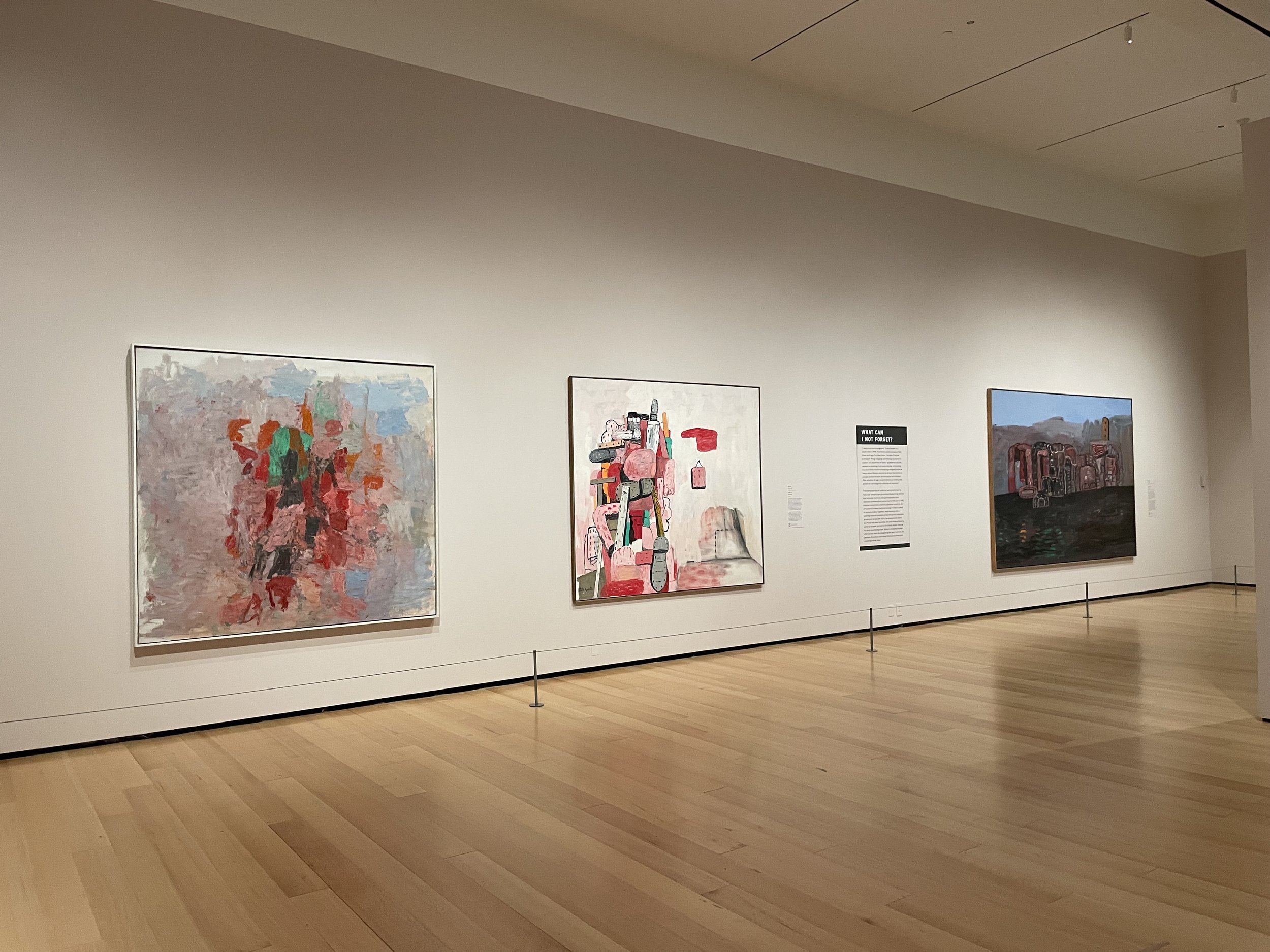
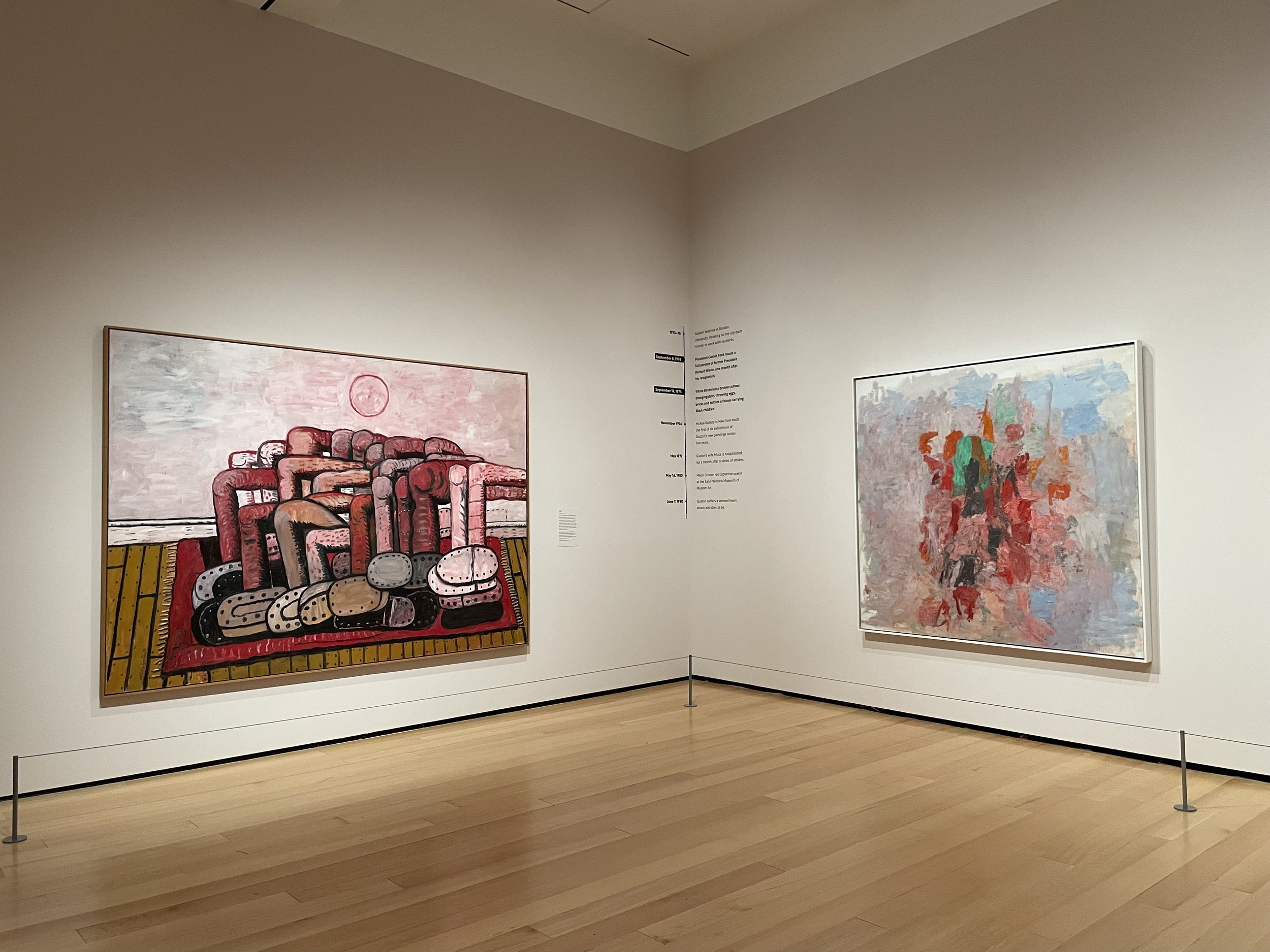
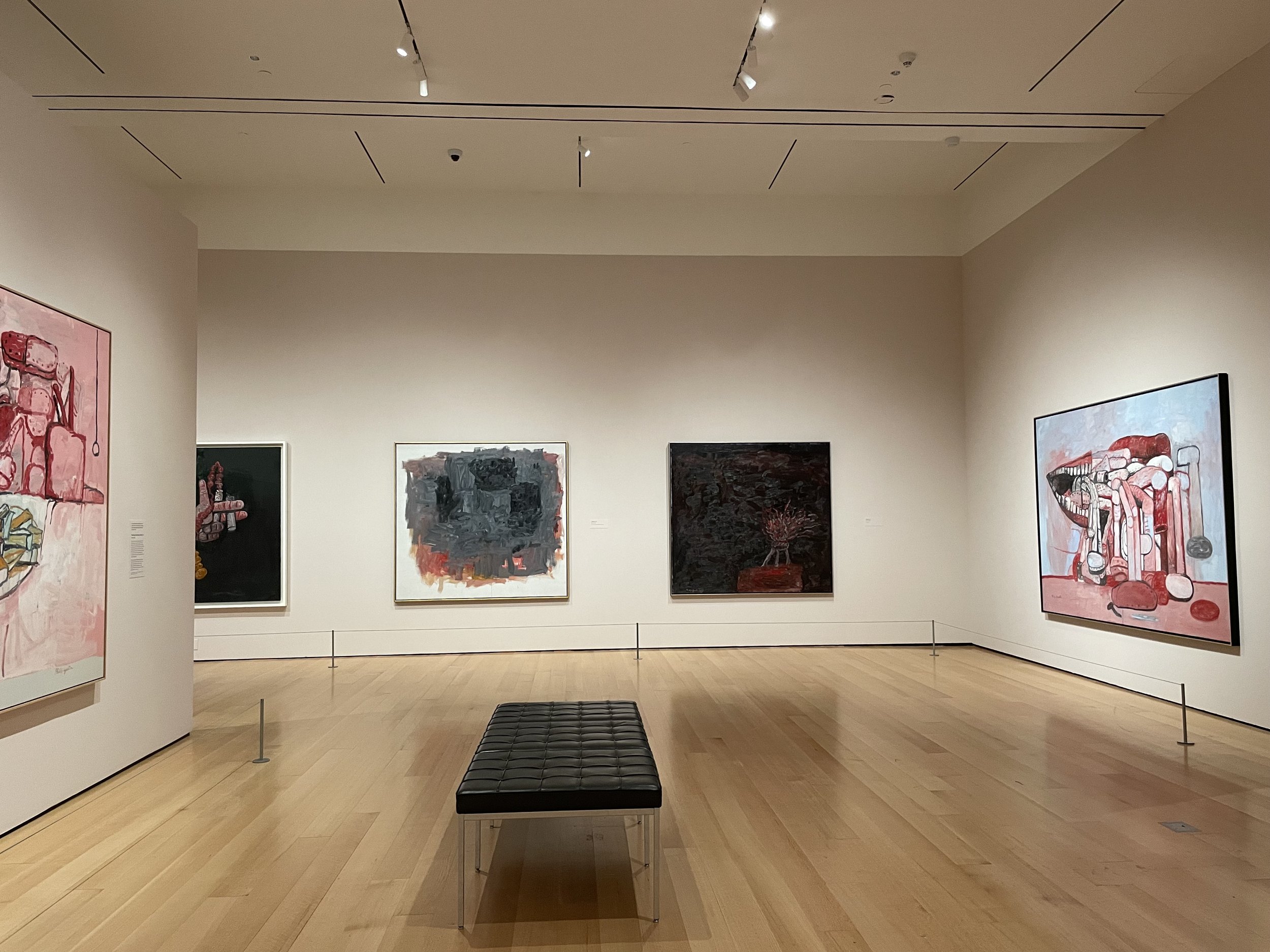
The palette throughout the galleries draws from Guston’s signature use of pink. Soft tonal shifts guide visitors through the exhibition, gradually lightening toward a bright white central space that evokes his 1970 Marlborough Gallery exhibition. Beyond this, a warm brick red creates a more intimate zone where visitors are invited to pause and share their own reflections.
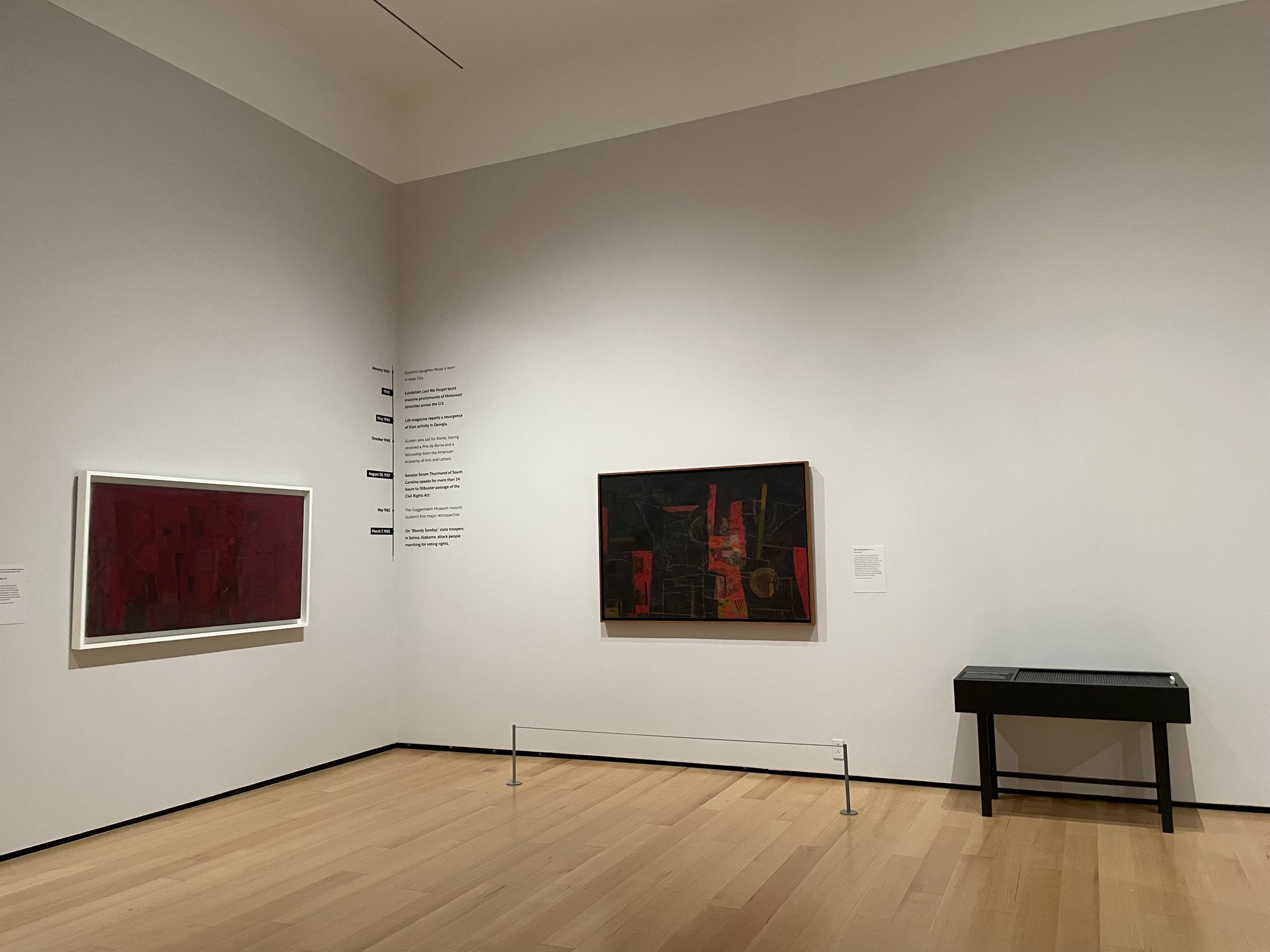
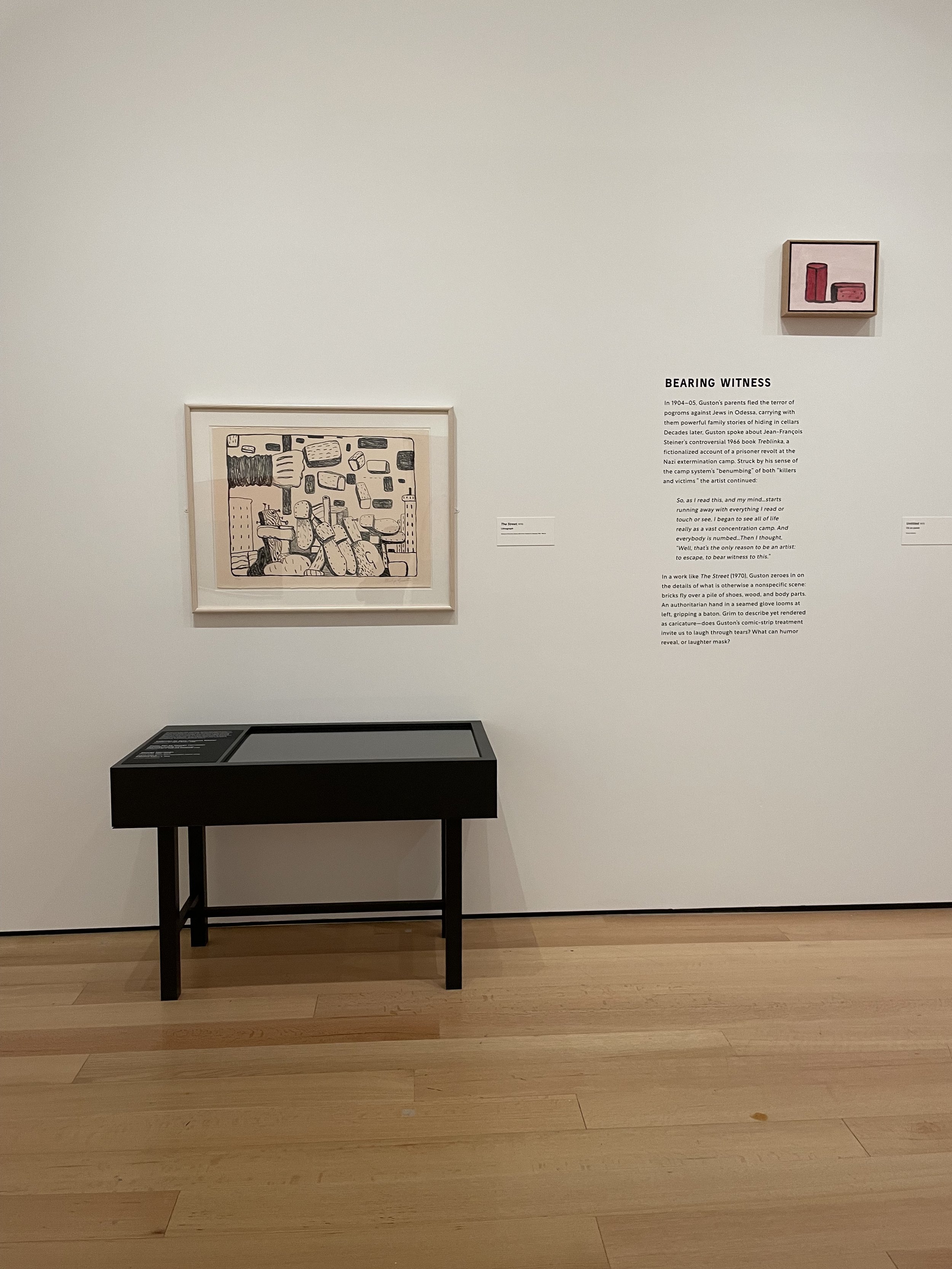
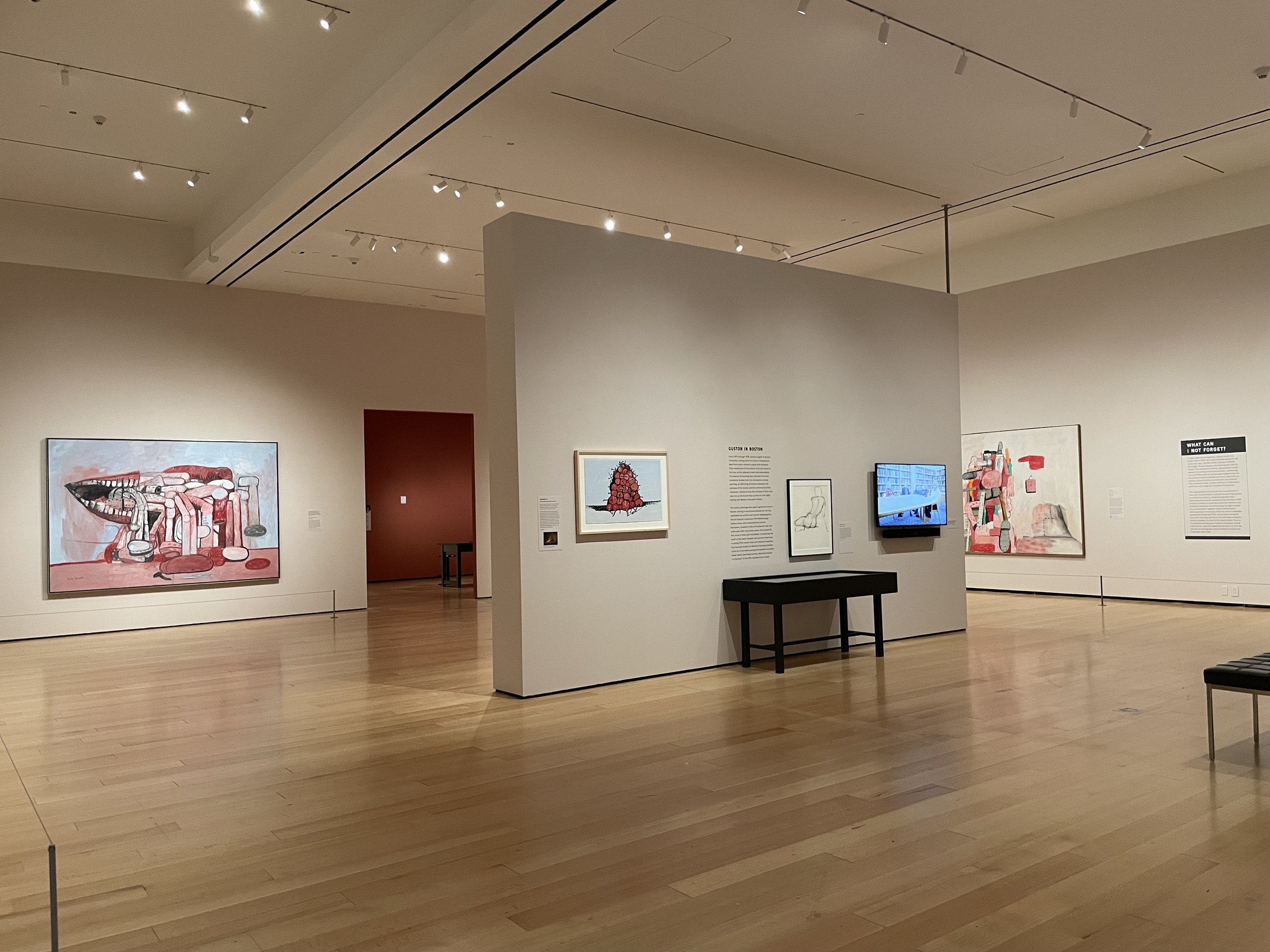
The casework was designed to be looked into, offering access to supplementary materials that shaped Guston’s practice. Cases containing more sensitive content include tambour doors that visitors could open at their discretion. The black detailing references Guston’s distinctive dark outlines set against pale grounds.
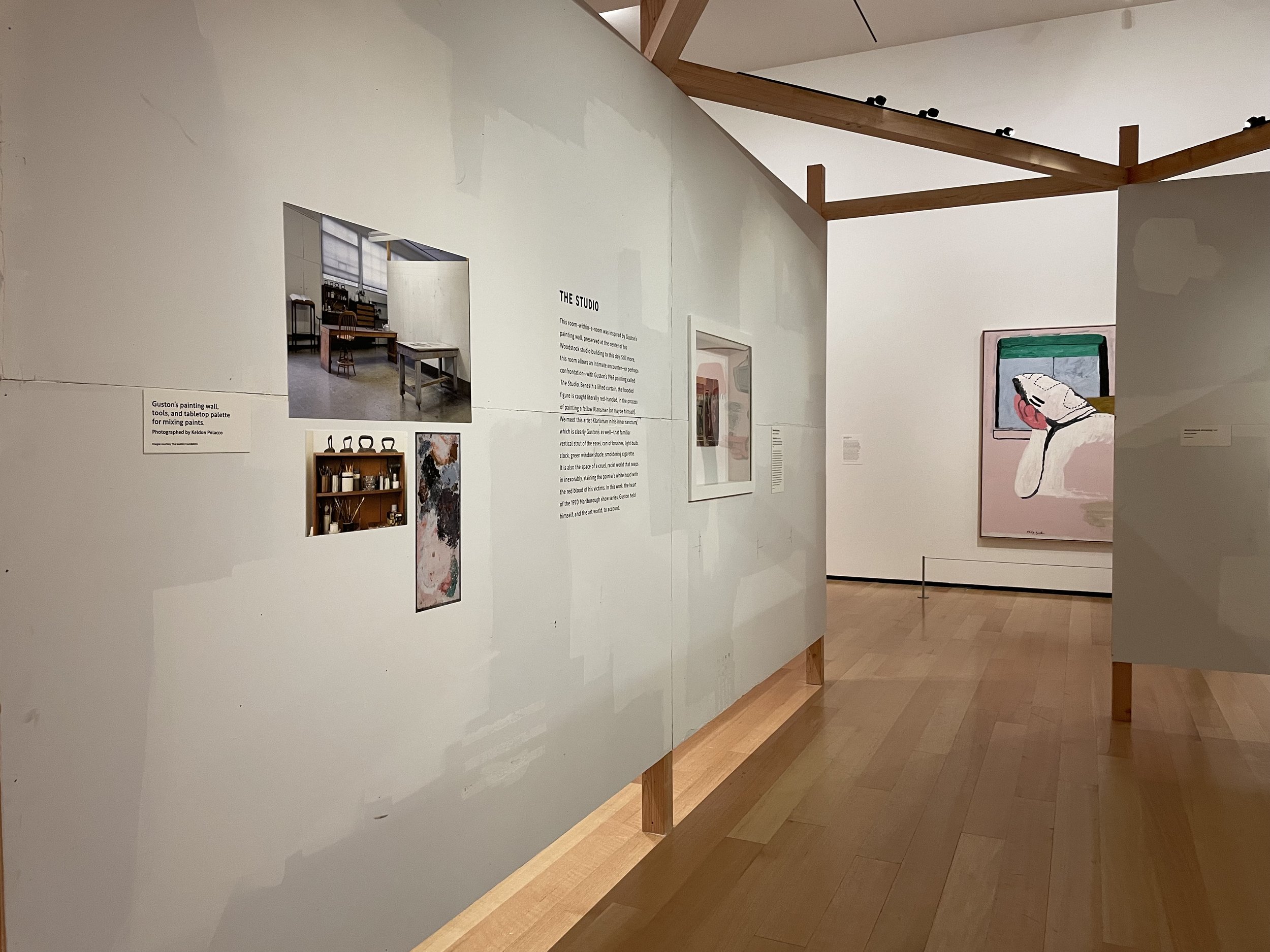
At the heart of the Marlborough room, we created a studio environment inspired by Guston’s workspace in Upstate New York. Recycled plywood, left partially unfinished and mottled with paint, evoked the character of his active studio. Small spotlights were mounted to the overhead structure of the space to light the work and avoid shadows.
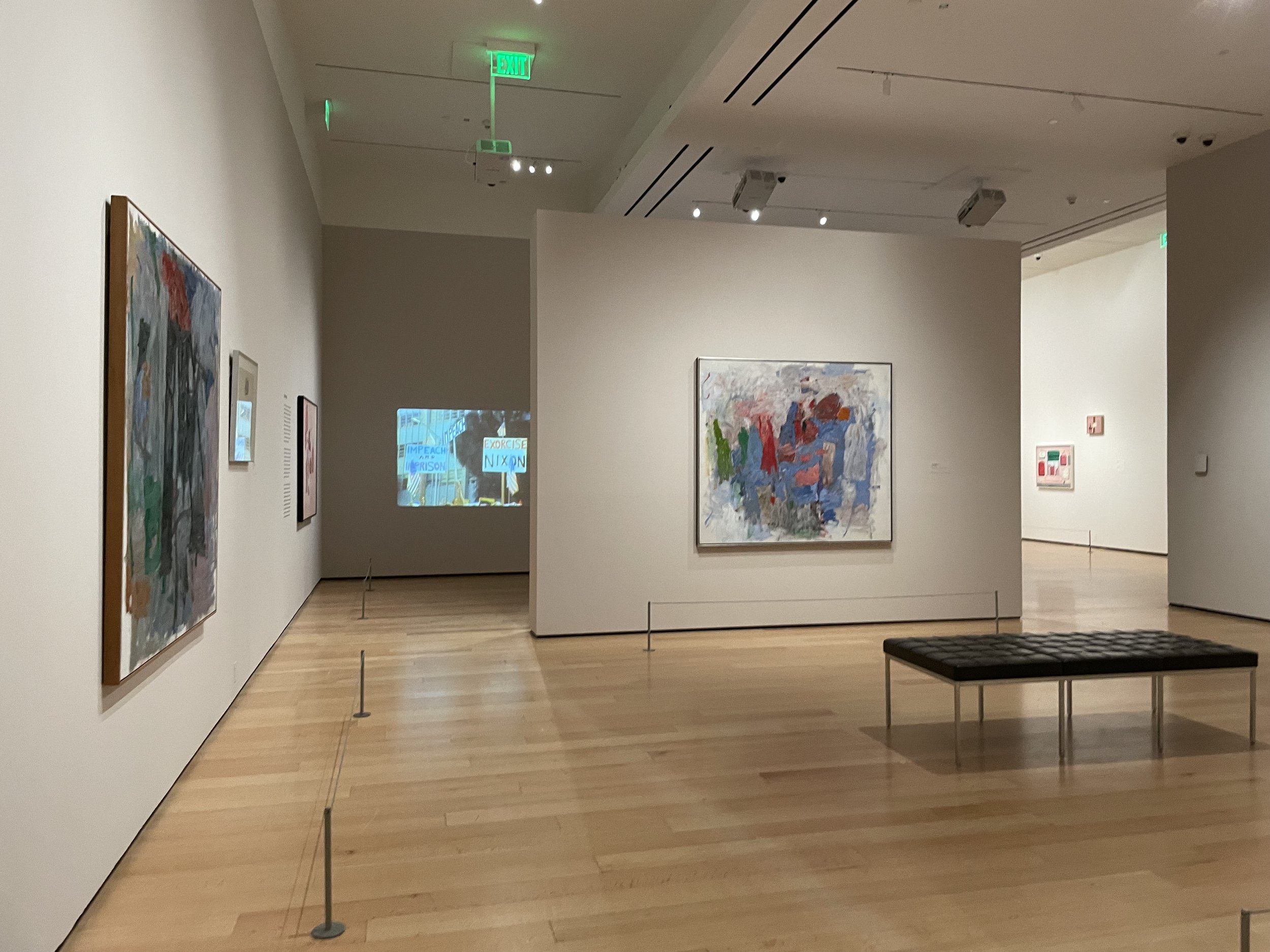
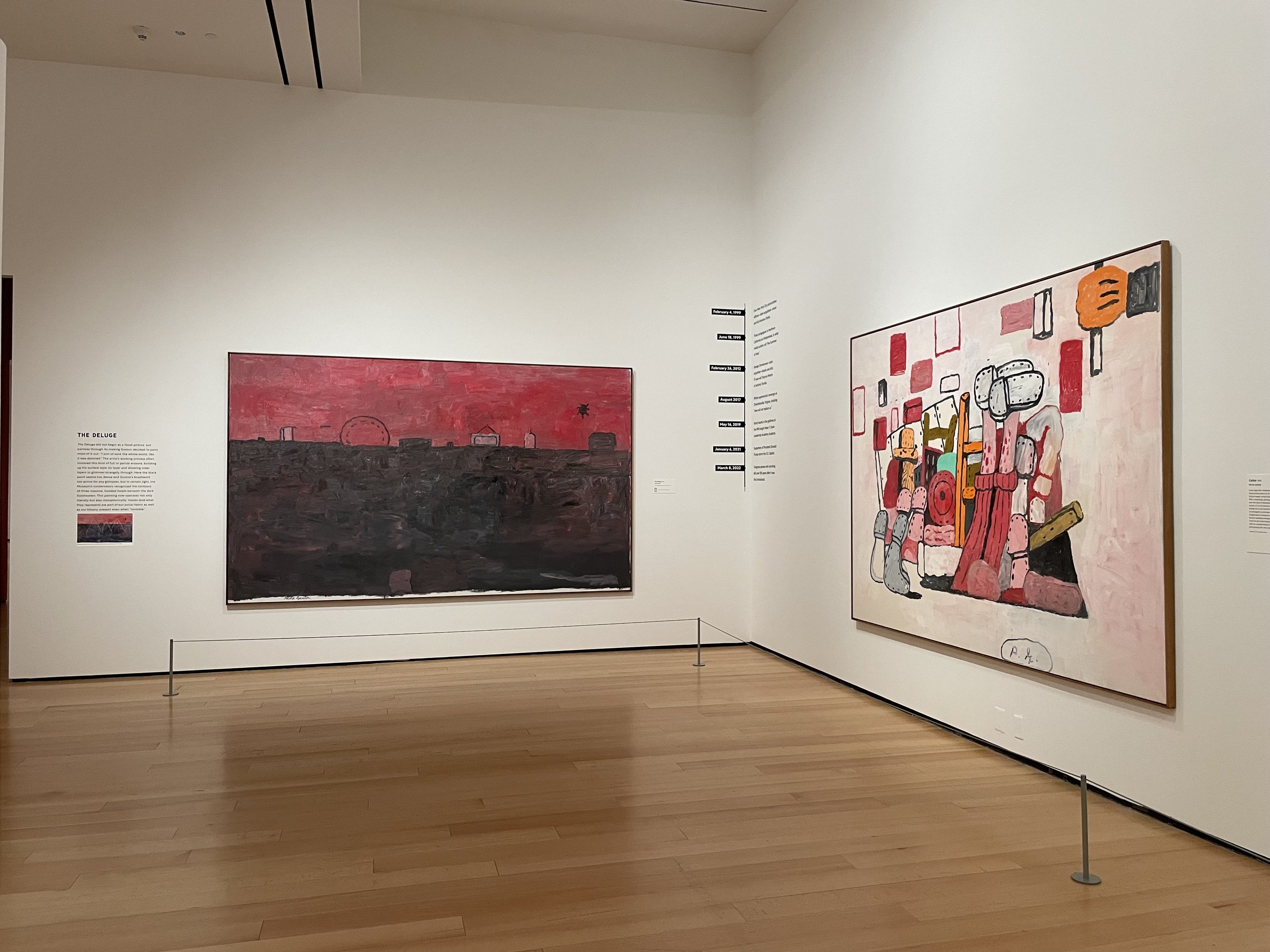
A key curatorial goal was to weave contemporary context throughout the show as a way to continually remind the visitor of the context in which the work was being made and suggest how Guston’s awareness of these events influenced his work.
This was done in two ways. Each gallery had a timeline that combined events in the news cycle with events in Guston’s own life. We placed these vertically, wrapping a corner in each room, as way to keep the information present and easy to find without interfering with the viewing of the work.
Second, between a gallery focusing on Guston’s period of Abstraction and before entering the Marlborough room, there was a dedicated space presenting three synchonized projections cycling through significant news events from the time, deepening the visitor’s understanding of the broader world Guston was responding to.
Photos courtesy of MFA, Boston