Philip Guston: Now
Museum of Fine Arts, Boston, 2002
Role: Exhibition Designer
Team: Curators Ethan Lasser, Kate Nesin, Terence Washington and Megan Bernard; Graphic Designer Eben Haines
Photos courtesy of MFA, Boston
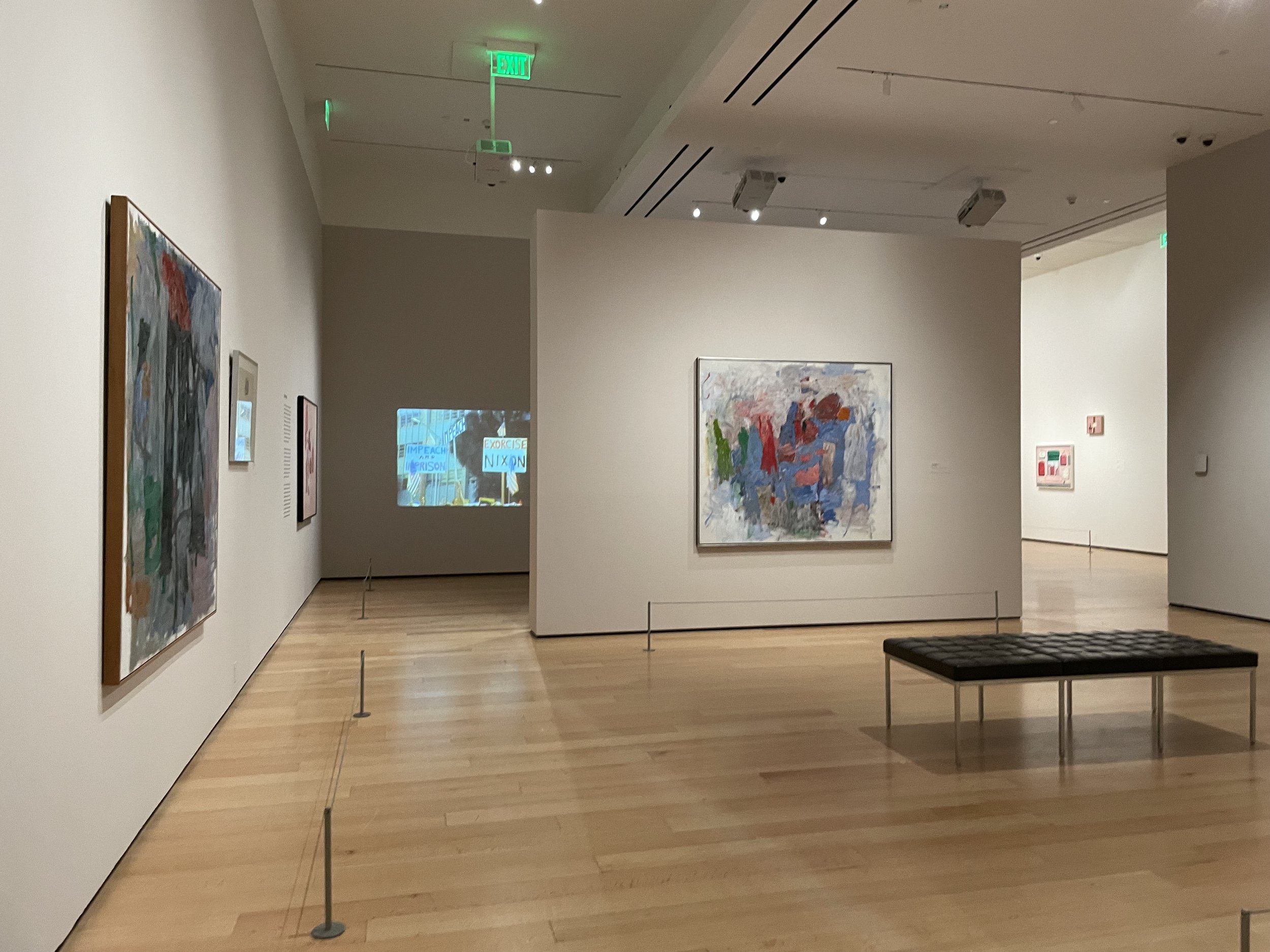
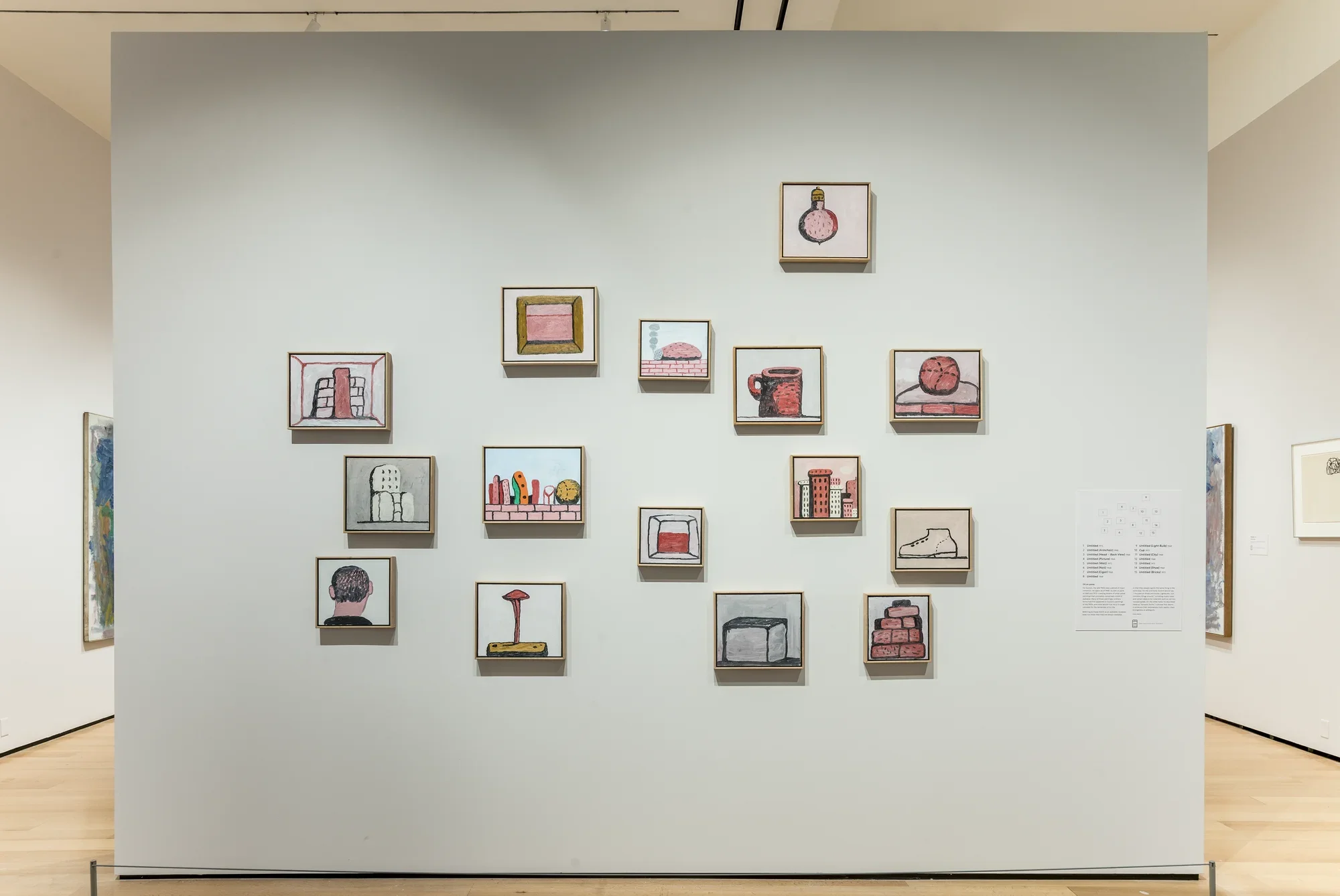
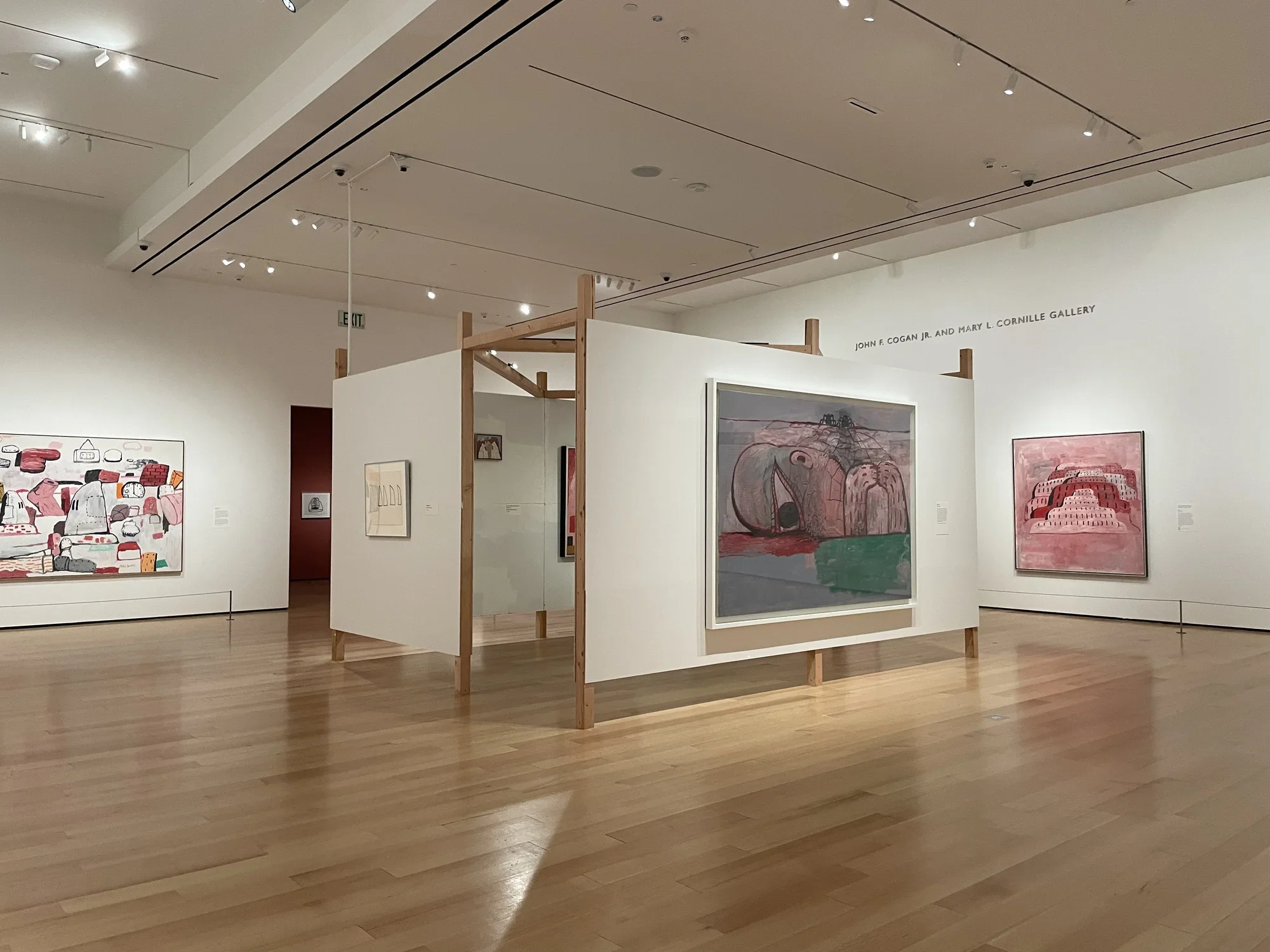
This exhibition explored Philip Guston’s career, the stylistic periods of his work, and his own ongoing exploration of self.
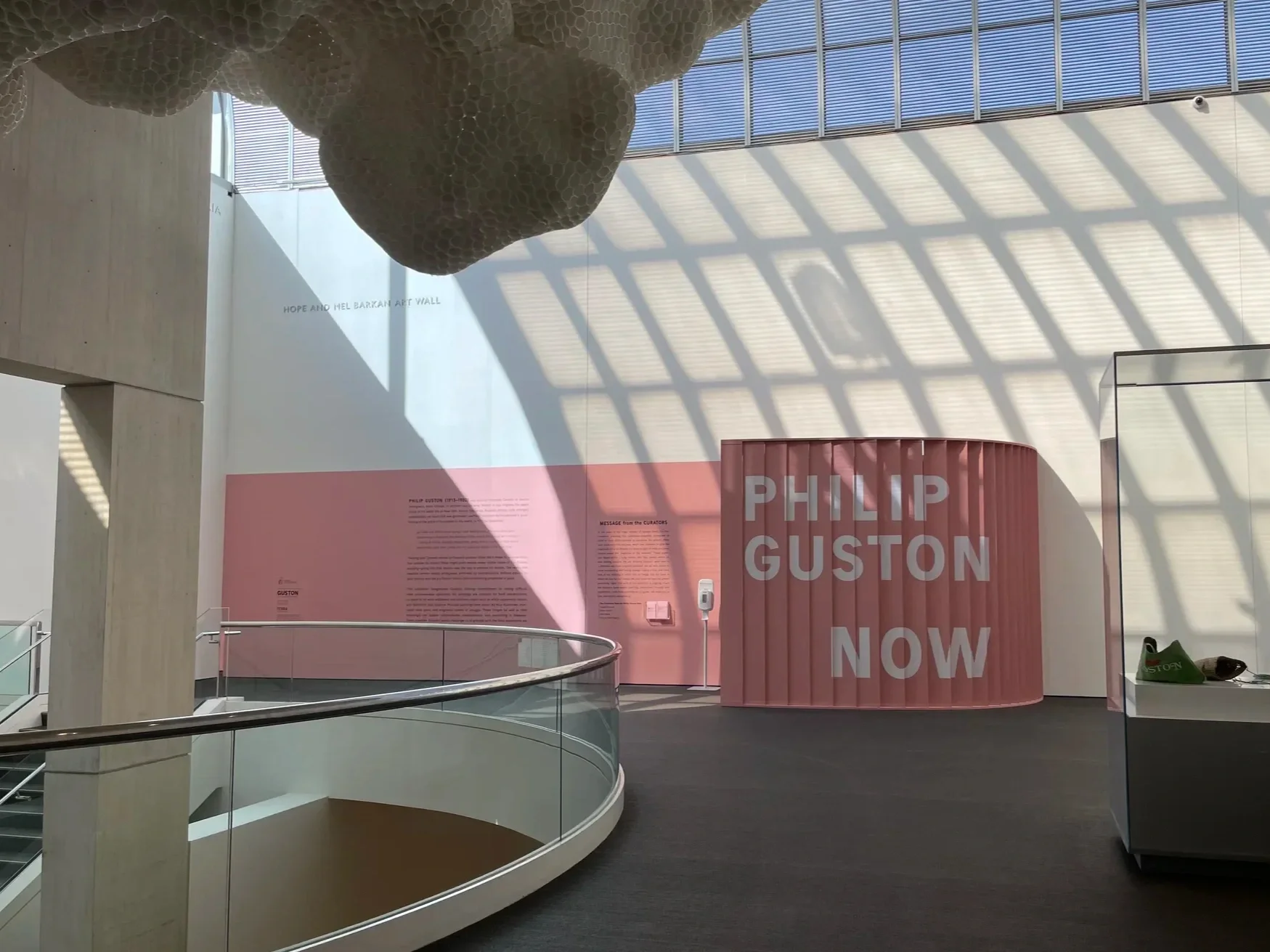
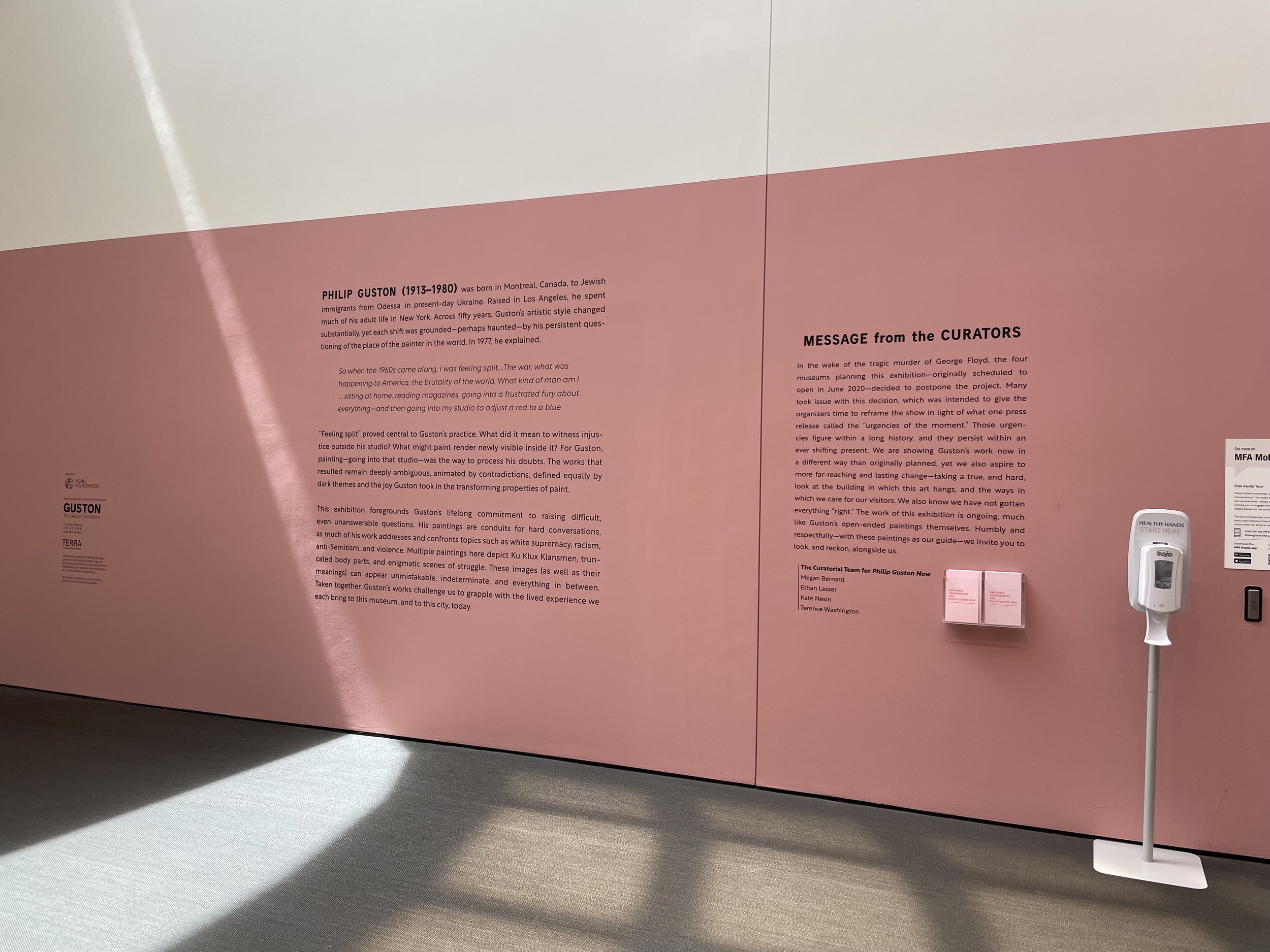
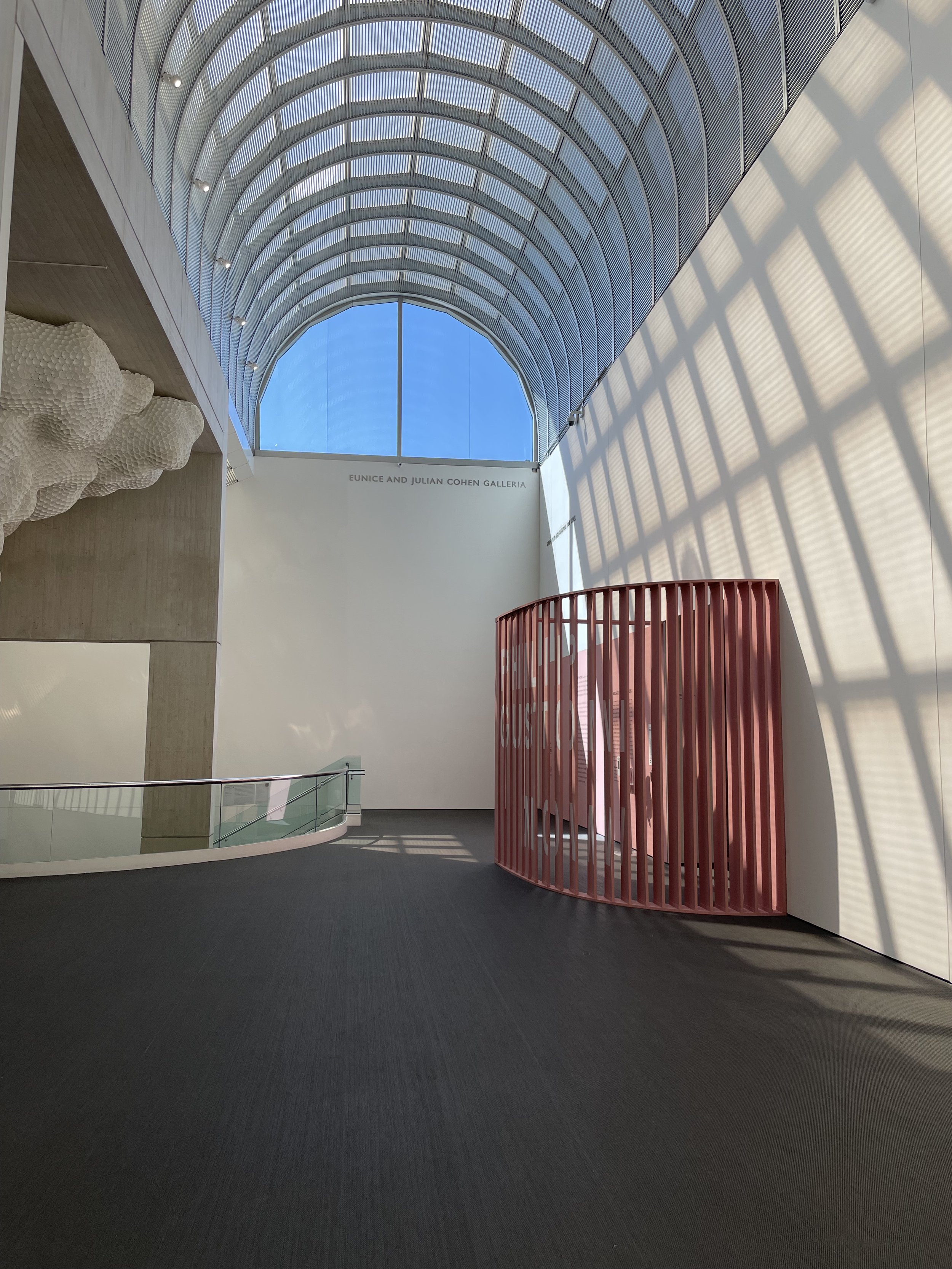
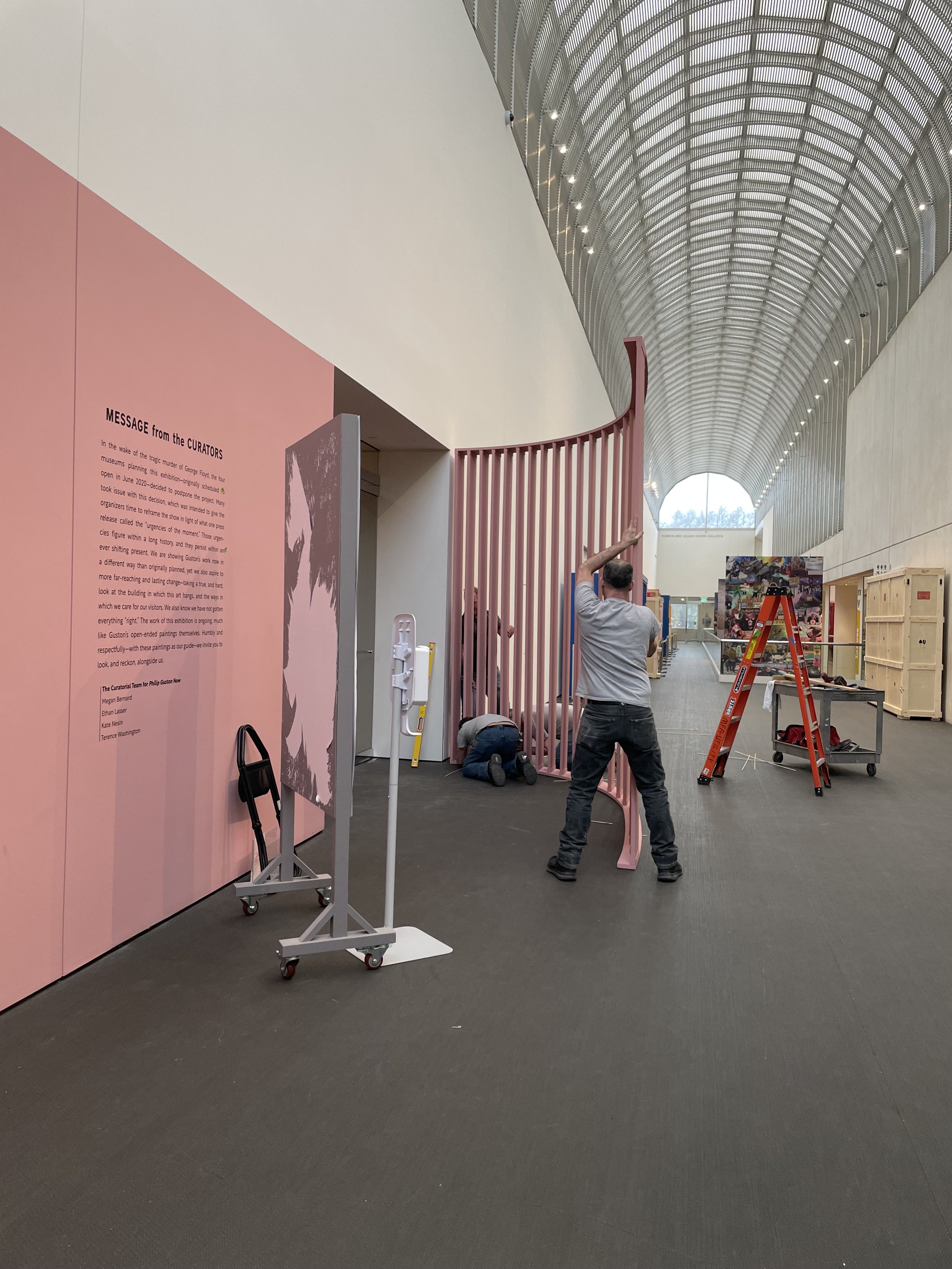
Because the existing architecture offered no natural threshold into the show, a curved, slatted entry wall was built just outside the galleries to create one. Wall color and graphics turned this wall into an inviting canvas for the title and introductory text, while the rhythm of the slats echoed the vaulted roof beyond it, preserving a feeling of openness within an otherwise small space.
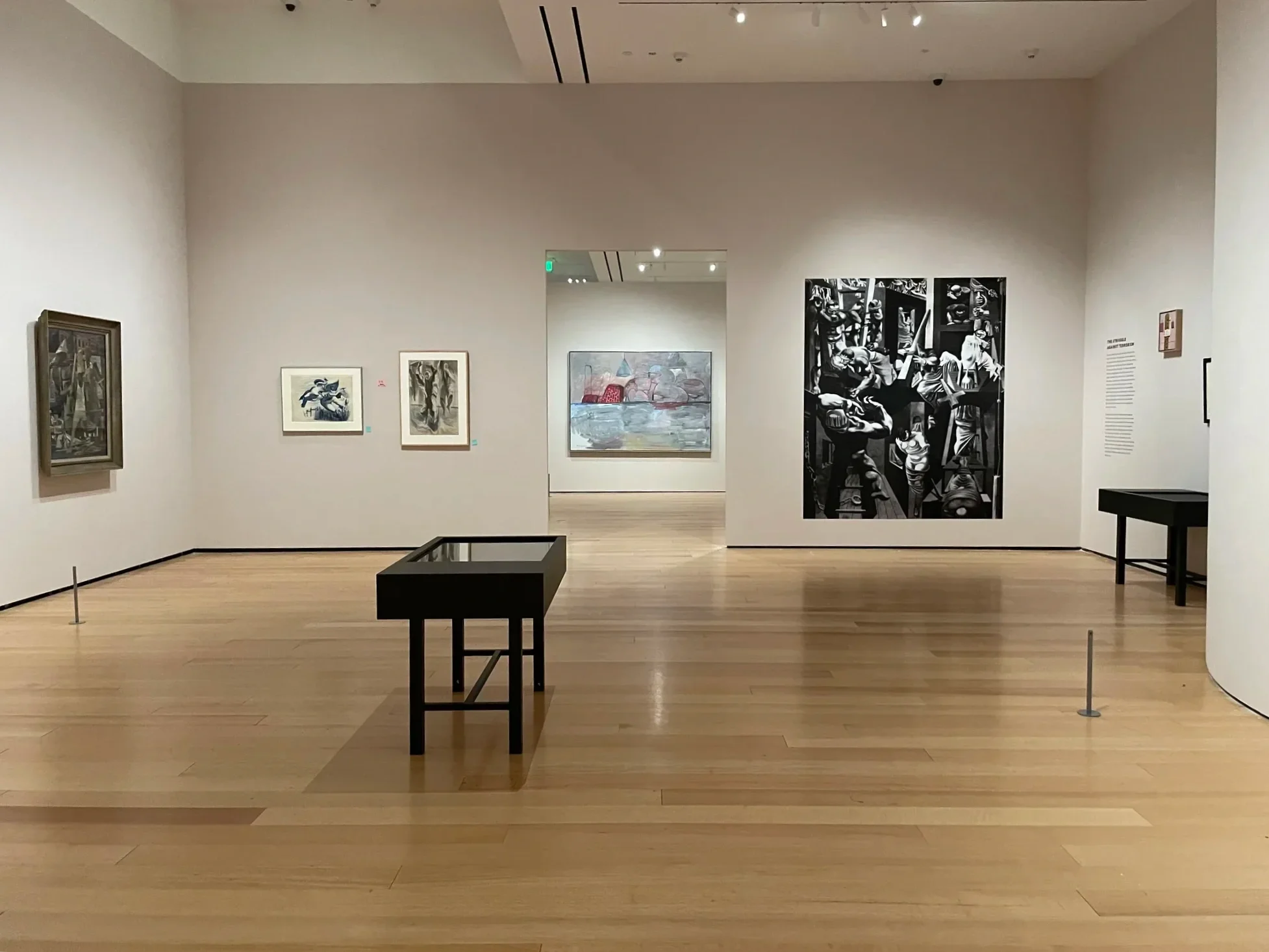
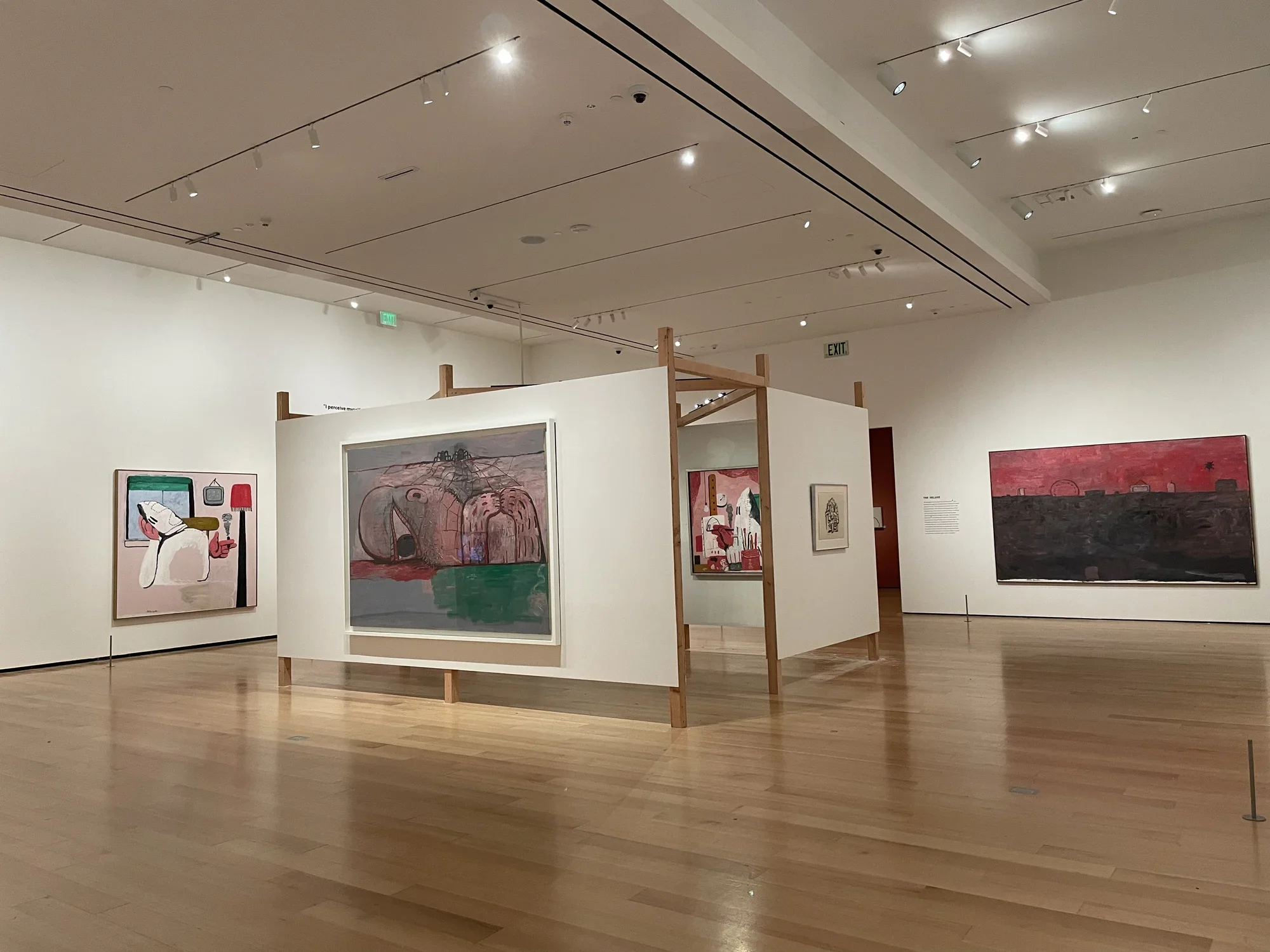
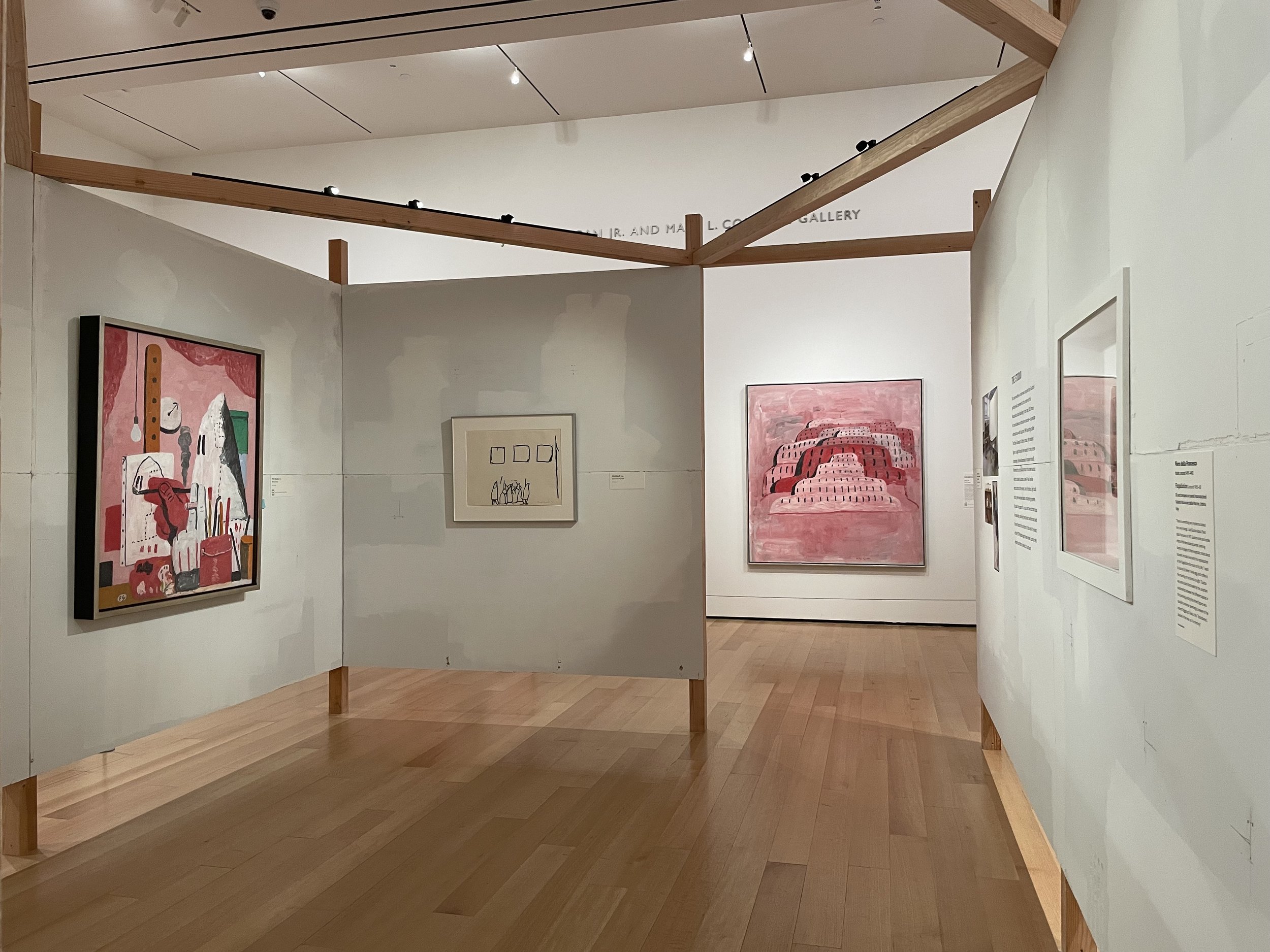
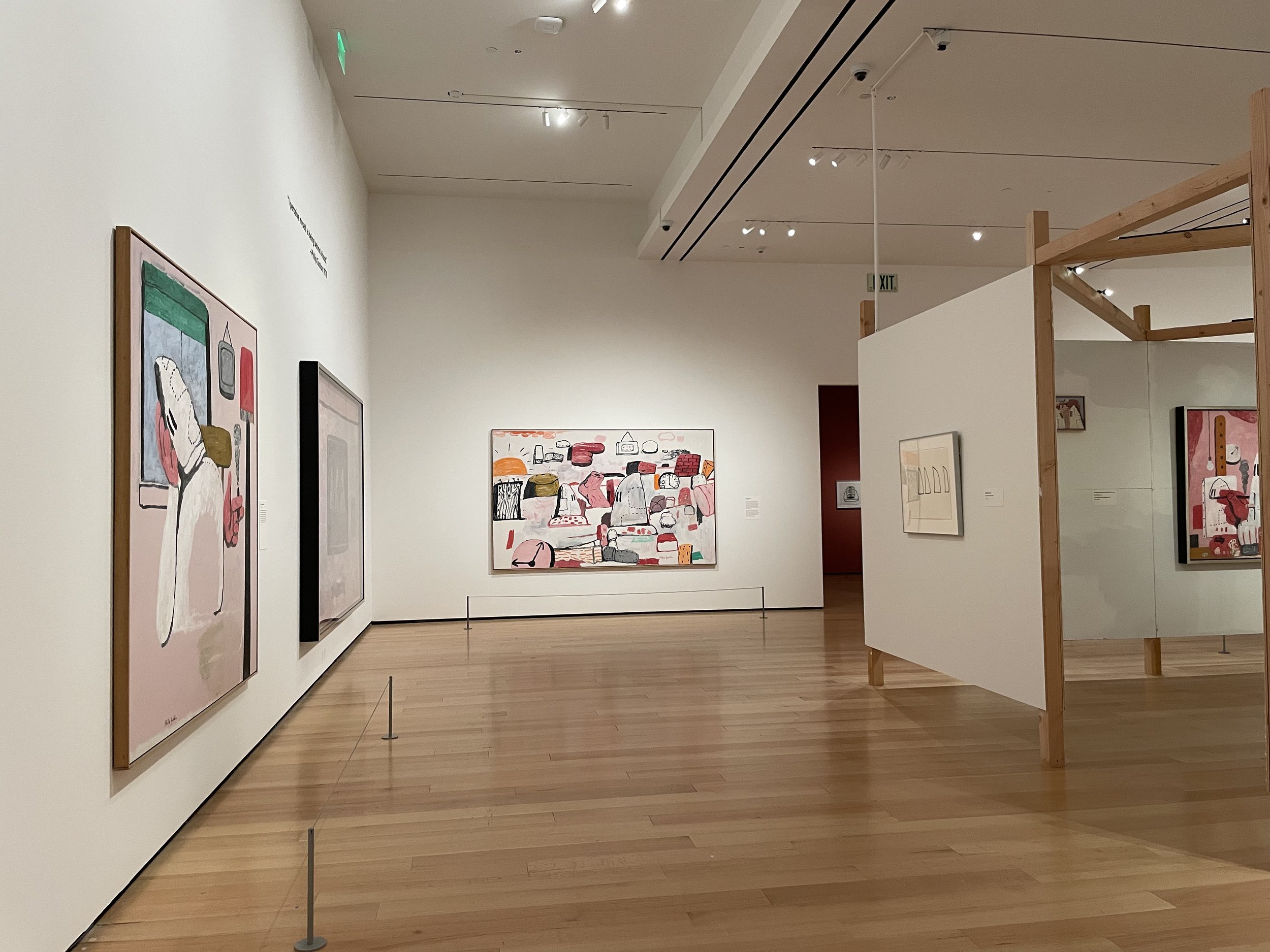
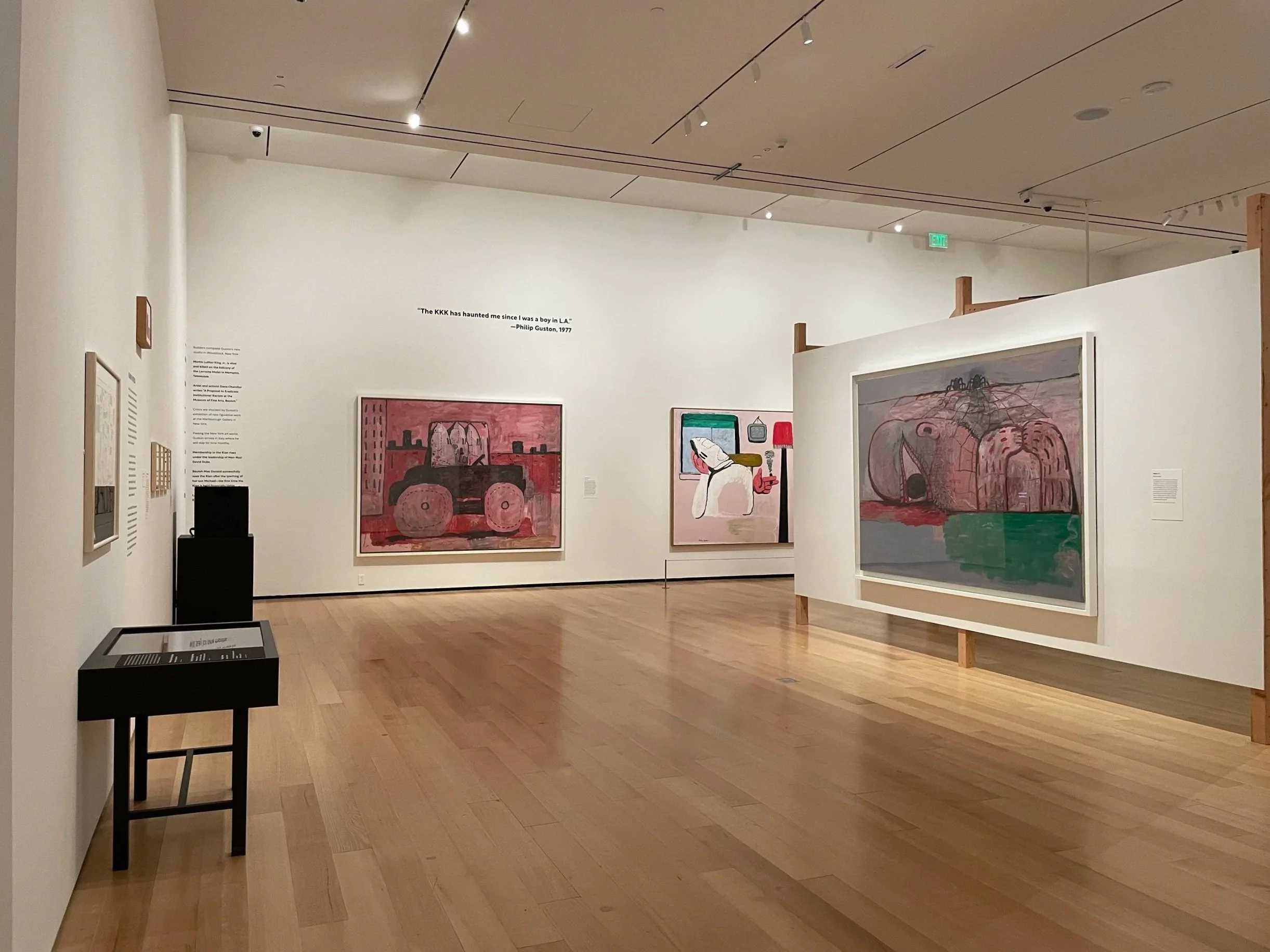
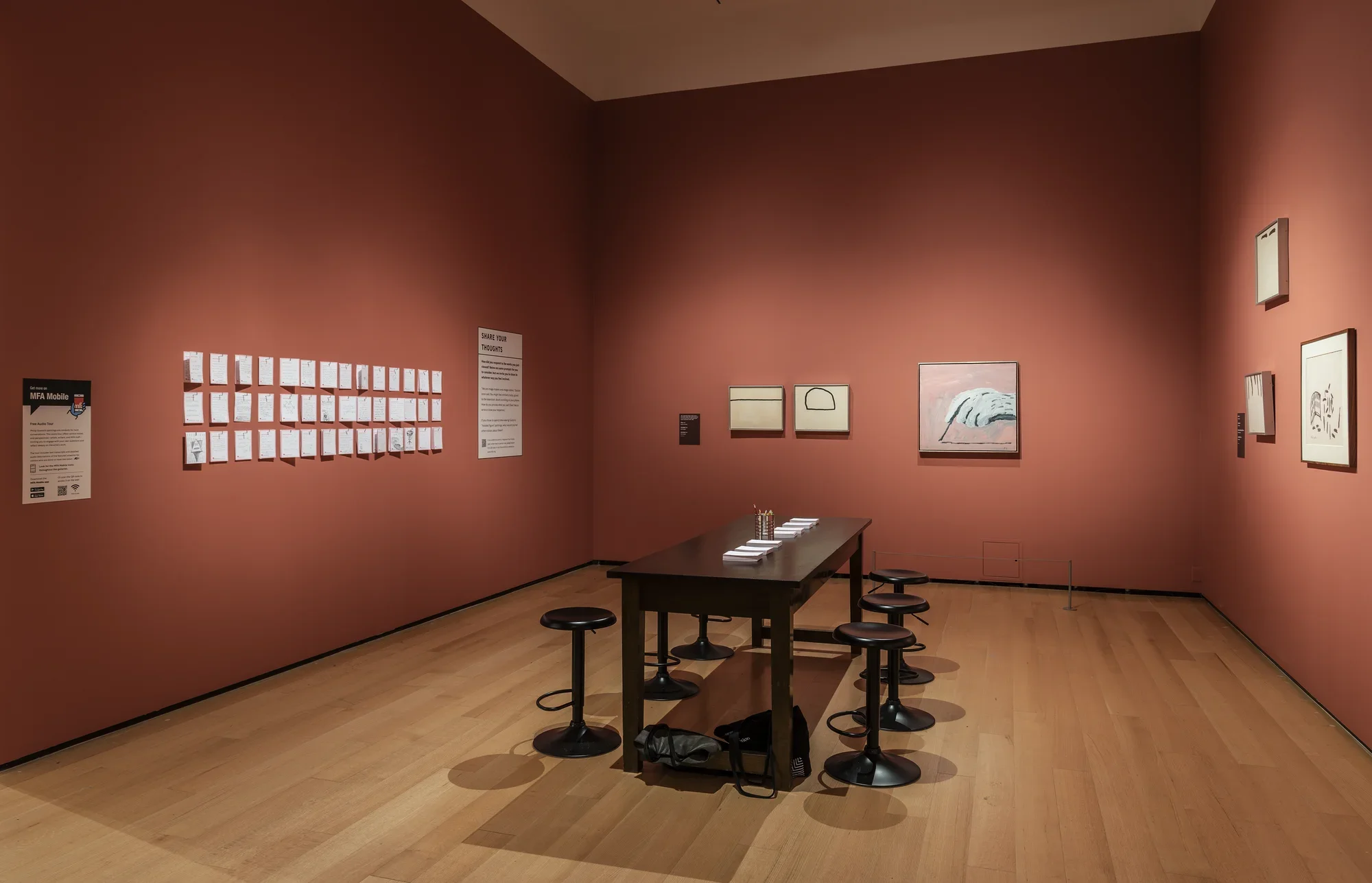
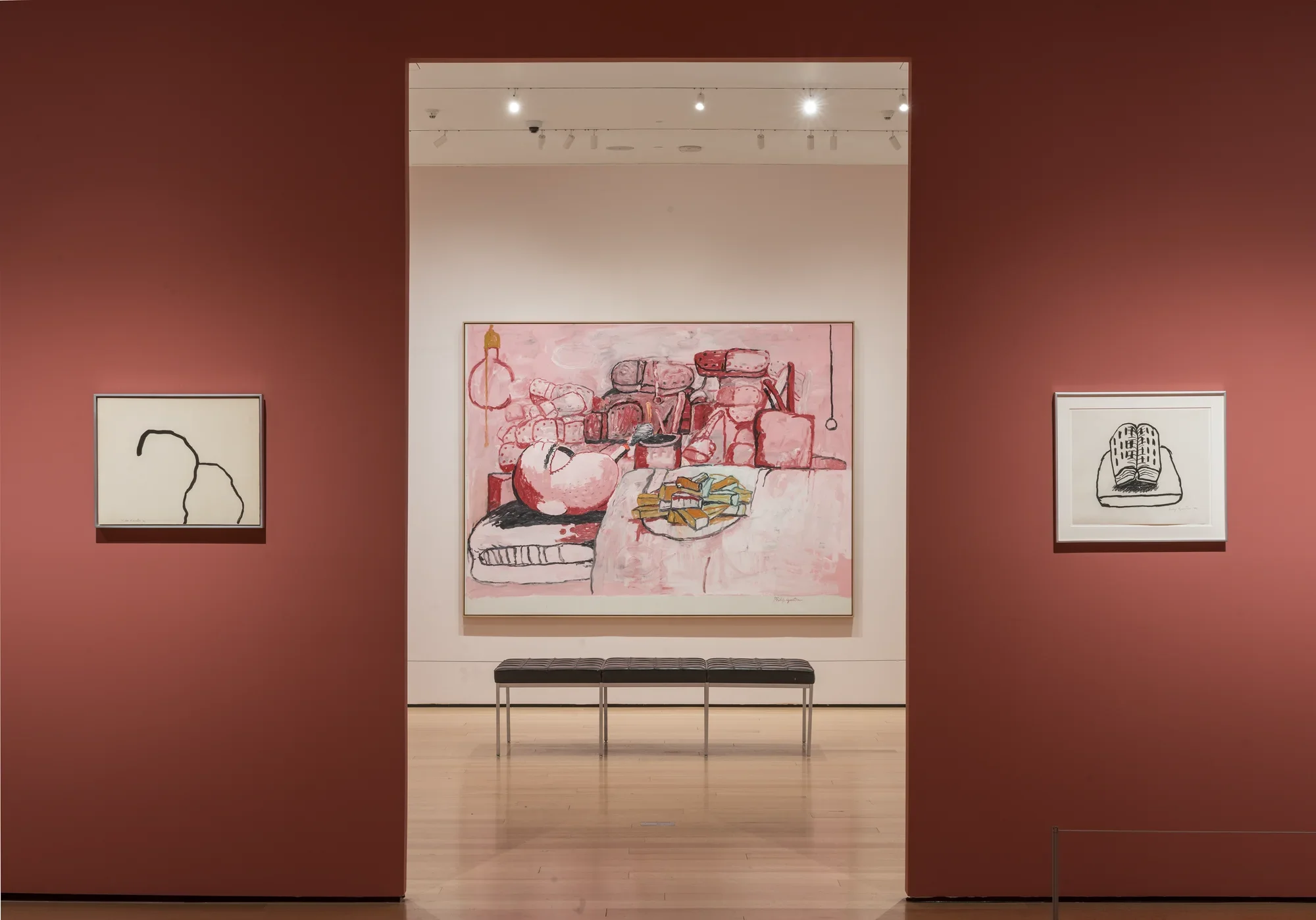
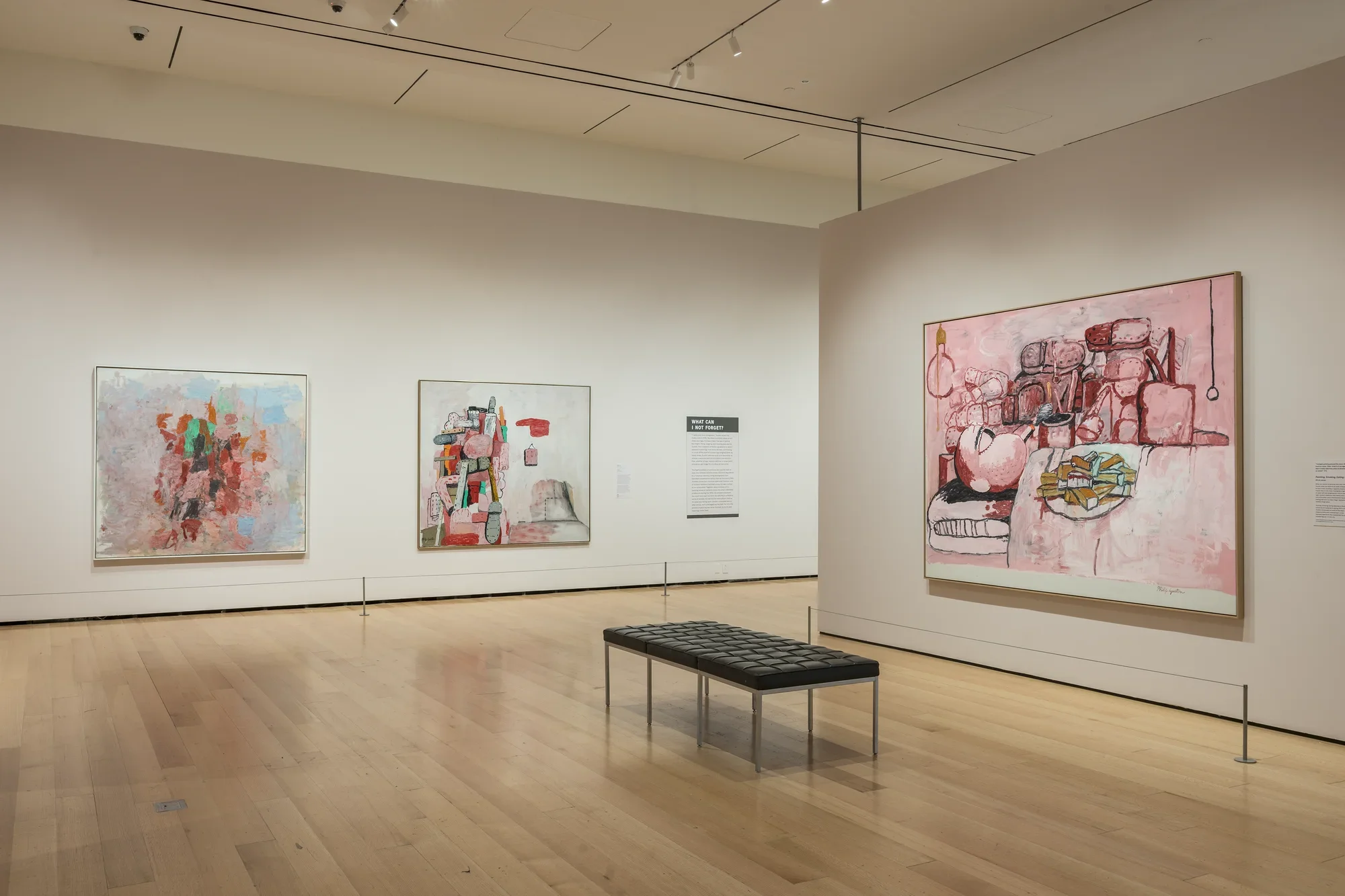
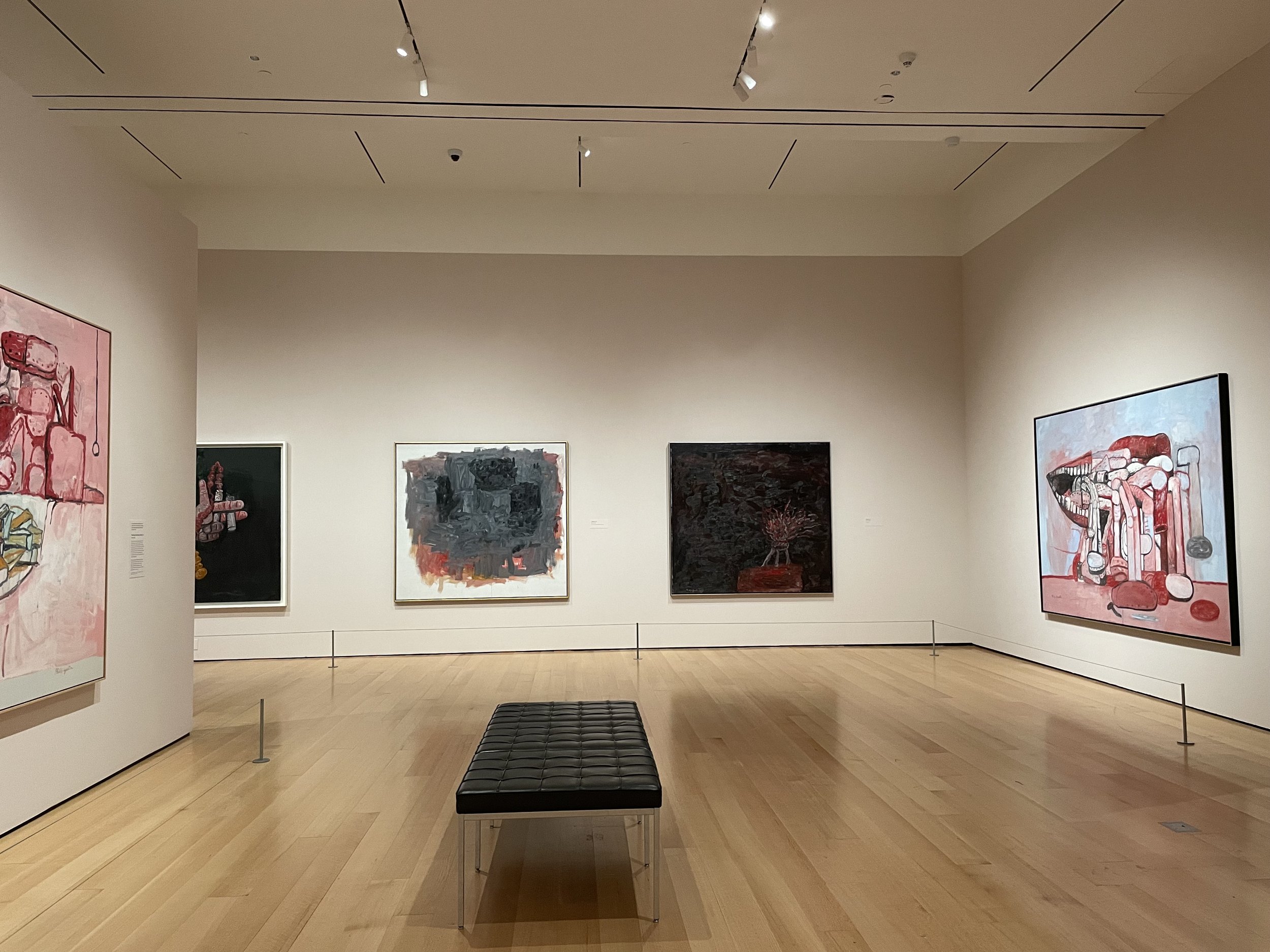
That sense of atmosphere carried through the galleries in color. The palette throughout drew from Guston’s signature use of pink, with soft tonal shifts guiding visitors deeper into the exhibition and gradually lightening toward a bright white central space that evoked his 1970 Marlborough Gallery exhibition. Beyond it, a warm brick red settled into a more intimate register, marking out a space where visitors were invited to pause and share their own reflections.
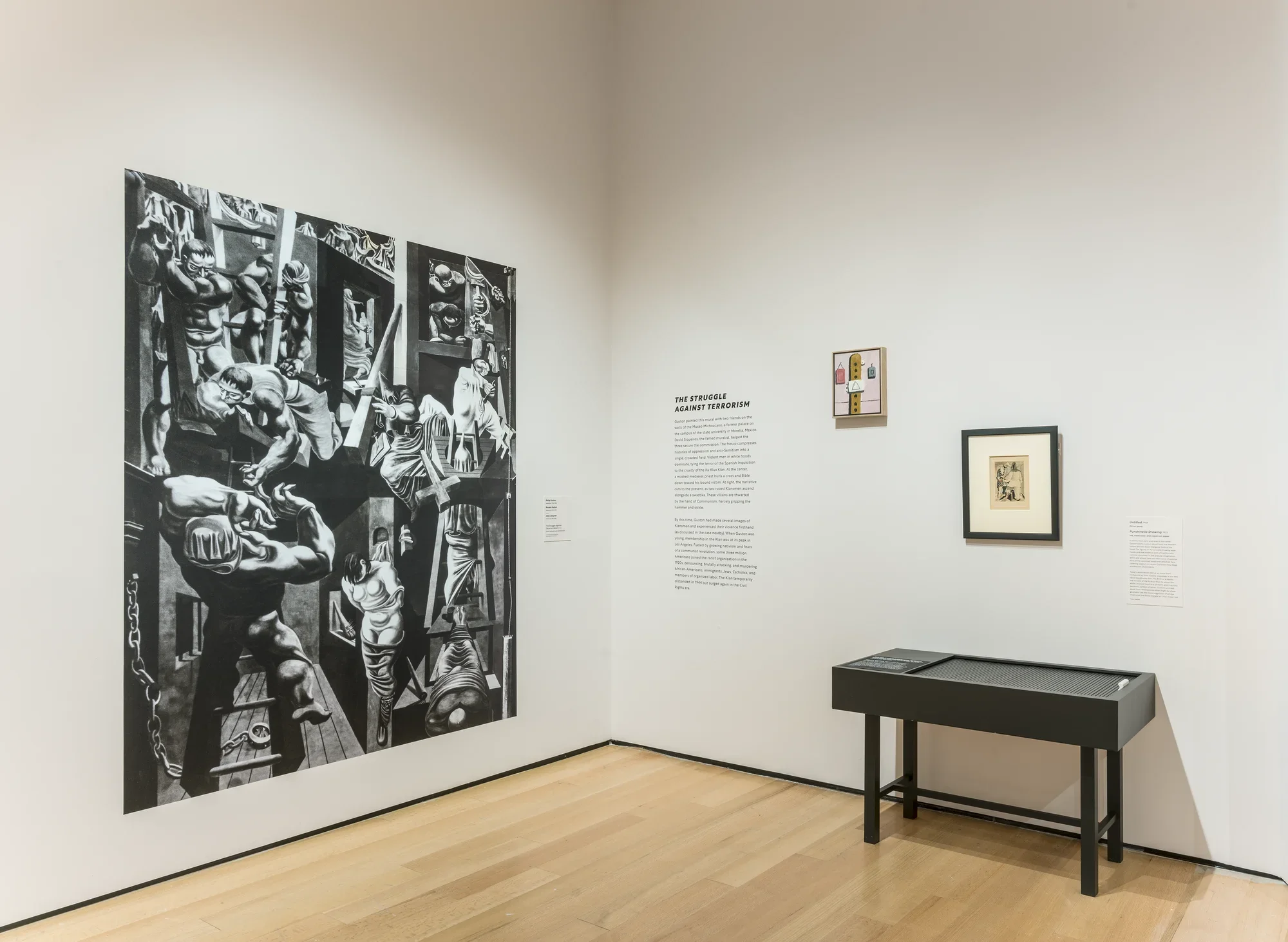
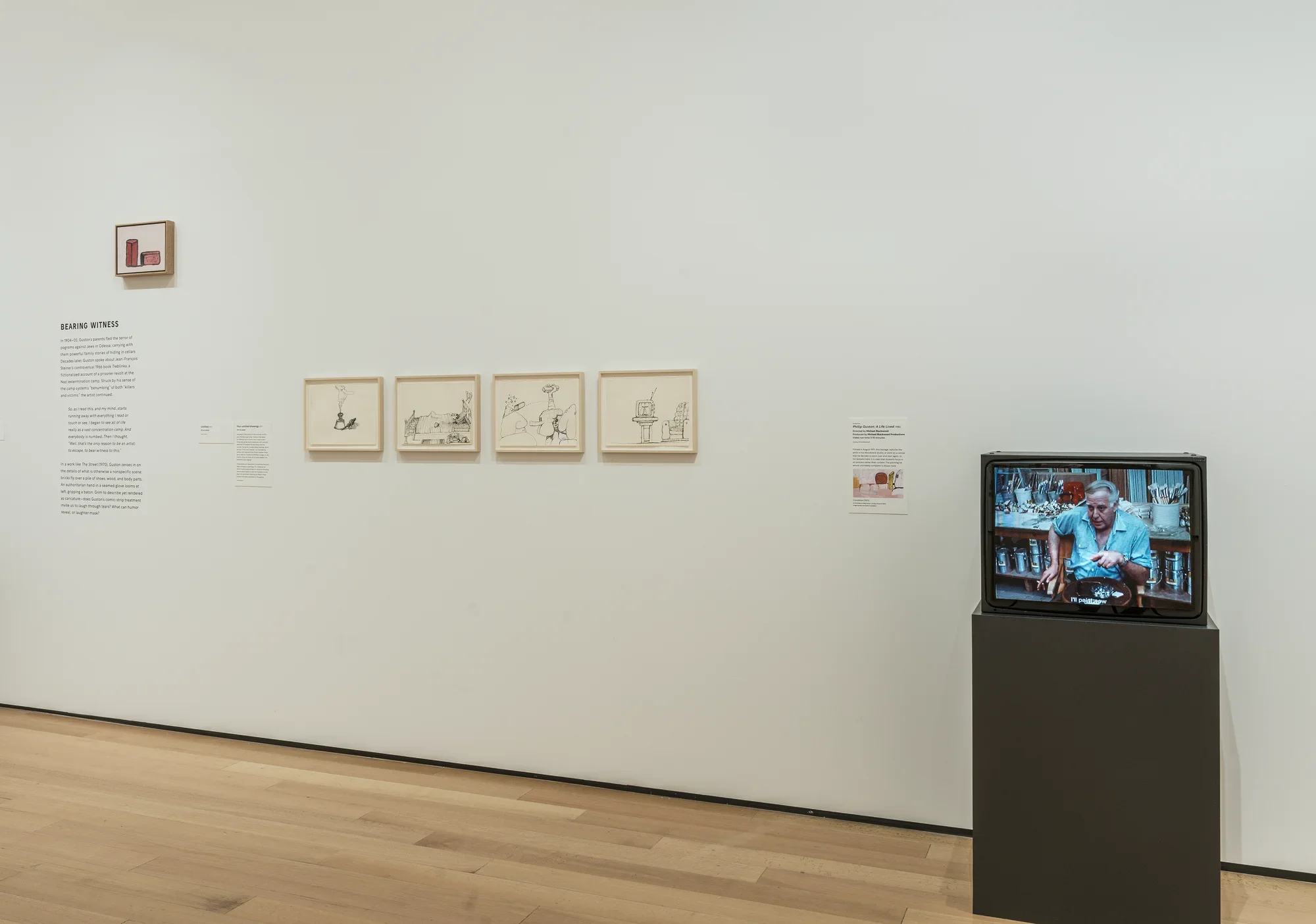
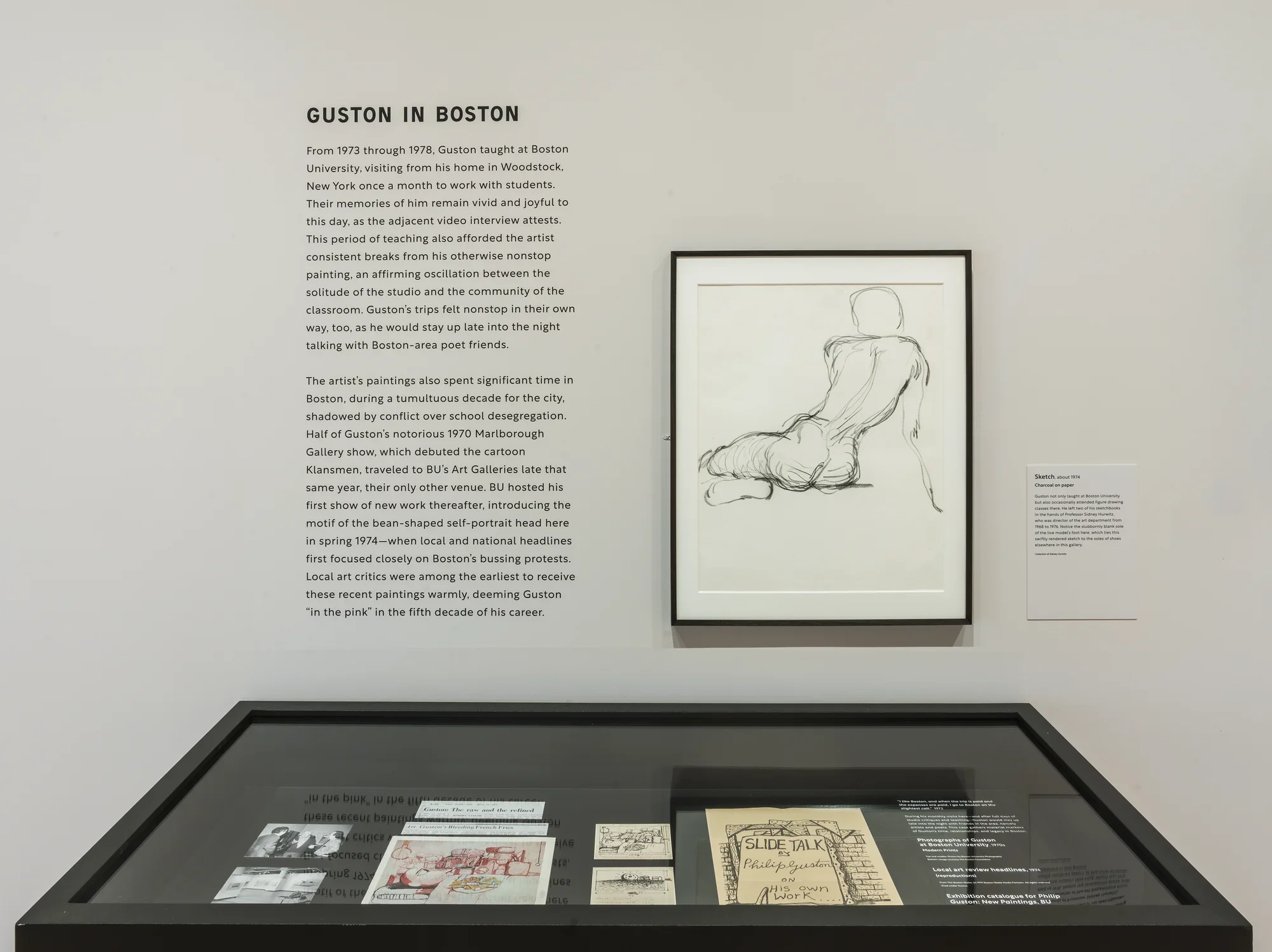
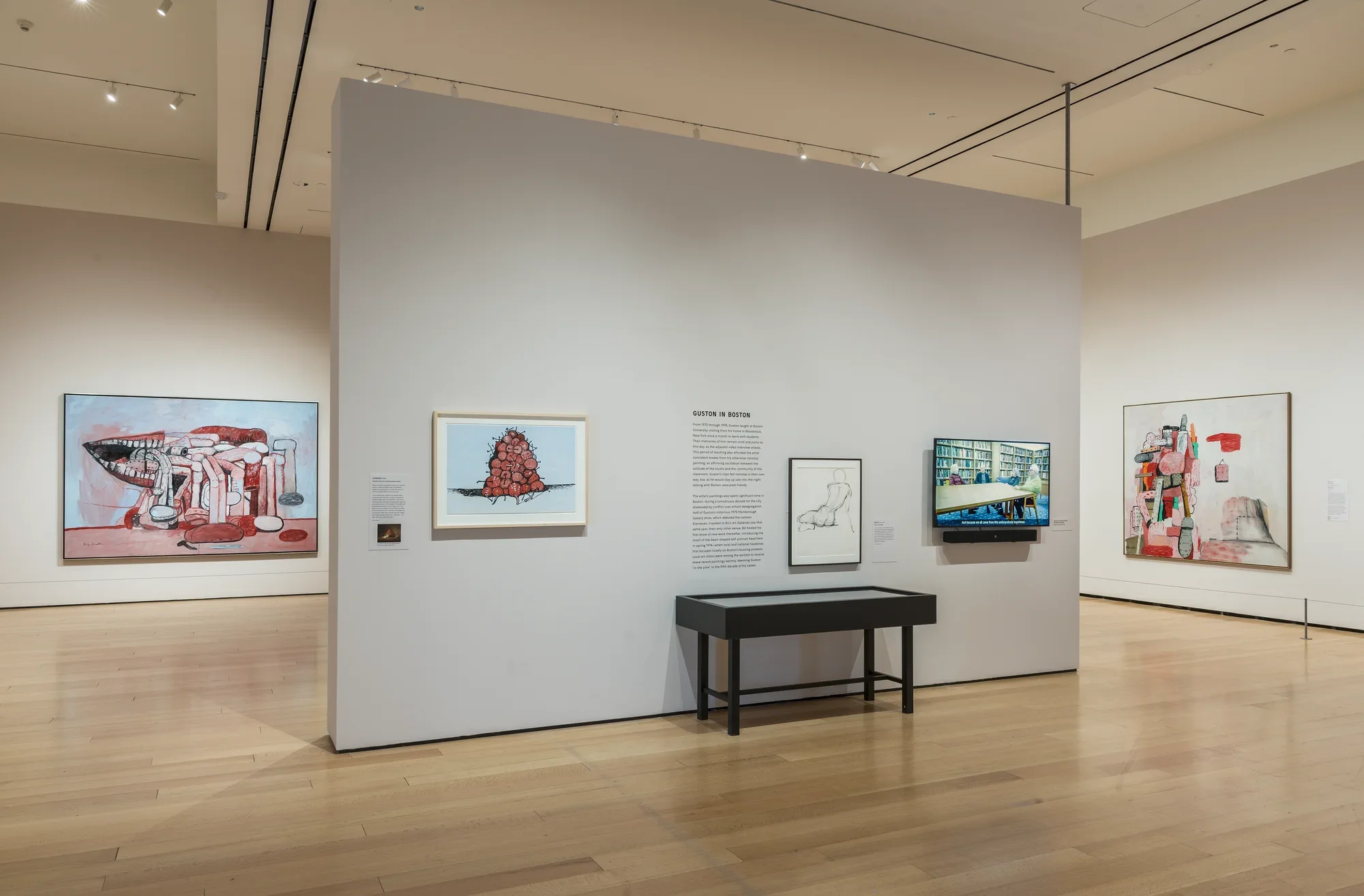
Casework and the Studio Environment. Casework throughout was designed to be looked into rather than simply looked at, offering access to supplementary materials that shaped Guston’s practice; cases holding more sensitive content used tambour doors that visitors could open at their own discretion. Black detailing on the cases referenced Guston’s own dark outlines set against pale grounds, tying the display language back to the work itself.
That same attentiveness to Guston’s process culminated at the heart of the Marlborough room, where a studio environment inspired by his workspace in Upstate New York was built into the space. Recycled plywood, left partially unfinished and mottled with paint, evoked the character of an active studio, while small spotlights mounted to the overhead structure lit the work without casting shadows.
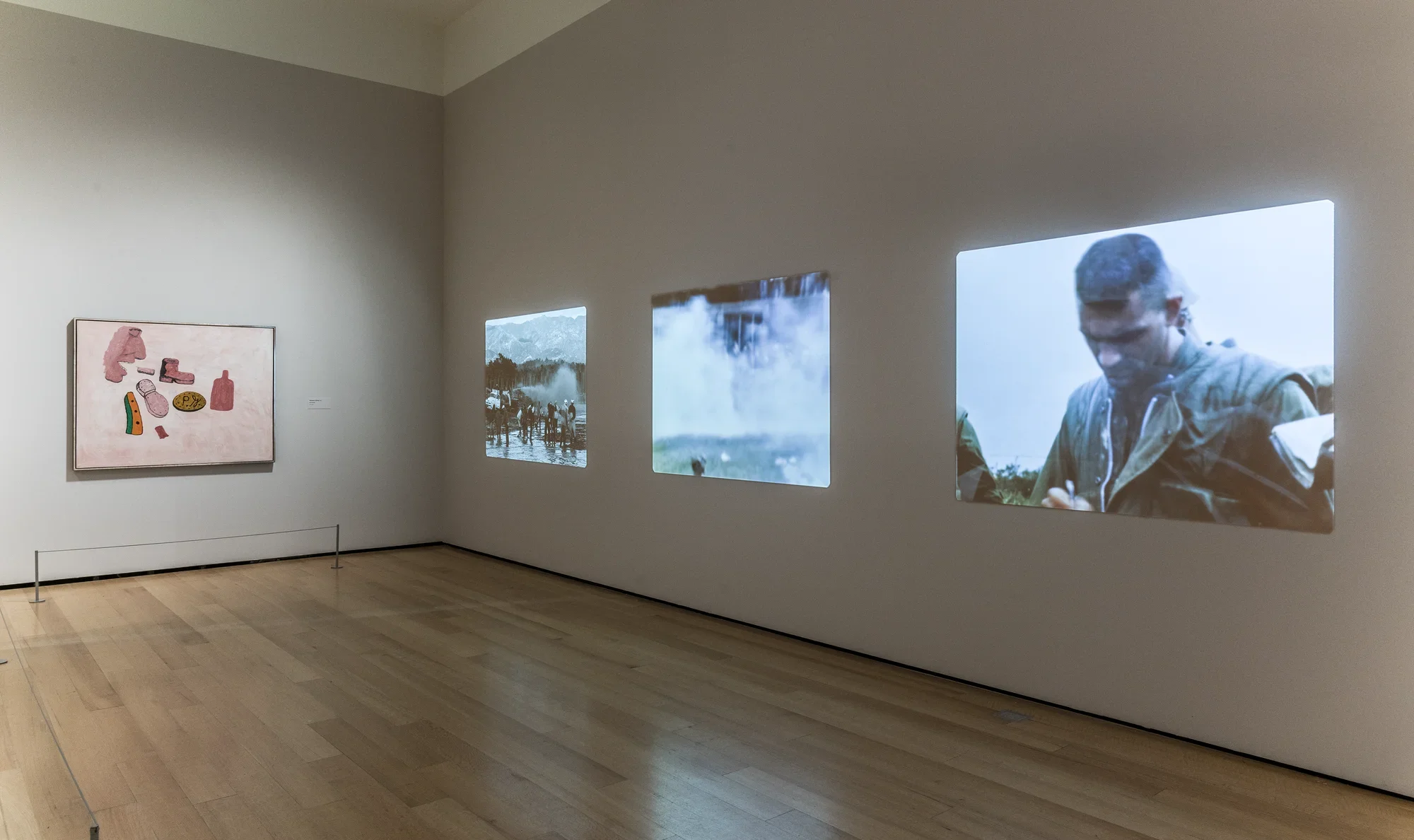
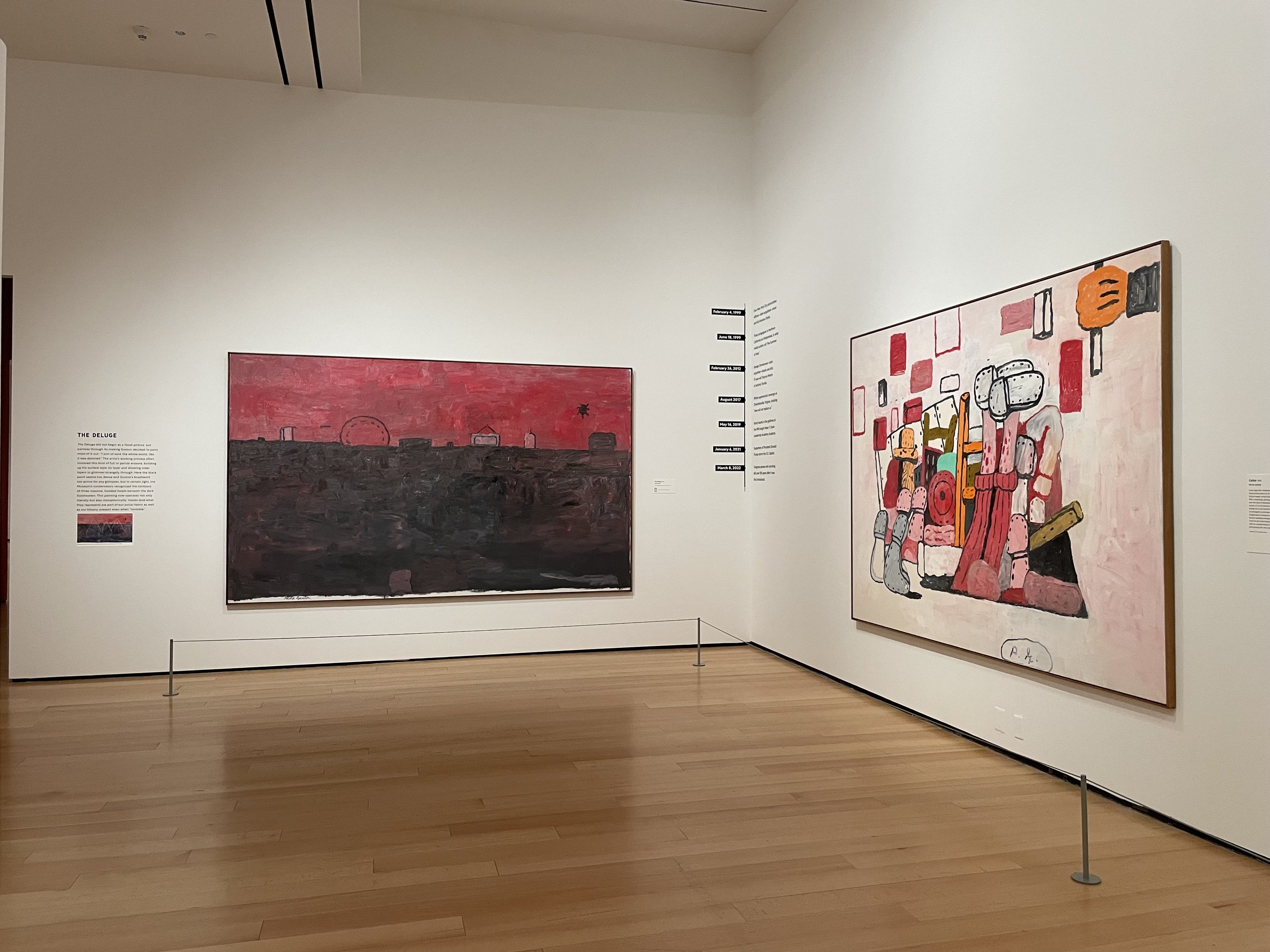
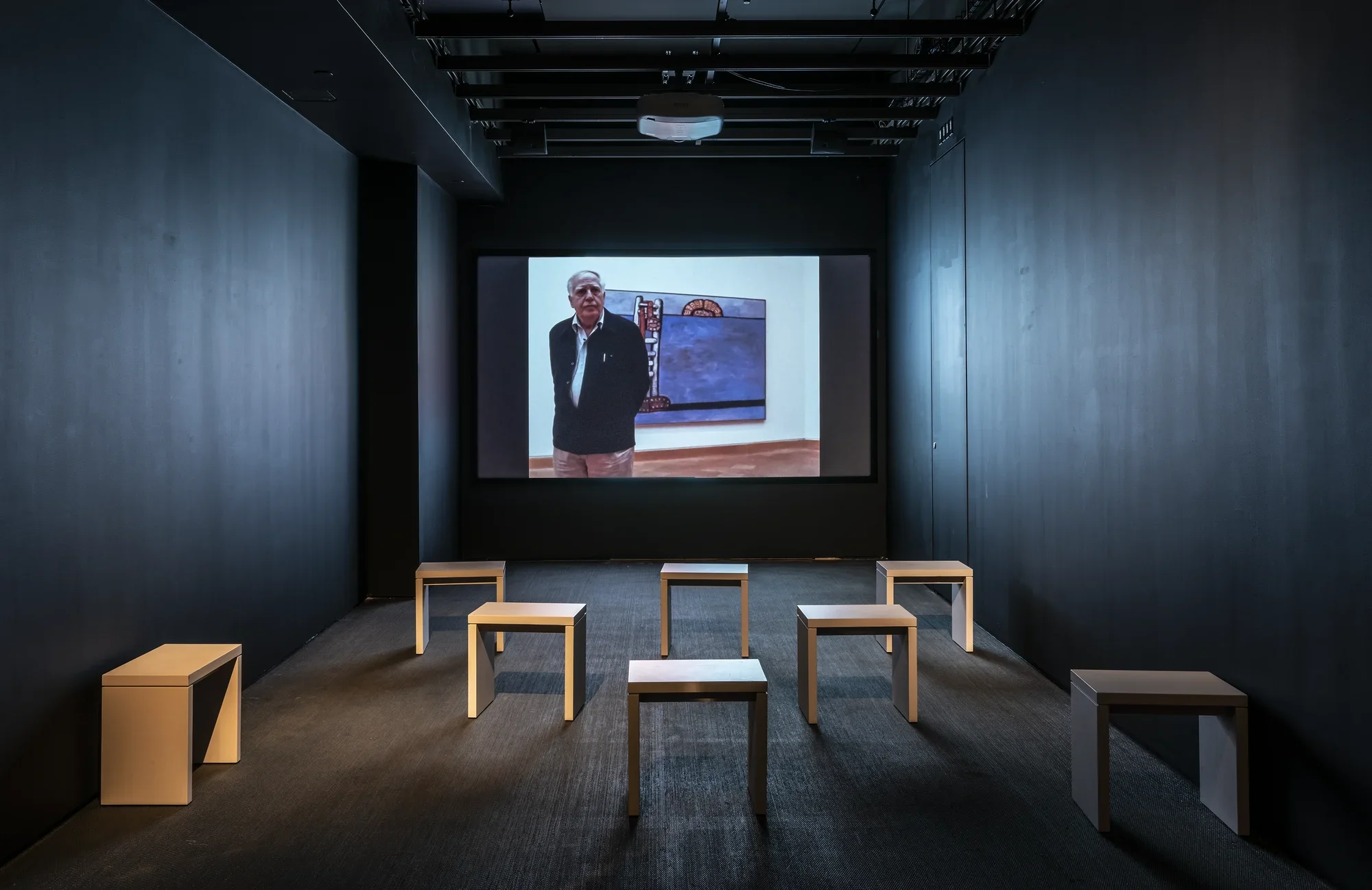
Weaving in Historical Context. A key curatorial goal was to weave contemporary context throughout the show, continually reminding visitors of the moment in which the work was made and suggesting how Guston’s awareness of current events shaped his practice. This played out in two ways: vertical timelines wrapped a corner of each gallery, combining news events with milestones in Guston’s own life so the context stayed present without competing with the work; and between the gallery devoted to his period of Abstraction and the entrance to the Marlborough room, a dedicated space held three synchronized projections cycling through significant news events of the time, deepening visitors’ understanding of the broader world Guston was responding to.